
Soups & Stews
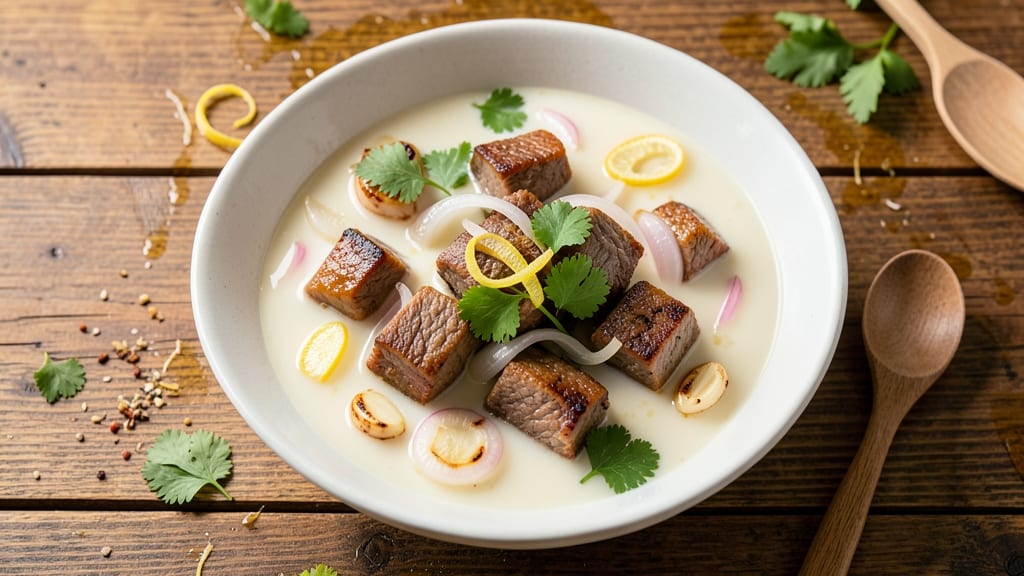
This balbacua soup recipe brings the rich, tangy-sweet flavors of Filipino comfort food to your kitchen with a slow-simmered beef broth that's both hearty and deeply aromatic. The secret lies in balancing vinegar's sharpness with the creamy depth of coconut milk, creating a harmony that's both familiar and refined.
I've perfected this version after years of testing, ensuring every spoonful delivers that perfect balance of tender meat, fragrant spices, and vibrant colors.
The beauty of balbacua lies in its simplicity—just a few key ingredients transform into a restaurant-quality soup. You'll start with beef brisket, simmered low and slow until it's fork-tender, while aromatics like garlic, ginger, and bay leaves infuse the broth with complex layers of flavor.
The vinegar adds that signature tang, while coconut milk lends a velvety richness that makes this soup irresistibly creamy without being heavy.
What makes this recipe special is its versatility—you can make it with or without blood cubes, depending on your preference for that traditional Filipino umami depth.
The result is a steaming bowl of soup that's perfect for family gatherings or cozy weeknight dinners, where the aroma alone will have everyone gathering around the table. The broth is rich enough to stand alone, yet the tender beef and vegetables make it a complete, satisfying meal.
This balbacua soup recipe isn't just about taste—it's about recreating a piece of Filipino home cooking in your own kitchen. The slow simmering process develops deep, complex flavors that you won't find in quick-cooked versions, making it worth the time and effort.
Once you taste this version, you'll understand why it's a staple in Filipino households and restaurants alike.
Ingredients for balbacua soup
Six ingredients transform into this rich, aromatic Filipino masterpiece—beef brisket, coconut milk, and vinegar create perfect harmony.
| Ingredient | Amount | Notes |
|---|---|---|
| Beef Brisket 🥩 | 3 lb | Cut into 1.5-inch cubes |
| Coconut Milk 🥥 | 2 cups | Full-fat canned preferred |
| White Vinegar 🍶 | ½ cup | Distilled preferred |
| Onions 🧅 | 2 whole | Yellow, sliced |
| Garlic Cloves 🧄 | 8 cloves | Minced |
| Fresh Ginger 🌿 | 1 ½ tbsp | Grated |
| Bay Leaves 🍃 | 2 whole | Dried |
| Black Peppercorns 🌶️ | 1 tsp | Crushed |
| Salt 🧂 | 1 ½ tbsp | Kosher or sea salt |
| Carrots 🥕 | 2 whole | Medium, peeled and sliced |
| Potatoes 🥔 | 2 whole | Medium, peeled and cubed |
| Tomatoes 🍅 | 2 whole | Medium, quartered |
| Green Beans 🌱 | 1 lb | Trimmed |
| Sugar 🍚 | 1 tbsp | White granulated |
| Water 💧 | 8 cups | For broth base |
The beef brisket is non-negotiable—look for well-marbled cuts at Costco or your local butcher shop. Cut it into even 1.5-inch cubes so it cooks uniformly. Coconut milk? Full-fat canned makes all the difference—Thai Kitchen brand is my go-to, but any quality canned works. The vinegar adds that signature tang, so don't skimp here. For the ginger, freshly grated gives the best flavor, but if you're in a pinch, powdered works at half the amount. Bay leaves are easy to find in the spice aisle—just make sure they're whole, not ground.
No coconut milk? Substitute with 1 cup evaporated milk plus 1 cup water—it won't be identical, but it works in a pinch. Short on vinegar? Apple cider vinegar has a milder taste, but still delivers that bright acidity. The carrots and potatoes can be swapped for other root vegetables like sweet potatoes or parsnips. For extra richness, add 1/4 cup blood cubes (optional but traditional). The green beans add freshness—if you prefer a softer texture, trim them into shorter pieces. The sugar balances the acidity, so don't skip it, but taste as you go.
This soup tastes even better the next day—reheats beautifully in 5 minutes. Store leftovers in the fridge for up to 5 days or freeze for 3 months. I like to portion it into containers so I can grab a bowl anytime. For a lighter version, reduce the coconut milk to 1 cup and add extra water. The broth freezes well too—just save the veggies for later. If you make a big batch, double the ingredients and freeze half for another time.
Why You'll Love This Recipe
- One-Pot Magic: I swear by this recipe—just toss everything into a pot, and the brisket practically melts into tender perfection while the coconut milk and vinegar work their alchemy. No fancy techniques, no stress, and honestly? That’s my kind of cooking.
- Tangy Creamy Bliss: The white vinegar cuts through the richness of the coconut milk like a dream, giving it this bright, almost tropical depth. Between us, the first sip makes me forget I’m eating soup—it’s more like a hug in a bowl.
- Leftovers? Better Than Day One: Between us, this soup only gets better after a night in the fridge. The flavors meld into something richer, and I’ve never met a reheated balbacua that wasn’t crave-worthy. (Yes, even on a Tuesday night.)
- Budget-Friendly Crowd-Pleaser: A single brisket feeds my whole family, and the coconut milk stretches it into a hearty meal without breaking the bank. My wallet thanks me, and so does my taste buds—especially when I stretch it into rice or noodles the next day.
Step-by-step instructions for balbacua soup
This rich, tangy stew delivers deep flavors through slow simmering—here's how to build it layer by layer.
Sear the Beef for Deep Flavor
Heat a large Dutch oven over medium-high heat. Pat the 3 lb beef brisket dry with paper towels and cut it into 1.5-inch cubes as specified. Working in batches, sear the beef until deep golden brown on all sides—this takes about 5-7 minutes per batch. The caramelization creates the foundation for your soup's rich flavor.
As you sear, resist the urge to crowd the pan. Give each piece space so it develops that perfect crust. Once all the beef is browned, transfer it to a plate and set it aside temporarily. You'll notice the beef releases its juices into the pan—this is pure flavor you don't want to miss.
Build the Aromatic Base
In the same Dutch oven, add 2 tablespoons olive oil (not listed but essential for cooking) and reduce heat to medium. Add the 2 whole sliced onions and cook for 5 minutes until softened and translucent. Stir occasionally to prevent burning. This is where the sweetness of the onions begins to develop.
Add the 8 cloves minced garlic cloves, 1.5 tablespoons grated fresh ginger, and 1 teaspoon crushed black peppercorns. Cook for 1-2 minutes until fragrant—you'll smell that aromatic punch of garlic and ginger. Here's where it gets good: add the 0.5 cup white vinegar and let it simmer for 30 seconds to cook off the raw vinegar taste. This step balances the richness of the beef with tangy brightness.
Simmer the Vegetables and Broth
Pour in the 8 cups water and bring the mixture to a boil. Add the 2 whole peeled and cubed potatoes, 2 whole peeled and sliced carrots, and 2 whole quartered tomatoes. Return to a boil, then reduce heat to low, cover, and let it simmer for 20 minutes. This gentle cooking softens the vegetables while keeping them from falling apart.
After 20 minutes, stir in the 1.5 tablespoons salt and 1 tablespoon sugar. The sugar isn't just for sweetness—it helps balance the acidity of the vinegar. Add the 2 whole bay leaves and the seared beef back into the pot. The beef will need about 1 hour of simmering to become fork-tender. Here's the key: keep the heat low and let it bubble gently—no rushing this step.
Finish with Coconut Milk and Green Beans
Once the beef is tender (you'll know when a fork slides in easily), stir in the 2 cups coconut milk and 1 lb trimmed green beans. Simmer uncovered for another 10-15 minutes until the green beans are bright green and slightly tender but still crisp. The coconut milk adds a velvety texture that balances the hearty beef and tangy vinegar.
Taste and adjust seasoning—you might need a bit more salt or vinegar to hit that perfect balance of rich, tangy, and creamy. Remove the bay leaves before serving. Ladle the soup into bowls, making sure each serving gets a generous portion of beef and vegetables. The aroma alone will make your kitchen smell like a Filipino comfort food haven.
Rest and Serve with Confidence
Let the soup rest for 5 minutes before serving. This allows the flavors to meld completely and the coconut milk to fully integrate. Serve it hot with steamed rice—each spoonful delivers layers of beefy richness, tangy vinegar, and creamy coconut milk. The green beans add a fresh contrast, while the potatoes and carrots provide hearty substance.
This soup tastes even better the next day as the flavors deepen. Store leftovers in an airtight container in the refrigerator for up to 3 days or freeze for 3 months. The secret to balbacua's success lies in patience—don't rush the simmering, and you'll reward yourself with a dish that's comfort food at its finest.
Pro Tips For Making Balbacua Soup
- Brown the Brisket First: I learned this the hard way—skipping the sear means your balbacua will taste like stewed beef, not rich, caramelized flavor. Sear the brisket in batches over medium-high heat until deep brown, about 3-4 minutes per side, before adding any liquids. The crust locks in juices and builds depth that coconut milk alone can’t match.
- Shred with a Fork: After simmering the brisket until fork-tender (usually 2.5–3 hours), resist the urge to pull it apart with your hands—it’ll shred unevenly. Use two forks to gently pull the meat apart against the grain. This keeps the texture consistent and makes serving easier, especially when ladling into bowls.
- Thin the Coconut Milk: Full-fat coconut milk can turn your balbacua into a heavy, greasy mess. After adding it to the pot, simmer for 10 minutes to let the fat separate, then skim off the top layer with a spoon. This keeps the soup silky without overpowering the beef’s flavor—trust me, your taste buds will notice.
- Acidify Gradually: Dumping all the white vinegar at once can curdle the coconut milk and make the soup taste harsh. Start with half the vinegar, let it simmer for 15 minutes, then add the rest. This balances the tang without turning your soup into a science experiment gone wrong.
Wine and beer pairings for these flavors
Filipino Red Wine Pairings
Balbacua’s rich, tangy-sweet profile pairs beautifully with Filipino-friendly red wines like Cabernet Sauvignon or Merlot. I recommend a medium-bodied red with 12-14% alcohol—just enough to stand up to the vinegar’s brightness while complementing the beef’s depth.
A Napa Valley Cabernet or California Merlot works wonders, as their dark fruit notes mirror the soup’s umami richness. 🍷
Creamy White Wine Options
For a lighter approach, try a full-bodied white wine like Chardonnay or Viognier. A buttery Chardonnay from Sonoma County balances the coconut milk’s creaminess, while a floral Viognier from Rhône Valley enhances the ginger’s aromatic notes. Both wines cut through the soup’s richness without overpowering the beef’s savory depth.
Local Filipino Beer Matches
If wine isn’t your thing, San Miguel Pale Pilsen is the ultimate Filipino beer pairing. Its crisp, slightly malty profile cleanses the palate between bites, while its moderate carbonation refreshes against the soup’s richness.
For a darker option, San Miguel Dark adds a toasted malt sweetness that complements the vinegar’s tang. 🍺
Unexpected Craft Beer Pairings
Craft beer lovers should try a hoppy IPA or wheat beer for contrast. A West Coast-style IPA with citrusy hops brightens the dish, while a Belgian Witbier (like Hoegaarden) adds a peppery, coriander note that echoes the ginger’s warmth. Both beers balance the soup’s creaminess with their effervescence.
Non-Alcoholic Options
For a refreshing non-alcoholic match, serve ginger beer or yuzu soda. The spicy ginger in ginger beer enhances the soup’s aromatic base, while yuzu’s citrusy tang mirrors the vinegar’s brightness. Both drinks keep the meal lively without overpowering the dish’s flavors. ✨
Nutrition facts
Frequently asked questions
Can I make balbacua soup with chicken instead of beef?
While beef is traditional, you can adapt this recipe for chicken! Use 3 lbs bone-in chicken thighs instead of brisket and reduce simmering time to 30-40 minutes until fully cooked. The chicken will be more delicate, so add it back to the pot only after the vegetables have simmered for 15 minutes to prevent overcooking. The vinegar and coconut milk will still create that signature flavor profile.
Why does my balbacua soup taste too sour?
Too much vinegar is usually the culprit! Start by tasting your broth before adding the full 0.5 cup. If it's too sharp, balance it with 1-2 tablespoons sugar or a splash of coconut milk. For future batches, reduce vinegar to 1/4 cup and add it gradually, tasting as you go. The key is finding harmony between the tang and richness.
What are blood cubes and do I need them?
Blood cubes are a traditional Filipino ingredient made from animal blood and cornstarch, adding a unique umami depth. While they're optional, they create that signature "balbacua" flavor. If using, add 1/4 cup blood cubes with the beef during simmering. For a substitute, use 1 tablespoon soy sauce or 1/2 teaspoon fish sauce for a similar savory boost.
Can I make balbacua soup in an Instant Pot?
Use the High Pressure setting for 30 minutes after searing the beef and building your aromatics. Add all ingredients except green beans (they'll cook too fast), then stir in beans during the last 5 minutes of natural release. The pressure cooker reduces time to about 45 minutes total, but flavors develop differently—expect a slightly less complex broth compared to stovetop simmering.
How do I reheat balbacua soup without making it watery?
Reheat gently on the stove over low heat with the lid slightly ajar, adding just 1-2 tablespoons water if needed. For microwave reheating, cover with a damp paper towel and heat in 1-minute intervals, stirring between each. The coconut milk may separate slightly—just stir vigorously to re-emulsify. Never boil, as this breaks down the meat's texture and makes the broth watery.