
Soups & Stews
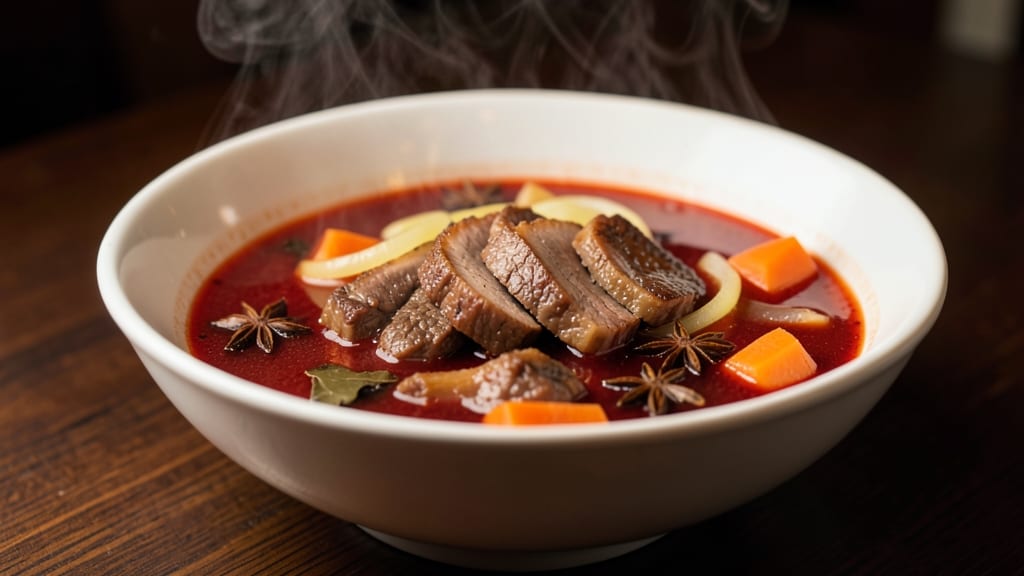
This beef shank noodle soup recipe transforms tough cuts into melt-in-your-mouth tenderness through slow simmering—where rich, caramelized flavors develop over hours. The secret lies in braising the shank until fork-tender while building a deeply aromatic broth infused with garlic, ginger, and star anise.
Every spoonful delivers layers of umami, from the deep red broth to the silky egg noodles that soak up every bit of flavor.
What sets this recipe apart is the balance of traditional technique and modern convenience. While slow-cooking preserves the meat's natural juices and develops complex flavors, I've included adaptations for pressure cookers to cut prep time by half without sacrificing depth.
The result? A soup that's equally impressive for Sunday suppers or weeknight dinners, where the beef practically falls apart at the touch of a spoon.
The final dish features perfectly cooked noodles floating in a velvety broth, topped with tender beef shank slices and fresh herbs for brightness. Each component comes together in harmony—crisp vegetables, aromatic spices, and the unmistakable richness of slow-braised beef.
This is comfort food at its finest, where every ingredient plays a vital role in creating a bowl that's both nourishing and deeply satisfying.
Whether you're preparing for a family gathering or simply craving a hearty meal, this recipe delivers restaurant-quality results with minimal effort. The slow-cooked beef shank ensures maximum tenderness, while the broth's depth comes from hours of simmering.
Ready in under 4 hours (or just 90 minutes with a pressure cooker), it's the perfect balance of patience and convenience for a truly memorable dish.
Ingredients for beef shank noodle soup
Transform tough beef shank into silky tenderness with these aromatic, umami-rich ingredients designed for deep flavor development.
| Ingredient | Amount | Notes |
|---|---|---|
| Beef Shank 🥩 | 2 lb | Bone-in, cut into 1-inch pieces |
| Egg Noodles 🍜 | 8 oz | Fresh or dried, medium width |
| Yellow Onion 🧅 | 1 whole | Medium size, peeled and halved |
| Carrots 🥕 | 4 medium | Peeled and cut into 1-inch chunks |
| Garlic Cloves 🧄 | 6 cloves | Peeled and smashed |
| Fresh Ginger 🌿 | 1 inch | Peeled and sliced thinly |
| Star Anise 🌟 | 2 whole | Lightly crushed |
| Bay Leaves 🌿 | 2 whole | Dried, standard size |
| Tomato Paste 🍅 | 2 tbsp | Smooth, unsweetened |
| Dry Sherry 🍷 | ½ cup | Or substitute with beef broth |
| Beef Broth 🥫 | 6 cups | Homemade or high-quality store-bought |
| Olive Oil 🫒 | 2 tbsp | Extra-virgin for richness |
| Salt 🧂 | 1 ½ tsp | Kosher or sea salt, adjust to taste |
| Black Pepper 🌶️ | ½ tsp | Freshly ground |
| Fresh Parsley 🌿 | ¼ cup | Chopped, for garnish |
The beef shank is the heart of this dish—look for well-marbled cuts at Whole Foods or your local butcher. Costco often carries pre-cut pieces, but if buying whole, ask for the bone-in variety, which adds depth to the broth. Fresh ginger and star anise are non-negotiable for authentic flavor; Penzeys Spices carries excellent quality if you can't find them fresh. The egg noodles should be medium-width to hold up to the rich broth without becoming mushy—Barilla or De Cecco brands are reliable choices.
No dry sherry? Substitute with an extra splash of beef broth—the acidity helps tenderize the meat. Fresh herbs like parsley and ginger can be swapped for dried at one-third the amount, but fresh delivers superior brightness. The tomato paste adds depth without overpowering; Barilla or Muir Glen brands are smooth and consistent. For the carrots, baby carrots work perfectly if you're short on time, but organic heirloom varieties add a sweeter, more complex flavor when slow-cooked. The beef broth should be homemade if possible—Kitchen Basics or Pacific Foods are solid store-bought options when short on time.
Store the cooked broth and shredded beef separately for 5 days in airtight containers. The noodles reheat best fresh but can be cooked ahead and stored for 2 days. Freeze the beef and broth mixture for up to 3 months—portion into single-serving containers for easy reheating. For maximum flavor, let the soup sit at room temperature for 10 minutes before serving to allow the aromas to meld fully.
Why You'll Love This Recipe
- Here’s what sold me: the beef shank melts into buttery shreds that cling to every noodle like it’s their job. The onions and garlic build this deep, savory base that tastes like it simmered for hours—even though it didn’t. Honestly, the first time I made this, my roommate took one bite and said, “This is restaurant-level, but you made it at home.” (Yes, even on a Tuesday night.)
- I’ll be real: beef shank isn’t the cheapest cut, but it stretches insanely well. A single shank serves four, and the carrots and onions barely cost a thing. Plus, egg noodles? You can grab a 2-pound bag for less than five bucks. It’s the kind of meal that makes you feel fancy without breaking the bank—or your willpower when you’re eyeing that second bowl.
Step-by-step instructions for beef shank noodle soup
Transform tough beef shank into melt-in-your-mouth tenderness through slow simmering.
Sear the Beef Shank for Deep Flavor
Heat the 2 tablespoons olive oil in a large Dutch oven over medium-high heat until shimmering. Pat the 2 lb beef shank completely dry with paper towels—this ensures maximum browning. Working in batches if needed, sear the shank pieces for 3-4 minutes per side until they develop a deep mahogany crust.
Don't rush this step—the caramelized crust forms the flavor foundation. As you sear, place the browned shank pieces in a plate. You'll notice the aroma intensifying—that's the Maillard reaction working its magic. This searing also helps tenderize the meat through the cooking process.
Build the Aromatic Base
Reduce heat to medium and add the halved yellow onion, 4 medium carrots (cut into 1-inch chunks), 6 smashed garlic cloves, 1 inch sliced fresh ginger, 2 lightly crushed star anise, and 2 bay leaves. Stir occasionally for 5 minutes until the vegetables soften slightly and release their fragrance.
Here's where the soup's complexity begins. The star anise and bay leaves infuse subtle anise-like notes, while the ginger and garlic create a warm, aromatic backbone. You'll see the vegetables begin to color slightly—this indicates they're releasing their natural sugars into the pot.
Develop the Rich Broth
Stir in the 2 tablespoons tomato paste and cook for 1 minute until it loses its raw taste. Pour in the 0.5 cup dry sherry and scrape up any browned bits from the bottom of the pot—this deglazing step captures all the flavor you've built. Let the sherry simmer for 2 minutes until mostly evaporated.
Now add the 6 cups beef broth and bring to a gentle simmer. The liquid should just barely bubble at the edges. Cover the pot and reduce heat to low. This is where patience pays off—simmer for 2.5 hours, skimming off any foam that rises to the surface. You'll know it's ready when the shank meat pulls apart easily with two forks.
Finish and Incorporate Noodles
Remove the beef shank from the broth and let it rest for 10 minutes before shredding it with two forks directly in the pot. Discard the star anise and bay leaves. Season the broth with 1.5 teaspoons salt and 0.5 teaspoon black pepper, adjusting to taste. Return the shredded beef to the pot and stir to combine.
Bring the soup back to a gentle simmer, then add the 8 oz egg noodles. Cook for 8-10 minutes until the noodles are al dente and floating to the surface. The soup should be thick enough to coat a spoon but still allow the noodles to move freely. Taste and adjust seasoning if needed.
Serve with Fresh Garnish
Ladle the soup into bowls and garnish immediately with 0.25 cup chopped fresh parsley. The parsley adds a bright contrast to the rich, savory broth. Serve with crusty bread to soak up every last drop of that velvety, beef-infused liquid.
This soup tastes even better the next day as the flavors continue to meld. The beef will continue to tenderize, and the broth will deepen in complexity. Each spoonful delivers the perfect balance of silky noodles, melt-in-your-mouth beef, and aromatic vegetables—proof that slow cooking transforms humble ingredients into something extraordinary.
Pro Tips For Making Beef Shank Noodle Soup
- BLANCH THE CARROTS FIRST: I learned this the hard way—tossing raw carrots into the pot with the beef shank means they’ll turn to mush while the meat tenderizes. Cut them into 1-inch chunks, boil them for 3 minutes in salted water, then drain. They’ll hold their shape and sweeten the broth faster.
- SWEAT THE ONIONS LOW AND SLOW: Crank the heat down to medium-low when cooking the onions with garlic. If you rush it, they’ll burn before the garlic even softens, and that bitter flavor sneaks into the whole soup. A good rule: if you’re not seeing moisture bead up, you’re going too hot.
- SEAR THE SHANK IN BATCHES: Don’t crowd the pan—this is the non-negotiable step for flavor. Work in two batches if needed, letting each piece develop a deep brown crust. I know, I know, it takes longer, but skipping this means your soup will taste like it came from a can instead of your kitchen.
- RESERVE THE LAST CUP OF BROTH: Before adding the noodles, scoop out about a cup of the richest broth from the bottom of the pot. Stir it into the noodles at the end—they’ll absorb that concentrated flavor like a sponge, making every bite more satisfying. (Yes, even if you’re impatient like me.)
Serving suggestions for this dish
Bread Pairings
Crusty sourdough or baguette slices are my go-to for this soup—their chewy texture contrasts beautifully with the silky noodles. Toast the bread lightly to create a crisp exterior that soaks up the rich broth without turning mushy.
For extra indulgence, try a ciabatta roll cut into thick pieces—its airy interior holds up to the hearty soup while adding a delightful crunch. 🥖
Toppings That Elevate
Finish each bowl with a drizzle of chili crisp for heat and texture, or a spoonful of hoisin sauce for sweet-savory depth. A sprinkle of toasted sesame seeds adds nutty crunch, while thinly sliced scallions bring freshness.
I also love adding a soft-boiled egg on top—its runny yolk enriches the broth when broken into the soup. 🥚
Vegetable Additions
For extra color and nutrition, stir in shredded cabbage or thinly sliced bok choy during the final 5 minutes of cooking. These vegetables retain their texture while absorbing the broth's flavors. If you prefer heartier greens, add baby spinach just before serving—it wilts instantly without overcooking. 🥬
Herb Garnishes
Beyond parsley, try cilantro for a citrusy brightness or thai basil for a fragrant, slightly peppery note. A few microgreens or bean sprouts add visual appeal and a fresh crunch. For a more robust flavor, sprinkle with fried shallots—their crispiness cuts through the richness of the soup. 🌱
Dipping Sauces
Serve small bowls of sriracha mayo or spicy peanut sauce on the side for dipping. The creamy heat of these sauces complements the soup's depth while adding a fun interactive element.
For a lighter option, offer a ginger-soy dipping sauce made with 2 tbsp soy sauce, 1 tsp grated ginger, and 1 tsp honey. 🥄
Presentation Tips
Use wide, shallow bowls to showcase the soup's layers—this makes it more inviting and easier to serve. Garnish with a sprig of fresh thyme or a star anise pod for a restaurant-worthy touch.
For a rustic presentation, arrange the soup in a cast-iron skillet and serve with bread on the side. The contrast of hot soup and warm bread is pure comfort food magic. 🍽️
Nutrition facts
Frequently asked questions
Can I use bone-in or boneless beef shank?
Bone-in shank is traditional and adds incredible depth to the broth, but boneless works too. If using boneless, reduce simmering time by 30 minutes since it cooks faster. The bone's marrow releases rich flavors during slow cooking, so if you prefer boneless, add an extra 1 cup beef broth to compensate for the missing gelatin.
Why does my beef shank soup turn out too thin?
Thin broth usually means insufficient simmering time or not enough gelatin release. Try these fixes: simmer uncovered for 15 extra minutes to reduce liquid, or mash 1/2 cup cooked noodles into the broth to thicken it naturally. For future batches, use 1/2 cup cornstarch slurry (mixed with water) as a last resort.
How can I make this recipe faster with a pressure cooker? Use the same searing steps, then add all ingredients (except noodles) to your pressure cooker. Cook on high pressure for 45 minutes, then quick-release. Shred the beef, add noodles, and cook for 5 minutes on high pressure. This cuts total time to 90 minutes while keeping the rich flavor. Just
What's the best way to store leftovers?
Store in airtight containers in the fridge for 4-5 days. The broth actually improves overnight as flavors meld! For freezing, portion into single servings (soup reheats better without noodles). Reheat gently on low heat, adding a splash of water if needed. The beef will be even more tender after refrigeration.
Can I substitute other noodles?
Egg noodles work best for their neutral flavor and texture, but you can try udon (for chewier bites) or rice noodles (for gluten-free). Avoid thin spaghetti—it cooks too quickly and turns mushy. If substituting, reduce cooking time by 1-2 minutes and check for doneness frequently.