
Soups & Stews
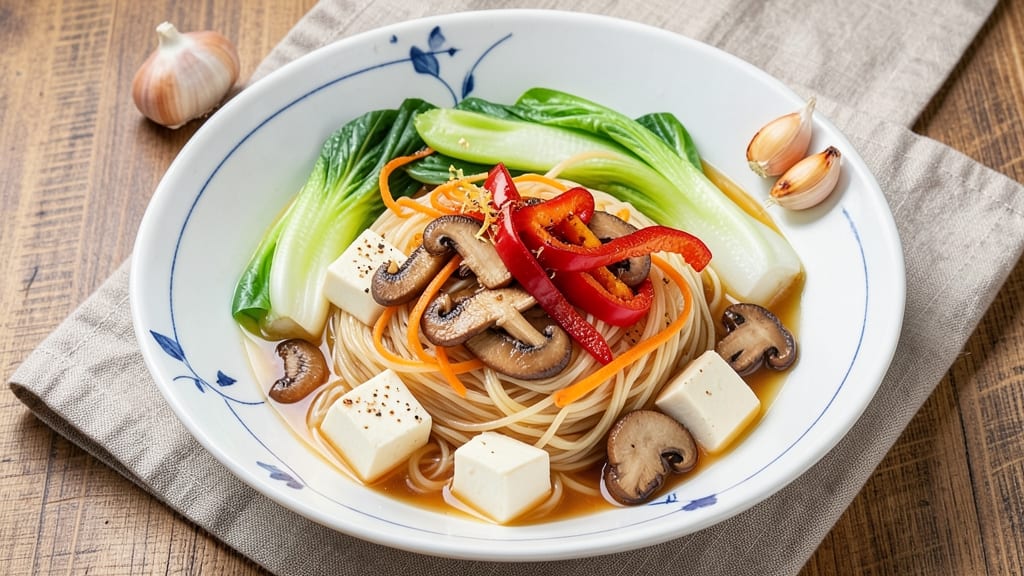
This Asian vegetable noodle soup delivers the perfect balance of fragrant ginger-lime broth and silky rice noodles in under 45 minutes. The secret lies in a layered broth—miso for umami depth, coconut milk for creaminess, and fresh herbs that brighten every spoonful.
I developed this recipe after years of adapting regional styles, ensuring it’s both authentic and approachable for home cooks.
The broth starts with aromatics—garlic, ginger, and galangal—sautéed until fragrant, then simmered with miso, soy sauce, and coconut milk for a rich, velvety base. Silky rice noodles cook in the broth itself, absorbing its flavors while maintaining their signature chew.
Garnishes like tofu, mushrooms, and fresh herbs add texture and color, transforming a simple bowl into a restaurant-worthy dish.
What makes this soup stand out is its versatility—adjust the vegetables based on what’s seasonal, and swap in tofu or shrimp for a protein boost. The lime zest and cilantro finish cut through the richness, creating a harmonious balance of flavors.
Serve it steaming hot with extra herbs and chili flakes for a meal that’s as comforting as it is vibrant.
Whether you’re craving a light lunch or a nourishing dinner, this soup delivers bold flavors without the heaviness. The broth’s depth comes from slow simmering, while the noodles stay tender and satisfying.
Perfect for meal prep or a quick weeknight dinner, it’s a dish that feels both special and effortless to make.
Ingredients for asian vegetable noodle soup
Fragrant aromatics, umami-rich miso, and silky noodles—this soup brings restaurant flavors home in one bowl.
| Ingredient | Amount | Notes |
|---|---|---|
| Silken Tofu 🍲 | 1 block | Firm tofu, pressed and cubed |
| Shiitake Mushrooms 🍄 | 8 whole | Stems removed, sliced |
| Baby Bok Choy 🥬 | 4 whole | Trimmed, halved lengthwise |
| Carrots 🥕 | 2 medium | Julienned or matchstick cut |
| Red Bell Pepper 🌶️ | 1 whole | Thinly sliced, seeds removed |
| Garlic Cloves 🧄 | 6 cloves | Minced, fresh preferred |
| Fresh Ginger 🌿 | 2 tbsp | Finely grated, peeled |
| Galangal 🌿 | 1 tbsp | Finely grated, peeled |
| White Miso Paste 🧂 | 2 tbsp | High-quality, unsweetened |
| Light Soy Sauce 🥄 | 1 tbsp | Gluten-free if needed |
| Coconut Milk 🥥 | 1 can (13.5 oz) | Full-fat for creaminess |
| Rice Vinegar 🍶 | 1 tbsp | For brightness |
| Lime Zest 🍋 | 1 tbsp | Freshly zested |
| Fresh Cilantro 🌿 | ½ cup | Chopped, stems included |
| Silky Rice Noodles 🍜 | 8 oz | Uncooked, wide or medium |
| Red Chili Flakes 🌶️ | ½ tsp | Adjust to taste |
| Sesame Oil 🫒 | 1 tsp | Toasted, for finishing |
| Vegetable Oil 🫒 | 1 tbsp | For sautéing |
| Sea Salt 🧂 | 1 tsp | Diamond Crystal preferred |
| Black Pepper 🌶️ | ½ tsp | Freshly ground |
The galangal and ginger are non-negotiable for that authentic Southeast Asian punch. Trader Joe's carries fresh galangal in the frozen section, and if you can't find it, double the ginger—it works in a pinch. For the miso, Miso Master or Hodo brands deliver the best umami depth. Shiitake mushrooms should be plump and firm—avoid dried unless rehydrated properly. The tofu? Silken holds its shape better than firm in the broth, but if you only have firm, press it for 15 minutes first.
No galangal? Double the ginger and add 1 tsp of lemongrass paste—it’s a game-changer. Swapping coconut milk? Full-fat cashew cream gives similar richness. The lime zest can be substituted with bottled lime juice (1 tbsp), but fresh zest adds that bright, citrusy finish that’s key. For extra protein, add 1 cup cooked edamame or chickpeas—they hold up beautifully. And if you’re using dried shiitake mushrooms, soak them in warm water for 20 minutes before slicing.
This soup tastes even better the next day—reheat gently with a splash of water to restore its silky texture. Store leftovers in an airtight container for up to 4 days, or freeze portions for up to 3 months. For meal prep, cook the broth separately and assemble bowls fresh—keeps the noodles from getting mushy. Garnish with extra chili flakes and cilantro right before serving to keep everything vibrant.
Why You'll Love This Recipe
- No Chopping Chaos: I swear by this recipe because the veggies—carrots, bell pepper, bok choy—just fall apart with a few minutes of simmering. No julienne skills required; I toss them in whole or roughly chopped, and the broth does all the work. That shiitake umami? It melts right into the broth, so you’re not stuck dicing mushrooms like some kind of line cook.
- Umami Bomb: Between the shiitake mushrooms and silken tofu, this soup packs a flavor wallop without needing fancy sauces. The tofu adds this silky richness while the mushrooms deepen the broth—like a cozy hug for your taste buds. Honestly, the first time I made it, I kept going back for seconds just to taste that perfect balance.
- Lunchbox Hero: This is my go-to for meal prep because it stays delicious for days. I’ll make a big batch on Sunday, and by Wednesday, it’s still packed with flavor—no sad, wilty veggies here. The tofu holds up, the broth gets even better, and I just reheat portions straight from the fridge. Zero fuss, all satisfaction.
- Budget Flex: I can feed four people for under $10 with this recipe. Shiitake mushrooms add luxury without the price tag, and silken tofu stretches the broth beautifully. Between us, it’s the kind of dish where you can afford to buy organic veggies and still save money—because leftovers mean fewer takeout nights. Win-win.
Step-by-step instructions for fragrant ginger-lime noodle soup
Here’s how to build a vibrant, aromatic broth that balances earthy depth with bright citrus notes—every step matters.
Prepare the Aromatics and Vegetables
Start by pressing the 1 block silken tofu between paper towels for 10 minutes to remove excess water, then cut into ½-inch cubes. Trim the stems from the 8 whole shiitake mushrooms and slice them into ¼-inch strips. Halve the 4 whole baby bok choy lengthwise, then slice the 2 medium carrots into ¼-inch matchsticks. Thinly slice the 1 whole red bell pepper (seeds removed) and set aside.
Finely grate the 2 tbsp fresh ginger and 1 tbsp galangal—this releases their essential oils, which are the soul of the broth. The galangal adds a peppery, citrusy kick that pairs beautifully with the ginger’s warmth. Keep these aromatics separate for now; we’ll use them in stages to build layers of flavor.
Sauté the Base and Build the Broth
Heat 1 tbsp vegetable oil in a large pot over medium heat. Add the 6 cloves minced garlic and sauté for 30 seconds until fragrant—don’t let it brown. Add the shiitake mushrooms and cook for 4 minutes until they release their moisture and begin to soften. Stir in the 2 tbsp white miso paste, 1 tbsp light soy sauce, and 1 tbsp rice vinegar, letting the miso melt into the oil for 1 minute. This creates a savory, umami-rich foundation.
Pour in 4 cups water (enough to cover the ingredients) and bring to a gentle simmer. Add the grated ginger and galangal, then stir in the 1 can (13.5 oz) coconut milk. Simmer for 15 minutes—the broth should smell like a spice market, with notes of coconut, citrus, and earthy mushrooms. Skim off any foam that rises to the surface for a cleaner broth.
Add Vegetables and Season
Toss the tofu cubes, carrots, bell pepper, and baby bok choy into the simmering broth. Cook for 5-6 minutes until the carrots soften slightly but still retain a bite. Stir in the 1 tbsp lime zest, 1 tsp sea salt, and 0.5 tsp black pepper, then add the 0.5 tsp red chili flakes for a subtle heat. Taste and adjust seasoning—you want a balance of salty, tangy, and slightly spicy.
Here’s the thing—if the broth tastes too thin, simmer uncovered for another 5 minutes to reduce it slightly. If it’s too thick, add ¼ cup hot water to loosen it. The texture should be silky but still allow the noodles to absorb flavor later.
Cook the Noodles and Finish
Rinse the 8 oz silky rice noodles under cold water for 30 seconds to remove excess starch, then drain. Add them to the broth and cook for 3-4 minutes until they’re tender but still hold their shape. The noodles should float effortlessly—if they stick together, stir gently with a spoon.
Remove the pot from heat and stir in 1 tsp toasted sesame oil and 0.5 cup chopped fresh cilantro. Let the soup sit for 2 minutes to allow the flavors to meld. The cilantro brightens the dish, while the sesame oil adds a nutty depth that ties everything together.
Serve Immediately for Maximum Freshness
Ladle the soup into bowls, ensuring each serving gets a generous portion of noodles, vegetables, and broth. The tofu should be warm but not falling apart, and the bok choy should still offer a slight crunch. Garnish with an extra sprinkle of lime zest and cilantro for color and freshness.
Serve this soup while it’s steaming hot—it’s best enjoyed immediately, when the broth is fragrant and the noodles are perfectly al dente. The contrast of silky noodles, tender vegetables, and the aromatic broth makes every spoonful a little celebration. Leftovers? Reheat gently with a splash of water to restore the broth’s richness.
Pro Tips For Making Asian Vegetable Noodle Soup
- Parboil the Carrots: Toss the carrots in boiling water for 2 minutes before adding them to the soup—this softens them just enough to cook through without turning to mush. I learned this the hard way after serving rubbery carrots that looked like they’d been microwaved instead of simmered.
- Slice Shiitake Thick: Cut shiitake mushrooms into ¼-inch slices, stems included—thicker pieces hold their shape better and absorb flavor without dissolving into the broth. Thin slices disappear faster than you’d think, and you’ll end up with a soup that looks like it was made by someone who actually knows what they’re doing.
- Don’t Overcrowd the Bok Choy: Add baby bok choy in batches when it’s the last 5 minutes of cooking, or it’ll turn into sad, wilted leaves instead of crisp-tender greens. A crowded pot steams the leaves instead of searing the edges, and no one wants that.
- Cube the Silken Tofu: Cut silken tofu into ½-inch cubes so they’re big enough to bite into but small enough to cook through evenly—whole blocks stay cold and rubbery, while tiny crumbles disappear into the broth. Sounds weird, but it works: the texture becomes light and silky instead of gluey.
Essential equipment for perfect results
Pot Essentials
Start with a wide, deep pot—I love my All-Clad 5-quart Dutch oven for its even heat distribution and sturdy base. The depth ensures enough room for the broth to develop layers of flavor without boiling over.
If you don’t have one, a stainless steel stockpot (like Cuisinart’s 6-quart) works perfectly. Avoid nonstick—it can’t handle the simmering time and may release harmful fumes when heated. 🔥
Tools for Precision
A fine-mesh strainer (I use OXO Good Grips) is key for skimming foam from the broth, keeping it clean and silky. For grating ginger and galangal, a microplane (like Barbour’s) gives you the finest texture, which dissolves beautifully into the broth.
A wooden spoon is your best friend for stirring—it won’t scratch the pot and adds a subtle, natural flavor over time.
Noodle Prep Tools
Rinse your silky rice noodles under cold water using a fine-mesh colander (like Chicago Metallic’s) to remove excess starch. This prevents them from sticking together in the broth.
For slicing mushrooms and vegetables, a sharp chef’s knife (I swear by Wüsthof’s 8-inch) and a mandoline (for even carrot matchsticks) make prep a breeze. A small bowl for soaking lime zest in warm water for 5 minutes before adding it to the broth extracts even more citrusy flavor.
Garnish Accessories
Fresh herbs like cilantro and lime zest need a small, sharp pair of kitchen shears (like Mercer Culinary’s) for quick chopping. A spice grinder (I use Spiceworks’) ensures your red chili flakes are finely ground for even distribution.
For the finishing touch, a small squeeze bottle (like OXO’s) lets you drizzle toasted sesame oil artistically over each bowl—it’s a little detail that elevates the dish from homey to restaurant-worthy. ✨
Optional Upgrades
If you’re prepping ahead, invest in glass airtight containers (like Pyrex’s 4-cup jars) for storing leftovers—they keep the soup fresh for up to 4 days in the fridge.
For extra flavor depth, a high-quality immersion blender (like Ninja’s) lets you blend the broth slightly for a creamier texture without losing the vegetable pieces. And if you’re feeling fancy, a small mortar and pestle lets you crush whole dried chili peppers for a custom spice blend.
Nutrition facts
Frequently asked questions
Can I make this soup without galangal?
Galangal adds a unique citrusy peppery note, but you can substitute it by doubling the fresh ginger and adding 1 teaspoon of lemongrass paste (or 1 tablespoon of finely minced lemongrass). For extra depth, a pinch of cardamom or white pepper works too. The broth will still be fragrant—just slightly different in flavor profile.
How do I prevent the noodles from turning mushy?
Rinse the silky rice noodles under cold water for 30 seconds before adding them to the broth to remove excess starch. Cook them directly in the broth for just 3-4 minutes—they’re done when they float and are tender but still hold their shape. Avoid overcooking, and never boil the broth vigorously once the noodles are added.
What’s the best way to store leftovers?
Store leftovers in an airtight container in the fridge for up to 4 days. To reheat, add a splash of water and warm gently on the stove over low heat—this prevents the broth from separating. For freezing, portion the soup into glass containers and freeze for up to 3 months. Thaw overnight in the fridge before reheating.
Can I add protein besides tofu?
Yes! For a vegan version, try 1 cup cooked chickpeas or edamame—they hold up well in the broth. If you’re not vegan, add shrimp (cook separately and add at the end) or thinly sliced chicken breast (simmer for 5 minutes with the vegetables). Just adjust cooking times to avoid overcooking the protein.
Why does my broth taste too salty?
Miso and soy sauce are naturally salty, so taste as you go! If the broth is too salty, dilute it with ½ cup hot water or add a splash of coconut milk to balance the flavors. For future batches, reduce the miso to 1 tablespoon and soy sauce to ½ tablespoon—this gives you more control over the seasoning.