
Soups & Stews
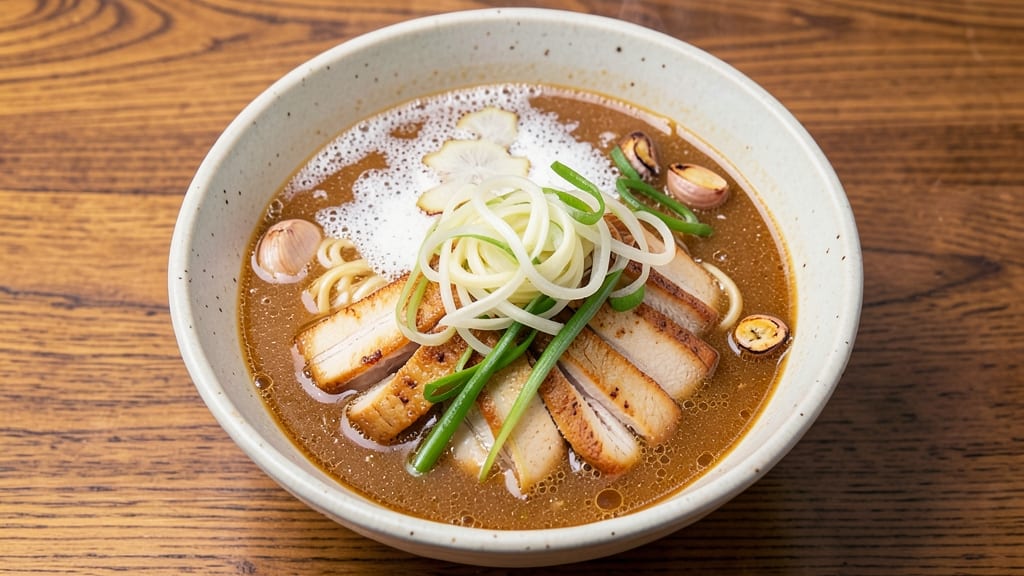
This Asian ramen soup recipe delivers the perfect balance of rich umami broth, silky noodles, and vibrant toppings in every bowl. 💛 The secret lies in a multi-stage broth that builds deep, savory flavor through slow simmering and aromatic spices, transforming simple ingredients into something restaurant-worthy.
Whether you prefer a miso-based depth or a tonkotsu-style richness, this method ensures your ramen will be the centerpiece of any meal.
The foundation is a foolproof broth that starts with charred aromatics—ginger, garlic, and scallions—then develops layers of umami through soy sauce, miso paste, and a touch of sesame oil.
Fresh ramen noodles cook in just 3 minutes, absorbing the broth’s flavors without turning mushy, while toppings like soft-boiled eggs, mushrooms, and green onions add texture and brightness. The key is timing: each component must be prepped ahead so everything comes together seamlessly.
What you’ll end up with is a restaurant-quality bowl—steaming with golden broth, topped with tender proteins, crisp vegetables, and a perfect swirl of silky noodles. The aroma alone will draw everyone to the table, while the first bite delivers a symphony of flavors: salty, savory, slightly sweet, and fresh.
This isn’t just ramen; it’s a comforting, customizable experience that adapts to any craving—spicy, creamy, or herb-forward.
Serve immediately with your choice of toppings—think chashu pork, corn, or nori strips—and watch as the broth transforms into a velvety, flavor-packed masterpiece. The best part? Every bowl tastes like it came from a bustling Tokyo ramen shop. Let’s get cooking.
Ingredients for asian ramen soup
Umami-packed broth, silky noodles, and vibrant toppings—this ramen transforms simple ingredients into restaurant-worthy magic.
| Ingredient | Amount | Notes |
|---|---|---|
| Ramen Noodles 🍜 | 8 oz | Fresh, dried or instant (check package) |
| Chicken Breasts 🍗 | 1 ½ lb | Boneless, skinless, for broth |
| Fresh Ginger 🧄 | 2 tbsp | Grated, peeled, fresh preferred |
| Garlic Cloves 🧄 | 6 cloves | Peeled, smashed slightly |
| Green Onions 🧅 | 2 whole | White and green parts separated |
| White Miso Paste 🧂 | 3 tbsp | High-quality, fermented |
| Soy Sauce 🥄 | ½ cup | Light or dark, to taste |
| Sesame Oil 🫒 | 1 tbsp | Toasted, for aroma |
| Dried Shiitake Mushrooms 🍄 | 4 whole | Rehydrated, stems removed |
| Eggs 🥚 | 4 whole | Large, for soft-boiling |
| Nori Sheets 🍣 | 4 sheets | For garnish, store-bought |
| Chili Oil 🌶️ | 1 tbsp | Optional, for heat |
| Sesame Seeds 🌾 | 1 tbsp | Toasted, for garnish |
| Kosher Salt 🧂 | 1 ½ tsp | Diamond Crystal preferred |
| Black Peppercorns 🌶️ | ½ tsp | Freshly cracked |
The broth is where the magic happens. Chicken breasts should be skinless and boneless—look for plump, firm cuts at Whole Foods or your local butcher shop. Fresh ginger and garlic are non-negotiable here; Penzeys Spices sells pre-peeled ginger if you're short on time. The miso paste? Miso Master brand is my go-to for that deep, fermented punch. For shiitake mushrooms, grab the dried kind—they infuse the broth with earthy depth. Pro tip: Toast the dried mushrooms in a dry pan for 30 seconds before soaking to wake up their flavor.
No fresh ginger? Dried ginger powder at half the amount works in a pinch, but you’ll lose that bright, zesty kick. Swap chicken for pork bones or kombu seaweed if you want a vegetarian tonkotsu-style broth. Soy sauce preferences vary—Japanese light soy for delicate flavor or dark soy for richer color. The sesame oil is purely for aroma; add it at the very end. For toppings, soft-boiled eggs are a must—6-minute eggs strike the perfect balance between runny and firm. Nori sheets? Any brand works, but Marukome stays crisp longer.
Prep ahead to save time: Make the broth first and keep it simmering on low heat while you prep toppings. Ramen noodles cook in just 3 minutes, so time them perfectly with the broth. Store leftover broth in the fridge for up to 5 days—it only gets better as the flavors meld. For the eggs, boil them just before serving; they won’t hold up well if prepped too early. Garnishes like sesame seeds and chili oil can be tossed in a small bowl for easy serving. This dish is all about assembly—keep components separate until the last minute for maximum freshness.
Why You'll Love This Recipe
- One-Pot Magic: I swear by this recipe when I’m too tired to scrub pots. Toss everything—noodles, chicken, veggies—into one pot, and let the broth do the work. The ginger and garlic infuse effortlessly while the chicken simmers to tender perfection.
- Umami Bomb: That first sip? Chef’s kiss. The chicken broth, fresh ginger, and a handful of green onions chopped at the end release this bright, punchy aroma that hits like a flavor upgrade. It’s the kind of taste that makes you pause mid-bite and think, “Wait, is this actually mine?”
- Weeknight Workhorse: Between us, this is my go-to when I’ve got friends over last-minute or the kids are begging for dinner. Double the batch, freeze half, and you’ve got a 5-minute meal later. The noodles hold up, the broth stays rich, and no one’s complaining.
- Budget Win: Chicken breasts stretch further than you’d think when shredded, and ramen noodles? A pantry staple that doesn’t break the bank. Honestly, for the flavor you get—warm, savory, with a little kick—I’d call this the most satisfying dollar-per-bite meal I know.
Step-by-step instructions for Asian ramen soup
Here's how to build a restaurant-quality ramen with layers of umami and silky texture.
🔥 Step 1: Build the Umami-Packed Broth
In a large stockpot, combine the 1.5 lb chicken breasts, 2 tbsp fresh ginger, 6 cloves garlic cloves, 2 whole green onions (white parts only), 4 whole dried shiitake mushrooms, 1.5 tsp kosher salt, and 0.5 tsp black peppercorns. Cover with 8 cups cold water and bring to a boil over high heat. Once boiling, reduce to medium-low heat and simmer uncovered for 45-60 minutes until the chicken is fully cooked and the broth has deepened in color.
Strain the broth through a fine-mesh sieve, pressing gently on the solids to extract maximum flavor. Discard the solids and return the broth to the pot. Here's where the magic happens: whisk in the 3 tbsp white miso paste until fully dissolved. The broth should now have a rich, fermented aroma—this is your umami foundation. Keep it warm over low heat while you prepare the rest.
🍳 Step 2: Cook the Noodles and Prepare Eggs
While the broth simmers, prepare the 8 oz ramen noodles according to package instructions—but here's the trick: cook them 1 minute less than recommended. You want them al dente so they don't turn mushy when combined with the hot broth. Drain and set aside, reserving 1 cup of pasta water for later.
For the eggs, bring a separate pot of water to a gentle simmer. Crack each of the 4 whole eggs into small ramekins or heatproof bowls. Once the water is at a gentle simmer (not boiling), carefully lower the eggs into the water using a slotted spoon. Cook for 6 minutes for jammy yolks—this is perfect for ramen. Transfer eggs to an ice bath to stop cooking while you finish the soup.
🥘 Step 3: Assemble the Soup with Perfect Technique
Return the broth to a rolling simmer. Add 0.5 cup soy sauce and 1 tbsp sesame oil, stirring to combine. Here's the secret to silky texture: add the 1 cup reserved pasta water to the broth first, then ladle the hot broth over the drained ramen noodles in bowls. The starchy water helps the noodles absorb the broth perfectly.
Divide the soft-boiled eggs among the bowls, then top with 2 sheets nori sheets (cut into strips if needed) and 1 tbsp sesame seeds. Drizzle with 1 tbsp chili oil for heat—this is where you can adjust spice to taste. The contrast of textures is everything: silky noodles, jammy eggs, crispy nori, and toasty sesame.
🍽️ Step 4: Garnish and Serve with Confidence
Before serving, add the green onion tops (green parts only) as garnish. These should be chopped into fine slivers for a pop of freshness that cuts through the richness. Taste and adjust seasoning—you might want to add a splash more soy sauce or a pinch of salt to balance the flavors.
Serve immediately with chopsticks and a small bowl of chili oil on the side for those who want extra heat. The broth should coat the back of a spoon with a velvety texture, the noodles al dente with bite, and the eggs perfectly set with runny yolks. This is the kind of ramen that makes people ask for seconds.
Pro Tips For Making Asian Ramen Soup
- Sear Chicken First: Cut the chicken into thin strips, then sear them in a hot pan with oil until golden—about 3-4 minutes per side. This locks in flavor and prevents dryness when you later simmer it in the broth. I used to skip this and ended up with bland, rubbery chicken every time.
- Julienne Ginger Like a Pro: Use a sharp knife and cut the ginger into fine, matchstick-thin strips instead of grating it. This way, it infuses the broth without turning the soup into a ginger mud. (Yes, I’ve learned the hard way—your soup will thank you.)
- Don’t Boil the Noodles Dry: Cook the ramen noodles for 1-2 minutes less than the package says, then finish them in the hot broth. Overcooked noodles turn mushy and ruin the texture—this is the thing that matters most in ramen.
- Toast Garlic Low and Slow: After mincing the garlic, cook it in the broth on low heat for 2-3 minutes until fragrant but not browned. High heat burns it fast, and you’ll taste that bitter regret. (Your taste buds will notice the difference.)
Perfect pairings for this dish
Classic Side Pairings
Start with steamed edamame—tossed with 1 tsp toasted sesame seeds and a pinch of flaky sea salt—to add a light, protein-rich contrast. The delicate sweetness of edamame complements the umami depth of the broth beautifully.
I also love serving pickled vegetables like quick-pickled cucumbers or radishes—just mix ½ cup rice vinegar, 1 tbsp sugar, and 1 tsp salt with thinly sliced veggies for a refreshing tang. 🥕
Protein Upgrades
For a heartier bowl, add thinly sliced chashu pork (braised pork shoulder) or grilled shrimp with garlic butter. If you’re vegetarian, mushroom duxelles—sautéed 8 oz cremini mushrooms with 2 tbsp butter, 1 tbsp soy sauce, and 1 tsp miso paste—adds meaty texture.
I also recommend crispy fried tofu for a lighter option, tossed in 1 tbsp cornstarch and 1 tsp chili flakes before frying. 🍗
Beverage Pairings
A light Japanese lager like Sapporo or Asahi cuts through the richness of the broth without overpowering it. For something bolder, try a dry sake like Dassai 17—its crisp acidity balances the umami perfectly.
Non-alcoholic? Jasmine green tea or yuzu soda (a citrusy Japanese soft drink) adds a refreshing contrast. I always keep a chilled bottle of Sapporo on hand when making ramen—it’s my go-to. 🍶
Garnish Essentials
Don’t skip the crispy garlic chives—sauté ¼ cup chives in 1 tbsp oil until golden for a fragrant finish. Corn kernels (blanched in boiling water for 3 minutes) add a sweet, buttery note, while thinly sliced scallions bring freshness.
For extra luxury, drizzle with truffle oil (½ tsp) or white truffle cream—just mix 2 tbsp heavy cream with ½ tsp truffle paste. 🌿
Spicy or Creamy Twists
Craving heat? Swap the chili oil for gochujang sauce—mix 2 tbsp gochujang, 1 tbsp honey, and 1 tsp rice vinegar. For a creamy version, stir 2 tbsp tahini into the broth before serving, or top with crumbled fried shallots and a drizzle of yogurt.
I also love adding soft-boiled quail eggs for a delicate, rich yolk that pairs perfectly with the broth. 🌶️
Nutrition facts
Frequently asked questions about Asian ramen soup
Can I make this ramen with store-bought chicken broth?
While you can use store-bought broth as a shortcut, homemade broth delivers that restaurant-quality depth. For best results, simmer 1.5 lb chicken breasts with aromatics for 45-60 minutes—this builds layers of umami that canned broth can't match. If you're short on time, use a high-quality chicken or kombu broth and boost flavor with 1 tbsp soy sauce and 1 tsp miso paste.
How do I prevent my ramen noodles from turning mushy?
Cook noodles 1 minute less than package instructions and use fresh ramen noodles if possible. The secret is the starchy pasta water—reserve 1 cup and add it to the hot broth before ladling over noodles. This creates a silky texture instead of soggy strands. Always drain noodles well and assemble bowls immediately after cooking.
What's the best way to store leftover ramen?
Store broth separately in an airtight container for up to 5 days in the fridge—it only gets better as flavors meld. For noodles, rinse them in cold water to stop cooking, then store separately. Reheat broth first, then add noodles and toppings just before serving. Never reheat eggs in the broth to avoid rubbery textures.
Can I make this recipe vegetarian?
Replace chicken with mushroom duxelles (sauté 8 oz cremini mushrooms with 1 tbsp soy sauce and 1 tsp miso paste) or kombu seaweed for umami depth. Use vegetable broth instead of chicken broth and add crispy fried tofu or bean sprouts for protein. The same broth-building technique works—just focus on aromatic vegetables and fermented flavors.
Why does my ramen broth look cloudy?
Cloudiness usually means unrendered fat or undissolved miso. Strain the broth through a fine-mesh sieve and press gently on solids. For a clearer broth, skim fat during simmering. If using miso, whisk it vigorously into warm (not boiling) broth to dissolve completely. A slight cloudiness is normal from aromatics—just ensure it's not from uncooked ingredients.