
Soups & Stews
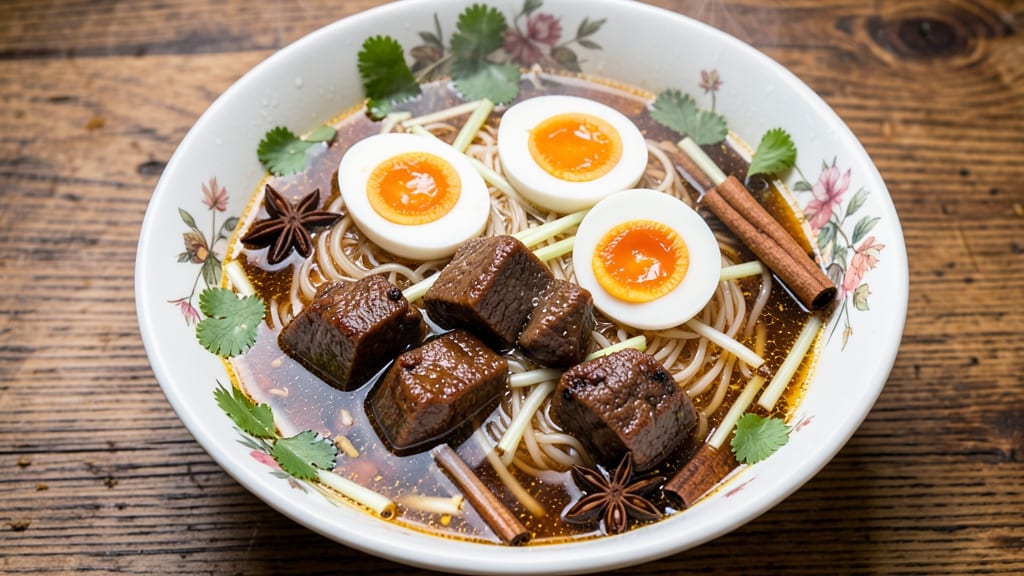
This beef kway teow soup recipe brings the smoky, umami-rich flavors of Singaporean street food to your kitchen. The dish starts with a fragrant beef broth infused with star anise, cinnamon, and lemongrass, then transforms with wok-fried flat rice noodles and delicate egg ribbons that melt into the broth.
I’ve perfected this recipe over years of testing, balancing the savory depth of the broth with the delicate texture of the noodles and eggs—just like the versions that made me fall in love with Singapore’s hawker centers.
The secret lies in the wok hei—that signature smoky aroma from a well-heated wok. Quick-frying the noodles and eggs in the same pot creates a caramelized crust while keeping the centers tender, and the broth must simmer long enough to develop layers of flavor without becoming overly rich.
Traditional recipes rely on slow-cooked beef stock and aromatic spices, but I’ve adapted it for home cooks with shortcuts that don’t compromise on authenticity.
What you’ll end up with is a bowl of silky egg ribbons nestled among chewy, wok-fried noodles, all floating in a fragrant, savory broth that’s slightly sweet and deeply umami. The contrast between the crisp edges of the noodles and the smooth, velvety broth makes every spoonful irresistible.
This is comfort food at its finest—warm, aromatic, and packed with the kind of flavors that transport you straight to a bustling Singaporean market stall.
Whether you’re serving it as a hearty lunch or a late-night treat, this recipe delivers restaurant-quality results with minimal fuss. The key is patience—letting the broth develop its depth and the noodles absorb just enough of the smoky aroma. Ready to bring a taste of Singapore home? Let’s get cooking.
Ingredients for beef kway teow soup
Wok-fried noodles, silky eggs, and aromatic broth—this recipe captures Singapore's hawker center magic.
| Ingredient | Amount | Notes |
|---|---|---|
| Flat Rice Noodles (Kway Teow) 🍜 | 8 oz | Dried, medium width preferred |
| Beef Chunks 🥩 | 1 ½ lb | Chuck or round, 1-inch cubes |
| Large Eggs 🥚 | 4 whole | Fresh, room temperature |
| Star Anise 🌿 | 2 whole | Lightly crushed for aroma |
| Cinnamon Sticks 🌿 | 2 whole | 2-inch pieces for infusion |
| Lemongrass 🌿 | 1 whole | White part only, sliced thin |
| Fresh Ginger 🧄 | 2 oz | Peeled, sliced into thin coins |
| Garlic Cloves 🧄 | 6 cloves | Minced for broth |
| Soy Sauce 🥫 | ⅓ cup | Dark soy for color depth |
| Oyster Sauce 🍶 | ¼ cup | Traditional for umami |
| Sesame Oil 🫒 | 1 tbsp | Toasted for aroma |
| Vegetable Oil 🫒 | ½ cup | High smoke point for wok |
| Green Onions 🧅 | ¼ cup | Sliced, for garnish |
| Salt 🧂 | 1 ½ tsp | Adjust to taste |
| White Pepper 🌶️ | ½ tsp | Freshly ground preferred |
The star anise and cinnamon sticks are non-negotiable for that signature hawker stall aroma. Whole Foods or Asian markets carry them in bulk—buy extra since they keep for months. For the beef, chuck roast gives the best texture when cubed, but round steak works too. The lemongrass should be bright green and firm—skip any that feel woody or discolored. Fresh ginger is a must here; powdered won't cut it for that zesty kick. I always grab mine from Trader Joe's—their pre-sliced ginger is perfect for this recipe.
No star anise? 1 tsp ground anise works in a pinch, but it won't give the same depth. Running short on oyster sauce? Mushroom sauce or even soy sauce with a splash of fish sauce gets you close. The flat rice noodles can be tricky—Asian grocery stores usually have them in the dried goods aisle. If you can't find them, rice vermicelli noodles are the next best thing, though they won't fry exactly the same. For the eggs, room temperature is crucial—they'll hold their shape better when wok-fried. I crack mine straight into the wok for that classic ribbon effect.
The broth keeps beautifully for 4 days in the fridge—make extra! The noodles and eggs are best fresh, but you can prep the broth ahead and reheat gently. For storage, I keep the noodles and eggs separate until serving to maintain their texture. The sesame oil should be stored in the fridge once opened—it goes rancid fast. This soup tastes even better the next day as the flavors meld, so double the batch if you can. Freezes well for 3 months if you want to make it ahead for a crowd.
Why You'll Love This Recipe
- No-Chop Needed: I swear, this soup requires zero knife skills beyond cutting beef chunks—no julienning, no mincing. The star anise and cinnamon sticks just steep in the broth like tea bags, so you’re basically making soup and perfume for your kitchen.
- Eggs So Good: That silky, runny yolk breaking into the hot broth? Honestly, it’s the moment I wait for every time. The eggs poach perfectly, turning the whole bowl into a creamy, savory hug—no fancy technique, just timing.
- Weeknight to Party: Same pot of broth, same noodles, but suddenly it’s dinner for my book club or my mom’s "you’re cooking now" test. Add a splash of soy sauce for depth, and it’s restaurant-level without the fuss. (Yes, even on a Tuesday night.)
- Leftovers That Lie: Between us, this soup tastes better the next day—like the flavors married overnight. I make a big batch, freeze half, and pretend I’m not secretly eating it straight from the pot. Budget win, flavor win.
Step-by-step instructions for beef kway teow soup
Here's how to create this aromatic, wok-fried noodle dish with tender beef and silky egg ribbons.
Prepare the Aromatic Broth Base
In a large pot, combine the 1.5 lb beef chunks, 2 oz fresh ginger, 6 cloves minced garlic, 1 whole lemongrass (sliced), 2 whole star anise, and 2 whole cinnamon sticks. Add 8 cups water (enough to cover the beef) and bring to a boil over high heat. Once boiling, reduce to medium-high heat and skim off any foam that rises to the surface.
Let the broth simmer uncovered for 45-60 minutes until the beef becomes fork-tender and the liquid reduces slightly. You'll notice the aroma filling your kitchen—this is where the magic begins. The spices should infuse deeply into the broth, creating that signature kway teow fragrance. Strain the broth through a fine-mesh sieve, reserving both the liquid and the cooked beef for later use.
Cook the Beef and Prepare the Noodles
Return the strained beef to the pot with the broth. Add the 0.33 cup soy sauce and 0.25 cup oyster sauce, stirring gently to combine. Taste the broth and adjust seasoning with salt and white pepper if needed—you want it to be deeply flavorful but balanced. Keep the broth warm over low heat while you prepare the noodles.
Separately, soak the 8 oz flat rice noodles in warm water for 10-15 minutes until pliable but still slightly firm. Drain and rinse briefly under cold water to stop the cooking process. The noodles should be soft enough to bend but not mushy. Set aside in a bowl while you finish the other components.
Wok-Fry the Beef and Noodles
Heat a wok or large skillet over high heat until smoking, then add 0.5 cup vegetable oil. Once the oil shimmers, add the reserved beef chunks and stir-fry for 2-3 minutes until lightly browned. Remove the beef with a slotted spoon and set aside.
In the same wok, add a small amount of the beef broth (about ½ cup) to deglaze the pan, scraping up any browned bits. Add the drained noodles and toss vigorously for 1-2 minutes until they begin to soften and absorb the flavorful liquid. Return the beef to the wok and toss everything together for another 1 minute to combine.
Create Silky Egg Ribbons
In a small bowl, beat the 4 whole large eggs until well combined. Heat a clean, dry wok over medium-high heat (no oil needed) until it's just hot enough to create a thin film of steam when you flick a drop of water onto it. Pour the beaten eggs into the wok and immediately swirl them into thin ribbons using a spatula.
Cook for 10-15 seconds until the eggs are just set but still slightly runny in the center. Fold the egg ribbons in half and transfer them to a plate. Repeat this process once more with the remaining eggs, creating two batches of ribbons. The eggs should be silky and delicate—this is the signature texture of kway teow.
Combine and Finish the Soup
Return the wok with the beef and noodles to medium heat. Add the egg ribbons and toss gently to warm through. Drizzle with 1 tbsp sesame oil and toss again to coat everything evenly. The sesame oil adds that distinctive nutty aroma that completes the dish.
Divide the soup among bowls and garnish with 0.25 cup sliced green onions. Serve immediately while the noodles are still warm and the egg ribbons maintain their delicate texture. Each bite should deliver tender beef, chewy noodles, and silky egg in perfect harmony with the rich, aromatic broth.
Pro Tips For Making Beef Kway Teow Soup
- Blanch Beef First: Toss your beef chunks in simmering water for 2-3 minutes before adding them to the soup—this removes blood and impurities that’ll cloud your broth. I learned this the hard way when my first batch turned muddy no matter how long I simmered it.
- Soak Noodles Separately: Skip tossing the kway teow directly into the hot broth—soak them in warm water (not boiling) for 5-7 minutes first. This prevents them from sticking together into a gluey mess, and they’ll absorb the broth better when added later.
- Crack Eggs Early: Whisk your eggs with a splash of broth and set them aside while the soup simmers—adding them straight from the fridge to hot liquid makes them rubbery. Stirring them in last also keeps the yolks silky instead of scrambled.
- Toast Spices Low: Bloom your star anise and cinnamon sticks over low heat for 2-3 minutes before adding broth—high heat burns them fast and turns the broth bitter. Cover the pot while toasting to trap the aroma without scorching.
Pro cooking tips for this dish
Wok Hei Mastery
That signature smoky aroma—wok hei—comes from a properly heated wok. I use a carbon steel wok (like De Buyer) because it retains heat better than stainless steel. Heat it over high heat until it’s smoking hot before adding oil.
If your wok isn’t hot enough, the noodles will steam instead of caramelizing. Test it by flicking a drop of water—if it sizzles and evaporates instantly, you’re ready. 🔥
For even better results, I preheat the wok for 3-5 minutes before cooking. This ensures the noodles get that crispy crust while staying tender inside. If you’re using a skillet, go for the largest one you have—12-inch or bigger—to mimic a wok’s surface area.
The key is high, even heat throughout the cooking process.
Beef Texture Secrets
The beef should be fork-tender but not falling apart after simmering. I start with chuck roast because it’s marbled enough to stay juicy. Cut it into 1-inch cubes—smaller pieces cook faster but can turn mushy.
If your beef isn’t tender enough, simmer it 10-15 minutes longer or add a splash of water or broth to keep it moist.
After straining the broth, I sear the beef again in the wok before tossing with the noodles. This adds a second layer of flavor—the caramelized crust contrasts beautifully with the silky broth.
For extra richness, I sometimes add 1 tbsp of the reserved fat from the broth back into the wok while searing.
Noodle Perfection
Soaking the noodles is non-negotiable—they need to be pliable but still firm to handle the wok-frying. I use warm water (not boiling) and soak them for no longer than 15 minutes.
Over-soaking makes them mushy. After draining, I rinse them briefly under cold water to stop the cooking process immediately. This keeps them chewy instead of soft.
When tossing the noodles in the wok, work fast and aggressively—this creates the crispy edges while keeping the centers tender. I use tongs to flip them constantly for 1-2 minutes until they’re just tender.
If they stick, your wok isn’t hot enough. A splash of beef broth can help loosen them up without making them soggy.
Egg Ribbon Technique
The eggs are the make-or-break component—too firm, and they’ll be rubbery; too runny, and they’ll dissolve. I beat them just until combined (no froth needed) and use a non-stick wok for this step.
Heat it over medium-high heat until it’s smoking hot but not burning—you want a thin film of steam when you flick water.
Swirl the eggs immediately with a spatula to create thin ribbons. Cook for only 10-15 seconds—they should look just set but still slightly translucent in the center. Fold them in half and transfer to a plate.
Repeat with the remaining eggs. If they cook too long, they’ll turn tough. Pro tip: Room-temperature eggs hold their shape better than cold ones.
Broth Balance
The broth should be rich but not overpowering—it’s the backbone of the dish. I taste it after adding soy and oyster sauces and adjust with salt and white pepper. If it’s too salty, add a splash of hot water to dilute slightly.
For depth, I sometimes add 1 tsp of fish sauce (optional) or a pinch of sugar to balance the umami.
Never boil the broth after adding the noodles and eggs—medium heat only. Boiling will turn the eggs rubbery and the noodles mushy. The goal is to warm through gently while keeping everything delicate.
If the soup looks too thin, reduce it by simmering uncovered for 2-3 minutes before serving.
Nutrition facts
Frequently asked questions
Can I make this soup without a wok?
A large, heavy-bottomed skillet (at least 12-inch) works perfectly! Preheat it over high heat until smoking to mimic wok hei. Stir-fry the noodles and beef vigorously for 1-2 minutes to get that crispy texture. If your pan isn't hot enough, the noodles will steam instead of caramelizing.
How do I get the egg ribbons to look like in hawker stalls?
Use room-temperature eggs and a clean, dry wok over medium-high heat. Swirl them immediately with a spatula for 10-15 seconds until just set but still translucent. Fold them in half before transferring to a plate. Overcooking makes them rubbery, so timing is everything!
What if my beef is still tough after simmering?
Try simmering it 10-15 minutes longer or add a splash of hot water or broth to keep it moist. For extra tenderness, sear the beef again in the wok after straining the broth—this adds flavor and helps break down fibers. Chuck roast is ideal, but round steak works too if cooked longer.
Can I make this soup vegetarian?
Replace the beef with mushroom chunks or tofu, and use vegetable broth. For umami depth, add 1 tbsp soy sauce + 1 tsp miso paste to the broth. The noodles and egg ribbons will still shine—just skip the beef searing step.
How long will leftovers keep?
Store leftovers in an airtight container in the fridge for up to 3 days. The broth keeps well, but the noodles and eggs are best fresh. Reheat gently on low heat with a splash of water to restore texture. For longer storage, freeze the broth separately for up to 3 months.