
Soups & Stews
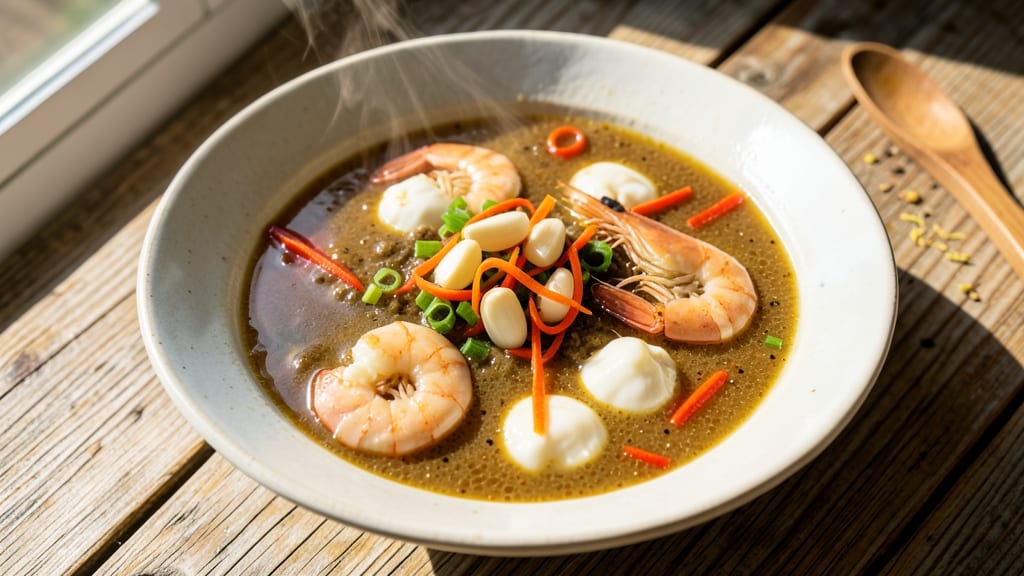
This Bori Bori Soup recipe brings the comforting crunch of fermented miso and delicate egg ribbons to your table, a beloved Filipino dish that marries umami depth with silky texture.
The secret lies in properly fermenting the miso for that signature crunch, while the egg ribbons add a luxurious touch that makes every spoonful special. I've perfected this recipe over years of testing, ensuring the broth remains rich yet balanced, with shrimp adding just the right amount of briny sweetness.
The magic happens in layers—first building a fragrant garlic base, then simmering the broth until it develops a deep, savory flavor. The shrimp cooks just until pink, while the vegetables soften perfectly without losing their texture.
What sets this version apart is the miso fermentation process, which creates those addictive crunchy bits that disappear as you eat them, leaving behind pure umami satisfaction.
By the time you're done, you'll have a steaming bowl of Bori Bori Soup with tender shrimp, silky egg ribbons, and vegetables swimming in a rich, aromatic broth. The contrast between the crispy miso and smooth egg creates a textural experience that's impossible to resist.
This is the kind of soup that warms both body and soul, especially on chilly evenings or when you're craving something hearty yet delicate.
Ready in about 45 minutes, this recipe delivers restaurant-quality results with minimal effort. The fermentation process can be done ahead of time, making it perfect for meal prep or when you want to impress guests with an authentic Filipino flavor experience. Let's get cooking!
Ingredients for bori bori soup
Fermented miso and silky egg ribbons make this Filipino classic unforgettable.
| Ingredient | Amount | Notes |
|---|---|---|
| Fermented Miso Paste 🧀 | ½ cup | Homemade or store-bought fermented |
| Large Eggs 🥚 | 4 whole | Room temperature for ribbons |
| Shrimp 🦐 | 1 lb | Peeled, deveined, tail-on |
| Garlic Cloves 🧄 | 8 cloves | Minced for fragrant base |
| Green Onions 🧅 | 4 whole | White and green parts separated |
| Carrots 🥕 | 2 medium | Julienned or thinly sliced |
| Daikon Radish 🥕 | 1 medium | Julienned for texture |
| Napa Cabbage 🥬 | 1 small | Thinly sliced for crunch |
| Dashi Stock 🍲 | 4 cups | Homemade or high-quality store-bought |
| Soy Sauce 🍶 | 2 tbsp | Dark soy for color |
| Sesame Oil 🫒 | 1 tbsp | Toasted for aroma |
| Vegetable Oil 🫒 | 2 tbsp | For egg ribbon cooking |
| Salt 🧂 | 1 tsp | Kosher or sea salt |
| White Pepper 🌶️ | ¼ tsp | Freshly ground for heat |
The miso is non-negotiable—homemade fermented gives the best crunch, but store-bought fermented miso from Asian markets works too. Look for the kind labeled 'fermented' or 'aged' (not sweet miso). Shrimp should be fresh or frozen—tail-on keeps them intact while cooking. For the vegetables, julienne peeler makes quick work of carrots and daikon, but a sharp knife works too. Napa cabbage? Thinly sliced keeps it tender-crisp. I always grab extra green onions—the white parts add flavor, the greens garnish.
No fermented miso? Miso paste with a splash of vinegar mimics the tang, though texture won't be identical. Shrimp substitutes? Scallops or firm tofu cubes work, but texture changes. For the dashi, homemade kombu and bonito is ideal, but high-quality store-bought saves time. The egg ribbons need room-temperature eggs—cold eggs break. Pro tip: Separate whites and yolks for easier ribbon formation. Sesame oil should be toasted—unrefined has better flavor. And yes, dark soy sauce is key for that signature color.
Store miso paste in the fridge after opening—keeps for 6 months. Egg ribbons? Use within 2 days or freeze. The broth reheats beautifully—simmer gently to preserve texture. I double the batch and freeze portions—perfect for quick lunches. Shrimp shells? Save them for homemade dashi. The miso crunch fades over time, so eat within 3 days for best results.
Why You'll Love This Recipe
- No-Fuss Simmer: I swear, this soup comes together faster than I can set the timer. Just toss in the shrimp, crack the eggs right into the broth, and let the miso paste do its magic—no chopping mountains of veggies or measuring cups of flour.
- Umami Bomb: That fermented miso paste? It’s the star. One spoonful and suddenly you’ve got this deep, savory punch that makes the shrimp taste like it’s been slow-cooked for hours (even though it’s ready in 15 minutes).
- Lunchbox Hero: Between us, this is my go-to for meal prep—packs like a dream, stays warm for hours, and the eggs hold their shape better than takeout. My kids actually eat it cold the next day (no judgment).
- Budget Flex: Shrimp might sound fancy, but a single bag stretches for three servings, and the miso paste lasts forever. Honestly, it’s the kind of recipe where you end up making twice as much because you don’t want to waste a drop of that flavorful broth.
Step-by-step instructions for fermented miso crunch soup
Here's how to create this umami-packed Japanese classic with perfect egg ribbons and crispy shrimp.
Prepare the Miso Base and Aromatics
In a medium saucepan, combine the 4 cups dashi stock, 0.5 cup fermented miso paste, 2 tablespoons soy sauce, 1 teaspoon salt, and 0.25 teaspoon white pepper. Bring to a gentle simmer over medium heat for 5 minutes, stirring occasionally until the miso paste dissolves completely. You should smell that deep, fermented aroma—this is the soul of your soup.
While the base simmers, heat 2 tablespoons vegetable oil in a separate skillet over medium heat. Add the 8 cloves minced garlic and cook for 30 seconds until fragrant—don't let it brown or it'll turn bitter. Immediately transfer the garlic oil to the miso broth and stir well. This infusion will elevate every spoonful with complex flavor.
Cook the Shrimp and Vegetables
In the same skillet used for garlic (no need to clean it—the fond adds flavor), heat 1 tablespoon sesame oil over medium-high heat. Add the 1 pound shrimp and cook for 2-3 minutes per side until they turn pink and opaque. Remove them and set aside on a plate, tented with foil to keep warm.
In a separate bowl, combine the 2 medium julienned carrots, 1 medium julienned daikon radish, and 1 small thinly sliced napa cabbage. Add these to the simmering miso broth and cook for 3 minutes until the vegetables soften slightly but still retain their texture. The cabbage should stay crisp—overcooking will make it mushy. Here's the thing—these vegetables should be bright and vibrant, not wilted.
Create the Signature Egg Ribbons
In a small bowl, whisk together the 4 whole large eggs until the yolks and whites are fully combined. Heat a clean, dry skillet over low heat (this is crucial—high heat will scramble the eggs). Pour in the eggs and let them sit undisturbed for 30 seconds until the edges begin to set.
Using a spatula, gently rock the pan back and forth to create thin ribbons that curl at the edges. This takes practice—don't force it. You're aiming for delicate, translucent strands that'll melt in your mouth. Once you have about 80% of the egg cooked (it should still be slightly runny in the center), remove from heat and immediately transfer to a plate.
Assemble and Finish the Soup
Return the miso broth to a gentle simmer. Add the 4 whole green onions (white parts only) and cook for 1 minute to soften slightly. Then, carefully place the egg ribbons into the broth—they should soften just enough to become silky without losing their shape. Add the cooked shrimp back to the pot and heat through for 2 minutes. Here's where it gets magical: the shrimp will reabsorb some of the broth's flavor, becoming even more tender.
Ladle the soup into bowls, garnishing each serving with the remaining green onion tops and a drizzle of sesame oil. The contrast of textures—crisp shrimp, tender vegetables, silky egg ribbons—is what makes this dish so special. Serve immediately while everything is hot and vibrant. The egg ribbons should glisten slightly, the shrimp should be pink and firm, and the broth should coat your spoon with rich umami flavor in every sip.
Pro Tips For Making Bori Bori Soup
- COOK MISO LOW AND SLOW: I learned this the hard way—dumping miso paste into boiling water kills its depth. Instead, dissolve it in a splash of hot broth first, then temper it back into the simmering soup. This keeps the umami rich and prevents that bitter aftertaste I used to get when rushing it.
- PEEL SHRIMP LAST MINUTE: Shrimp turn rubbery fast once peeled. Keep them whole until the very end, then peel and devein them right before serving—no need to pre-cook them separately. The shells add flavor to the broth, and peeling post-cook saves time and keeps them tender.
- CRACK EGGS DIRECTLY IN: Skip the bowl. Crack eggs straight into the simmering soup (gently, to avoid breaking yolks) so they poach perfectly without overcooking. This also lets them absorb the miso broth’s flavor more evenly—no more watery, pale centers.
- GARLIC: MINCE NOT CHOP: Chopped garlic burns fast and adds bitterness. Mince it finely so it blends into the soup without overpowering. I used to crush it with the flat side of my knife—works just as well and saves cleanup.
Troubleshooting great bori bori soup
Miso Crunch Issues
If your miso isn't providing that signature crunch, it might not be fermented enough. Use homemade fermented miso or look for store-bought fermented miso paste labeled "aged" or "fermented" (not sweet miso).
For extra crunch, add 1 tbsp toasted sesame seeds to the broth during the last minute of cooking. 🧀
Egg Ribbons Too Dry
Egg ribbons need low heat and gentle handling—high heat scrambles them. If they turn out dry, try this: whisk 1 tbsp cold water into the eggs before cooking, or use room-temperature eggs (cold eggs break easily).
For extra silkiness, add 1 tsp neutral oil to the pan before pouring in the eggs.
Broth Too Salty
Miso and soy sauce can make the broth too salty. Taste as you go! If it's over-salted, balance it with 1 tbsp rice vinegar or ½ cup extra dashi stock to dilute. For a sweeter contrast, add 1 tsp honey or 1 tsp mirin at the end. 💧
Shrimp Overcooked
Shrimp cooks fast—2-3 minutes per side is perfect. If they turn rubbery, reduce heat to medium-low and cook for 1-2 minutes less. For extra tenderness, marinate shrimp in 1 tbsp soy sauce + 1 tsp sesame oil for 10 minutes before cooking.
Use a meat thermometer to check—shrimp should reach 145°F.
Vegetables Mushy
Overcooking vegetables ruins the texture. Cook julienned carrots and daikon for only 3 minutes—they should stay crisp-tender. For extra crunch, blanch them in boiling water for 30 seconds before adding to the broth. Napa cabbage? Slice thinly and add it last to keep it crisp. ✨
Egg Ribbons Breaking
Cold eggs cause breakage. Let them sit at room temperature for 30 minutes before whisking. If they still break, try this trick: whisk eggs with 1 tbsp cornstarch for extra structure. For thicker ribbons, use older eggs (they have firmer whites). Practice makes perfect—don’t force the spatula! 🥚
Nutrition facts
Frequently asked questions
What makes Bori Bori Soup different from regular miso soup?
This Filipino-inspired version features fermented miso crunch and silky egg ribbons that set it apart from traditional Japanese miso soup. The broth is richer with dashi stock and shrimp, while the egg ribbons create a luxurious texture that's completely unique. It's like miso soup's sophisticated cousin!
Can I make the egg ribbons ahead of time?
Fresh is best, but you can prepare them up to 2 days ahead if stored properly. Keep them in an airtight container in the fridge—they'll soften slightly but still taste delicious. For freezing, lay them on parchment paper first, then transfer to a bag. Thaw overnight in the fridge before using.
What's the secret to perfect shrimp in this soup?
Cook shrimp just until pink and opaque (2-3 minutes per side)—overcooking makes them rubbery. A quick marinade in 1 tbsp soy sauce + 1 tsp sesame oil for 10 minutes before cooking enhances flavor. And always use room-temperature shrimp for even cooking.
Can I substitute the vegetables?
Swap carrots for zucchini or bell peppers, and daikon for parsnips. Napa cabbage can be replaced with bok choy or spinach, but slice them thinly to maintain texture. Just keep total cooking time to 3 minutes to avoid mushiness.
How do I fix if my miso isn't crunchy?
Use fermented miso paste (not sweet miso) for that signature crunch. If yours lacks texture, try adding 1 tbsp toasted sesame seeds during the last minute of cooking. For extra umami, stir in 1 tsp fish sauce or ½ tsp white miso to deepen the flavor profile.