
Soups & Stews
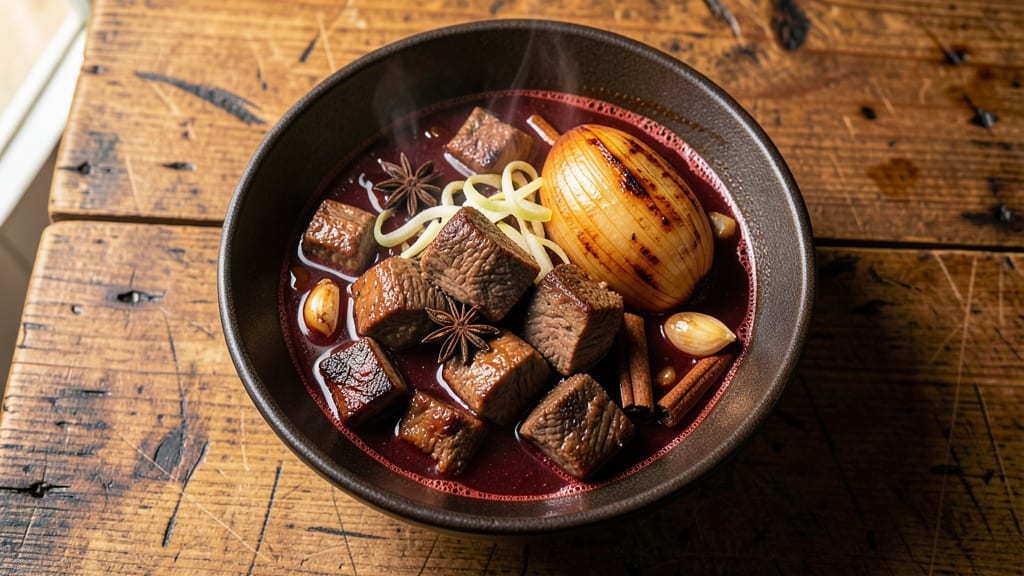
This beef hot pot soup recipe delivers restaurant-quality depth with tender beef, silky egg ribbons, and a spiced broth that simmers for hours. The secret lies in slow-cooked beef that practically melts in your mouth, paired with a fragrant broth built from star anise, cinnamon, and ginger.
I've perfected this version to balance traditional techniques with home kitchen accessibility—no special equipment required. What sets this apart is the two-stage cooking process: first simmering the beef and aromatics to extract maximum flavor, then finishing with beaten eggs that transform into delicate ribbons.
The result is a bowl that's both comforting and elegant—rich enough for a winter dinner but simple enough for a weeknight. Every spoonful delivers layers of savory, spicy, and umami in perfect harmony.
By the time you're done, you'll have a pot of soup that smells like home and tastes like a Michelin-starred experience. The broth is deep and aromatic, the beef fork-tender, and the egg ribbons add a luxurious texture that makes this dish feel special.
This is the kind of meal that disappears quickly and leaves everyone asking for seconds. Whether you prefer a clear broth or richer stew-style, this recipe adapts beautifully. Serve with steamed buns or fresh herbs for garnish. Let's make soup that feels like a celebration.
Ingredients for beef hot pot soup
Sixteen ingredients transform into a restaurant-worthy beef hot pot with tender meat and silky egg ribbons.
| Ingredient | Amount | Notes |
|---|---|---|
| Beef Chuck Roast 🥩 | 2 lb | Cut into 1-inch cubes |
| Fresh Ginger 🧄 | ½ inch | Sliced into thin coins |
| Star Anise Pods 🌿 | 2 whole | Lightly crushed |
| Cinnamon Sticks 🌿 | 2 whole | 2-inch lengths |
| Large Onion 🧅 | 1 whole | Quartered, skin on |
| Garlic Cloves 🧄 | 6 cloves | Smashed, not minced |
| Dried Shiitake Mushrooms 🍄 | 4 whole | Rehydrated in hot water |
| Large Eggs 🥚 | 6 whole | Room temperature |
| Vegetable Oil 🫒 | ½ cup | High smoke point |
| Soy Sauce 🍶 | ½ cup | Dark soy preferred |
| Shaoxing Wine 🍷 | ¼ cup | Or dry sherry |
| Chicken or Beef Broth 💧 | 6 cups | Homemade or high-quality |
| Salt 🧂 | 1 ½ tsp | Kosher preferred |
| White Peppercorns 🌶️ | ½ tsp | Freshly cracked |
| Green Onions 🧅 | 4 whole | Sliced for garnish |
The beef is non-negotiable—chuck roast delivers that melt-in-your-mouth texture. Costco or Whole Foods usually have it pre-cut into cubes, which saves time. If you're buying a whole roast, ask the butcher to cube it for you. Look for good marbling—it's what makes the meat tender during slow cooking. Fresh ginger is key here: Asian markets often have the best quality, but the regular grocery store stuff works fine if it's firm and smells vibrant. Star anise and cinnamon should be whole pods—no powdered substitutes. If you can't find shiitake mushrooms, cremini or white mushrooms work in a pinch, but they won't have that deep umami flavor.
No Shaoxing wine? Dry sherry or even a good red wine works—just make sure it's dry, not sweet. Fresh shiitake mushrooms? Soak them in hot water for 20 minutes to rehydrate, then use the soaking liquid as part of your broth. The eggs need to be room temperature for those perfect ribbons—take them out of the fridge 30 minutes before cooking. For the soy sauce, dark soy adds color and depth, but light soy works if that's what you've got. If you're making a big batch, double the broth—it freezes beautifully. The green onions are just for garnish, but if you're feeling fancy, add a few fresh basil leaves too.
This soup tastes even better the next day—4-5 days in the fridge, 3 months frozen. I always make a double batch because it disappears so fast. Store the broth separately if you want to reheat it without the beef getting mushy. The egg ribbons are best served immediately, but you can reheat the broth and add fresh eggs at the end. For leftovers, portion into containers with a little broth and beef—it reheats beautifully. The aromatics (star anise, cinnamon) can be removed after cooking, but I leave them in for extra flavor if I'm not serving it immediately.
Why You'll Love This Recipe
- One-Pot Magic: I swear by this—just toss the beef, onion, and spices into a pot, cover it, and walk away. The star anise and cinnamon do all the work while you sip wine (or tea, no judgment).
- Deep, Warm Spice Bomb: That ginger and star anise combo? It’s like a hug in a bowl. The beef gets tender enough to melt, and the broth turns into this rich, aromatic elixir—simple but ridiculously satisfying.
- Leftovers That Don’t Suck: Honestly, this soup tastes even better the next day. I make a double batch on Sundays, and by Wednesday, it’s still the star of my lazy nights—just reheat and serve with rice or crusty bread.
- Budget Beef Stretch: A chuck roast is cheap, and this recipe turns it into a hearty meal for the whole family. Between us, it’s my go-to for feeding crowds without breaking the bank—plus, the spices make it feel fancy.
Step-by-step instructions for beef hot pot soup
This rich, aromatic broth delivers melt-in-your-mouth beef and delicate egg ribbons in every bowl.
Prepare the Spiced Broth Base
Heat the 0.5 cup vegetable oil in a large stockpot over medium heat. Add the 2 lb beef chuck roast cut into 1-inch cubes and sear until deeply browned on all sides—this builds incredible flavor. Remove the beef and set aside.
In the same pot, add the 1 whole large onion (quartered, skin on), 6 smashed garlic cloves, 0.5 inch sliced fresh ginger, 2 lightly crushed star anise pods, and 2 cinnamon sticks. Sauté for 5 minutes until fragrant and the onion softens slightly. Pour in the 0.25 cup Shaoxing wine and let it bubble for 1 minute to cook off the alcohol.
Build the Flavorful Foundation
Add the 6 cups chicken or beef broth, 0.5 cup soy sauce, 1.5 tsp salt, and 0.5 tsp freshly cracked white peppercorns. Bring to a gentle boil, then reduce heat to low and skim off any foam that rises to the surface. Return the seared beef to the pot and add the 4 rehydrated dried shiitake mushrooms (strain and reserve the soaking liquid). Simmer uncovered for 1.5 hours until the beef is fork-tender.
Here's the thing—don't rush this step. The long simmering breaks down collagen in the beef, creating that signature silky texture. The broth should reduce slightly but remain generous enough to coat the beef. If it gets too thick, add a splash of water.
Prepare the Egg Ribbons
While the broth simmers, prepare the eggs. Crack the 6 whole large eggs into a bowl and whisk vigorously until the yolks and whites are fully combined. This ensures smooth, silky ribbons when cooked. Keep the eggs at room temperature—they'll cook more evenly.
Real talk: the egg technique is what makes hot pot special. You want to add them to the broth just before serving so they cook quickly and maintain their delicate texture. If you add them too early, they'll turn into scrambled eggs.
Finish and Serve
Remove the beef from the broth and strain the liquid through a fine-mesh sieve to remove any solids. Return the broth to the pot and maintain it at a gentle simmer. Just before serving, add the whisked eggs to the hot broth in small batches—you'll see beautiful ribbons form instantly.
Ladle the hot broth into bowls, placing 2-3 beef cubes in each. Garnish with sliced green onions and serve immediately with steamed rice or fresh vegetables on the side. The contrast of tender beef against silky egg ribbons in a fragrant broth is what makes this dish truly special.
Pro Tips For Making Beef Hot Pot Soup
- BLANCH THE ONION FIRST: Toss the whole onion into boiling water for 30 seconds before adding it to the pot—this softens it faster and keeps it from turning to mush later. I learned this the hard way when my soup turned into onion sludge halfway through cooking.
- CRUSH THE STAR ANISE: Lightly tap the star anise pods with a knife before adding them—this releases their oils and deepens the aroma without turning the broth bitter. Sounds weird, but it works: the flavor jumps from subtle to present.
- LOW AND SLOW AFTER BOIL: Once the broth reaches a rolling boil, turn the heat down to the lowest setting you can stand and let it simmer uncovered. I used to keep it at a medium simmer, and the beef always ended up dry. Patience here makes all the difference for tender meat.
- SALT THE WATER LATE: Wait until the beef is nearly done to add salt—this keeps the meat from toughening up in the initial high heat. I know, I know, but trust the process: the broth will still be flavorful, and your beef won’t fight back with a chewy texture.
Dietary considerations for beef hot pot soup
Gluten-Free Adaptations
This recipe is naturally gluten-free, but always double-check your ingredients. The key is using gluten-free soy sauce—brands like Kikkoman Gluten-Free Tamari or San-J Tamari work perfectly. Replace the regular soy sauce with ½ cup of these alternatives.
For extra depth, add 1 tsp gluten-free oyster sauce (check labels—most are gluten-free) or 1 tbsp coconut aminos for umami without gluten. 🌱
Low-Sodium Options
If you're watching sodium, reduce the soy sauce to ¼ cup and add ½ cup low-sodium chicken broth instead of regular. Boost flavor with 1 tbsp fish sauce (like Red Boat) or 1 tsp gluten-free Worcestershire sauce (such as Annie's).
Fresh herbs like cilantro or basil add brightness without salt. Taste as you go—you might need an extra pinch of white pepper to compensate.
Dairy-Free Considerations
This recipe is already dairy-free, but if you're adding toppings like cheese, opt for nutritional yeast (for a cheesy flavor) or dairy-free butter when serving with buns. The egg ribbons are naturally dairy-free, but if you're serving with side dishes, check for hidden dairy in sauces or garnishes.
A sprinkle of toasted sesame seeds adds texture without dairy. 🥚
Spice-Level Adjustments
For a milder broth, skip the white peppercorns or reduce them to ¼ tsp. If you love heat, add ½ tsp chili flakes or 1 tsp gochujang (Korean chili paste) when simmering.
For a smoky kick, swap ½ cup of the broth with smoked paprika-infused broth (simmer ½ tsp smoked paprika in ½ cup broth separately). Always taste the broth before adding eggs—they cook quickly and can't be adjusted later.
Vegetarian Substitutions
Replace the beef with mushroom medley (cremini, shiitake, and oyster mushrooms) or tofu (extra-firm, pressed and cubed). For umami depth, add 1 tbsp mushroom powder or 1 tsp vegan fish sauce (like Veggie Fish Sauce).
The egg ribbons remain a highlight, but you can also add silken tofu ribbons for extra protein. Serve with bok choy or napa cabbage for a hearty vegetarian bowl. 🌱
Nutrition facts
Frequently asked questions
Can I make this beef hot pot soup in a slow cooker? Transfer all ingredients (except eggs) to your slow cooker after searing the beef. Cook on low for 6-8 hours or high for 3-4 hours until the beef is fork-tender. The slow cooker method actually enhances the broth's depth. Just
How do I get the egg ribbons to look perfect every time?
Use room temperature eggs and whisk them vigorously until completely smooth. Add them to the broth just before serving—small batches at a time—while maintaining a gentle simmer. The key is patience: let them cook for 10-15 seconds before removing with a slotted spoon. Overcooking turns them into scrambled eggs!
What's the best way to store leftovers?
Store the broth and beef separately in airtight containers for up to 4 days in the fridge. The broth freezes beautifully for 3 months, while the beef is best reheated separately. Save the egg ribbons for fresh serving—they won't reheat well. When reheating, add fresh eggs to hot broth at the end.
Can I substitute regular soy sauce for gluten-free?
Not directly—regular soy sauce contains gluten. Use ½ cup gluten-free tamari instead, and add 1 tsp gluten-free oyster sauce for extra depth. Taste as you go—the flavor profile will be slightly different but still delicious. Always check labels for hidden gluten!
Why does my broth taste weak after simmering?
This usually happens from insufficient simmering time or skimping on aromatics. For maximum flavor, simmer uncovered for the full 1.5 hours and use all the spices (star anise, cinnamon). If needed, reduce the broth by 1 cup to concentrate the flavors. A splash of Shaoxing wine or fish sauce can also help.