
Soups & Stews
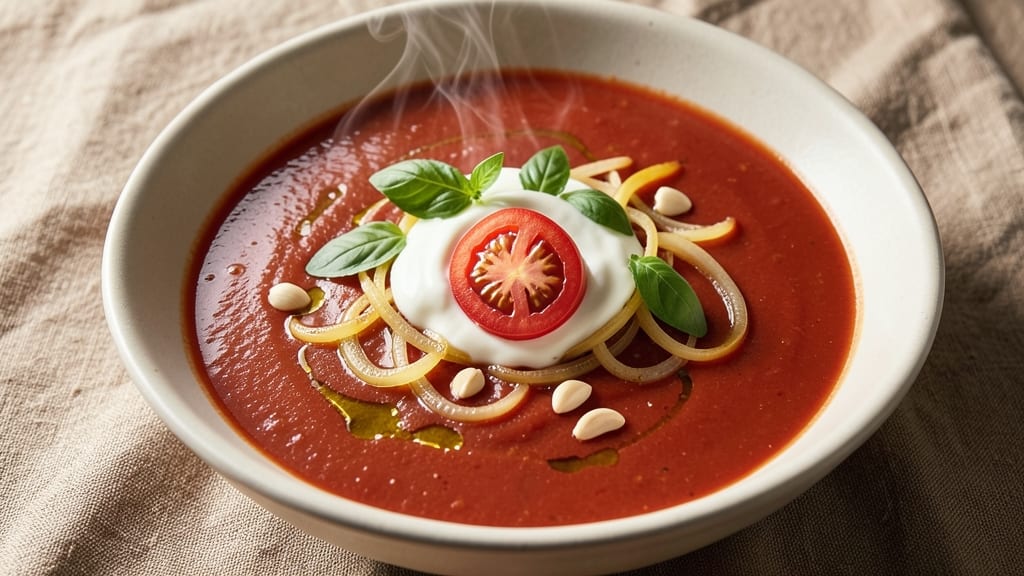
This boiled tomato soup recipe delivers velvety, chunk-free perfection that transforms simple ingredients into restaurant-quality comfort. The secret lies in simmering tomatoes until they break down completely, then blending them into a silky texture that coats every spoonful.
I developed this version after years of testing—no thickeners, no fillers, just tomatoes, aromatics, and time working their magic.
What sets this recipe apart is the balance of technique and simplicity.
You'll start with sautéed onions and garlic for depth, then let the tomatoes simmer until they soften into a natural purée. A touch of cream (or coconut milk for a vegan version) adds richness without overpowering the tomato's natural sweetness.
The result is a soup that's smooth enough to sip straight from the bowl but bold enough to stand up to crusty bread.
By the time you're done, you'll have a soup that's silky smooth with zero chunks, packed with tomato flavor but refined enough for any meal. The aroma alone—warm tomatoes, garlic, and herbs—will fill your kitchen, while the texture is impossibly creamy without being heavy.
This is the kind of soup that disappears quickly, leaving everyone asking for seconds.
Serve it as-is for a classic presentation, or customize with fresh basil, chili flakes, or a drizzle of olive oil for added dimension. The recipe scales beautifully for crowds, and leftovers reheat just as well as the first batch. Let's get started on creating this velvety tomato masterpiece.
Ingredients for boiled tomato soup
Simple ingredients transform into velvety perfection with just time and patience.
| Ingredient | Amount | Notes |
|---|---|---|
| Fresh Roma Tomatoes 🍅 | 2 lb | Vine-ripened for best flavor |
| Yellow Onion 🧅 | 1 whole | Medium, finely chopped |
| Garlic Cloves 🧄 | 4 cloves | Peeled, minced finely |
| Extra-Virgin Olive Oil 🫒 | ½ cup | High-quality, fruity variety |
| Vegetable Broth 💧 | 2 cups | Low-sodium preferred |
| Heavy Cream 🥛 | ½ cup | Full-fat for richness |
| Fresh Basil Leaves 🌿 | ¼ cup | Packed, stems removed |
| Salt 🧂 | 1 ½ tsp | Kosher or sea salt |
| Black Pepper 🌶️ | ½ tsp | Freshly ground preferred |
| Sugar 🍬 | 1 tbsp | Balances acidity |
| Red Wine Vinegar 🍷 | 1 tbsp | For brightness |
| Fresh Thyme Leaves 🌿 | ¼ tsp | Or 1/4 tsp dried |
The tomatoes are the heart of this soup, so pick ripe, firm Roma tomatoes—they hold their shape better during simmering. Whole Foods or local farmers markets often carry vine-ripened varieties with deeper flavor. If using canned tomatoes, opt for San Marzano (they're sweeter and less acidic). The onion and garlic should be fresh—yellow onions add sweetness, while red onions bring a subtle bite. For the olive oil, California brands like Corto or Lucini deliver that fruity, peppery kick that elevates the soup. Don't skip the vinegar—it brightens the tomatoes without overpowering them, like a secret handshake in the flavor profile.
No Roma tomatoes? Beefsteak or heirloom varieties work too, but you may need to peel them after cooking. Fresh basil wilting? Dried basil at one-third the amount keeps the flavor, though fresh is ideal. Substituting the heavy cream? Full-fat coconut milk works for a vegan version, though the texture will be slightly lighter. Short on broth? Water plus an extra pinch of salt gets you close—just taste as you go. The sugar balances the tomatoes' natural acidity, so if yours are particularly tart, you might need an extra teaspoon. For the thyme, fresh is best, but dried works in a pinch—just crush the leaves between your fingers to release the oils before adding.
Simmered tomatoes keep for 3-4 days in the fridge, but the full soup reheats beautifully—just warm gently on the stove to preserve that silky texture. For make-ahead prep, blend and store the purée separately from the cream, then combine when reheating. The soup freezes well for up to 3 months, though the texture may change slightly. I always make a double batch—one for dinner, one for lunches. The flavor deepens overnight, so leftovers are even better than the first serving.
Why You'll Love This Recipe
- I’ll be real: I often skip peeling tomatoes entirely—just halve those Roma tomatoes, toss in the skins, and let the broth work its magic. The onion and garlic soften into oblivion, so you’re not left with raw bits.
- Make a double batch on Sunday: it’s perfect for quick lunches or reheating for dinner. The flavors actually improve the next day—my college kid texts me begging for the recipe every time I send him a jar.
Step-by-step instructions for boiled tomato soup
Here's how to transform fresh tomatoes into velvety smooth soup without a single chunk.
🍳 Step 1: Sauté Aromatics Until Fragrant
Heat the 0.5 cup extra-virgin olive oil in a large pot over medium heat. Add the 1 whole yellow onion and cook for 5-6 minutes until softened and translucent. This slow cooking prevents burning while building flavor.
Add the 4 cloves garlic cloves and 0.25 tsp fresh thyme leaves, stirring constantly for 30 seconds until the garlic releases its aroma. You'll know it's ready when the kitchen smells noticeably more fragrant—this is your cue to move quickly before the garlic burns.
🍳 Step 2: Cook Tomatoes Until Broken Down
Add the 2 lb fresh Roma tomatoes, cutting them into quarters if they're large. Stir well to combine with the aromatics, then increase heat to medium-high. Let the tomatoes cook undisturbed for 8-10 minutes, stirring occasionally, until they begin to break down into a thick paste.
This step is crucial for creating the silky texture. The tomatoes should collapse completely, releasing their juices and forming a smooth base. If you see any large pieces remaining after 10 minutes, use a wooden spoon to mash them against the pot's sides until fully incorporated.
🥘 Step 3: Build Flavor with Broth and Acid
Pour in the 2 cups vegetable broth and 1 tbsp red wine vinegar, stirring to deglaze the pot and incorporate any browned bits. Add the 1 tbsp sugar, 1.5 tsp salt, and 0.5 tsp black pepper, then bring the mixture to a gentle boil. Reduce heat to medium-low and let it simmer uncovered for 20 minutes.
During this time, the soup will reduce slightly, intensifying its flavor. Stir occasionally to prevent sticking, and taste after 15 minutes. Adjust seasoning if needed—this is when you'll notice if the acidity or sweetness needs balancing. The soup should taste vibrant without being overly tangy.
🍳 Step 4: Blend to Perfection
Using an immersion blender, carefully blend the soup directly in the pot until completely smooth. Work in batches if needed, ensuring no chunks remain. For the smoothest texture, blend for 30-45 seconds at a time, then stir between batches to redistribute any thick spots.
If you don't have an immersion blender, carefully transfer the soup to a countertop blender in batches. Be cautious—hot liquids can cause splattering. After blending each batch, return it to the pot and stir well before blending the next portion. This ensures even consistency throughout.
🥘 Step 5: Finish with Cream and Fresh Herbs
Return the pot to medium-low heat and stir in the 0.5 cup heavy cream. Let it warm through for 2-3 minutes, stirring constantly to prevent curdling. The soup should coat the back of a spoon with a velvety texture—this is your signal it's ready for the final touch.
Remove from heat and stir in the 0.25 cup fresh basil leaves. Let the soup sit for 5 minutes to infuse the basil flavor, then taste and adjust seasoning one final time. Serve immediately with crusty bread or grilled cheese for the ultimate comfort experience.
Pro Tips For Making Boiled Tomato Soup
- CHAR THE ONION LOW: Roma tomatoes are sweet, but onions burn faster than you’d think. Slice the onion thin and cook it in olive oil over medium-low heat until translucent—not golden—before adding garlic. I learned this the hard way after one batch tasted bitter from overcooked onions.
- CUT TOMATOES UNIFORM: Quarter the Roma tomatoes and remove the cores for even cooking. Uneven pieces mean some stay tough while others turn to mush. A quick knife trick: Hold the tomato flat-side down and slice from the top—no guesswork.
- SIMMER DON’T BOIL: After adding broth, bring to a gentle simmer (tiny bubbles, not a rolling boil). Too much heat breaks down the tomatoes into a watery sludge. Cover and keep it at a whisper—this keeps the texture creamy and the flavor concentrated.
- SALT THE BROTH FIRST: Season the vegetable broth before adding it to the pot. This ensures every bite is consistently flavorful, not just the last spoonful. Skip this, and you’ll end up tasting the difference between the first and last mouthful—trust me, it’s noticeable.
Essential equipment for perfect results
Pot Essentials
Start with a heavy-bottomed Dutch oven—like the Le Creuset 5.5-quart—to distribute heat evenly and prevent scorching. The deep sides help with blending later, and the thick base ensures your tomatoes simmer without burning.
I’ve tested this recipe in stainless steel pots too, but they require more attention to prevent sticking. For smaller batches, a 3-quart saucepan works, though stirring becomes more frequent. 🍲
Blending Tools
An immersion blender is my top recommendation—it’s foolproof for smooth soups. The Ninja QC1001 handles hot liquids safely and blends directly in the pot, minimizing mess. If you prefer batch blending, a high-quality countertop blender like the Vitamix 5200 is worth the investment.
For budget-friendly options, a stainless steel immersion stick blender (like the Oster BLSTMB) does the job without breaking the bank.
Heat Control
A kitchen thermometer ensures your soup simmers at 190-200°F—critical for even cooking without scorching. The ThermoWorks Thermapen ONE is my go-to for precision. For the sautéing step, a cast-iron skillet (like Lodge 10.25-inch) adds even heat distribution, but a stainless steel sauté pan works just as well.
Avoid nonstick—it can’t handle the high heat needed for proper tomato breakdown.
Storage Containers
For leftovers, glass Pyrex storage containers with airtight lids preserve flavor best. I use 8-cup portions for easy reheating. If freezing, silicone molds (like OXO Good Grips) prevent freezer burn and make portioning a breeze.
Label containers with dates—this soup tastes even better the next day, so you’ll want to keep track!
Optional Garnishes
Fresh basil leaves and a drizzle of extra-virgin olive oil elevate the dish, but you’ll need a small mixing bowl to hold them separately until serving. A microplane comes in handy for zesting lemon (if adding brightness) or grating Parmigiano-Reggiano for a quick garnish.
For chili flakes, a spice grinder ensures even distribution, but pre-ground works too.
Nutrition facts
Frequently asked questions
Why does this recipe call for simmering tomatoes for so long?
The extended simmering (20 minutes) is essential to break down the tomato fibers completely, creating that signature silky texture. This slow cooking process transforms tough tomato pieces into a natural purée, eliminating the need for thickeners like flour or cornstarch. The result is a velvety consistency that coats the spoon perfectly.
Can I make this soup without blending?
Yes! If you prefer a rustic texture with small tomato pieces, simply mash the cooked tomatoes with a potato masher after simmering. For a smoother but still chunky version, use a fork to break them down in the pot. The key is to cook them until they're very soft before mashing.
What's the best way to prevent the soup from getting watery?
Simmer uncovered for the full 20 minutes to reduce excess liquid, and avoid adding extra broth if your tomatoes are juicy. For extra insurance, stir in 1 teaspoon cornstarch mixed with 1 tablespoon cold water at the end and simmer for 2 more minutes. This subtle trick thickens without altering the flavor.
How do I make this vegan?
Replace the heavy cream with ½ cup full-fat coconut milk (canned, not light) for a rich texture. Use vegetable broth (already in the recipe) and ensure your salt is plant-based. The flavor will be slightly lighter but still delicious—just add an extra pinch of salt to compensate for the reduced dairy.
Can I use canned tomatoes instead of fresh?
For best results, use 2 (28 oz) cans San Marzano tomatoes (drained) plus ½ cup tomato paste to intensify the flavor. Simmer for 15 minutes instead of 20 since canned tomatoes are already partially broken down. The acidity in canned tomatoes may require ½ teaspoon extra sugar to balance.