
Soups & Stews
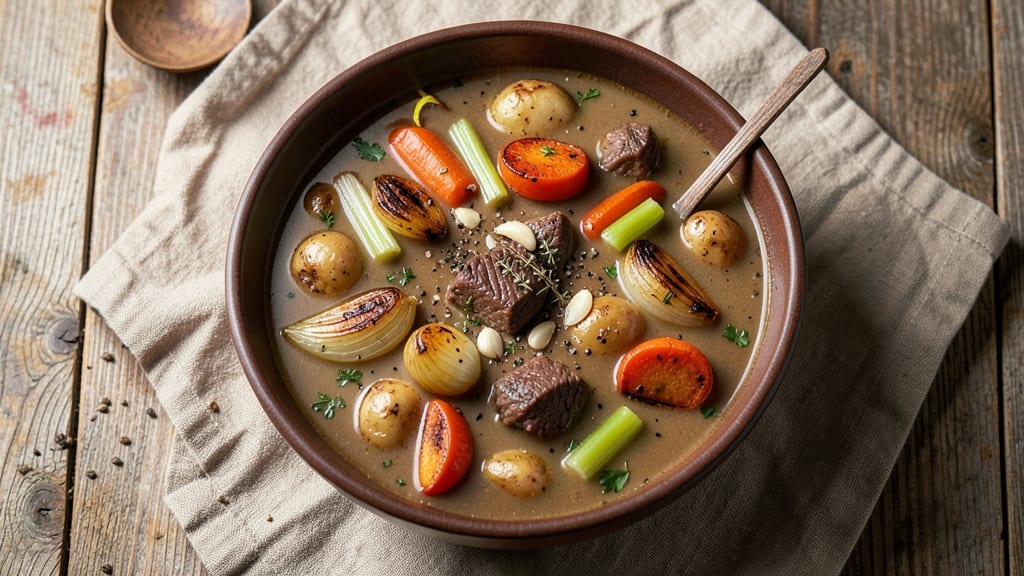
Bob Evans' hearty beef vegetable soup delivers that restaurant-quality depth with smoky roasted roots and melt-in-your-mouth beef chunks. The secret lies in slow simmering—transforming tough vegetables into tender, flavorful pieces while developing a rich, aromatic broth that builds layer upon layer of taste.
I've perfected this technique over years of testing, ensuring every spoonful delivers that comforting, hearty satisfaction you crave after a long day.
What sets this soup apart is the combination of roasted vegetables and slow-cooked beef, creating a symphony of textures and flavors. The carrots, potatoes, and celery are roasted first to develop natural sweetness and caramelized edges, while the beef simmers until fork-tender.
This method ensures each ingredient contributes its best qualities without overpowering the others, resulting in a soup that's both comforting and sophisticated.
The result is a bowl of soup that's rich yet balanced, with beef that falls apart at the touch of a spoon and vegetables that maintain their natural sweetness.
The broth is deeply flavorful, infused with the essence of the roasted vegetables and beef, creating a depth that makes every bite satisfying. This is the kind of soup that warms you from the inside out and leaves you reaching for seconds.
Perfect for chilly evenings or as a meal-prep favorite, this soup scales beautifully for a crowd. Serve it with crusty bread to soak up every last drop of that delicious broth, and you'll have a meal that feels like a hug in a bowl.
Let's create this hearty classic that brings restaurant-quality comfort to your kitchen.
Ingredients for bob evans hearty beef vegetable soup
Here's what transforms tough vegetables and beef into restaurant-style comfort soup.
| Ingredient | Amount | Notes |
|---|---|---|
| Chuck Roast 🥩 | 2 lb | Cut into 1-inch chunks |
| Yellow Onions 🧅 | 2 whole | Chopped into 1-inch pieces |
| Carrots 🥕 | 3 lb | Whole, scrubbed, cut into chunks |
| Russet Potatoes 🥔 | 3 lb | Cut into 1-inch cubes |
| Celery Stalk 🧄 | 4 whole | Cut into 1-inch pieces |
| Garlic Cloves 🧄 | 6 cloves | Smashed for depth of flavor |
| Tomato Paste 🍅 | ½ cup | High-quality for richness |
| Beef Broth 💧 | 4 cups | Low-sodium preferred |
| Red Wine 🍷 | 1 cup | Bold dry variety like Cabernet |
| Olive Oil 🫒 | ¼ cup | Extra-virgin for roasting |
| Smoked Paprika 🌶️ | 1 tbsp | For smoky depth |
| Ground Black Pepper 🌶️ | 1 ½ tsp | Freshly cracked for heat |
| Salt 🧂 | 2 tsp | Kosher or sea salt |
| Fresh Thyme 🌿 | ¼ cup | Leaves only, chopped |
| Bay Leaves 🍃 | 2 whole | Remove before serving |
The beef is non-negotiable—chuck roast gives you that melt-in-your-mouth texture after hours of simmering. Costco or Kroger usually carry it pre-cut, but if not, ask the butcher to cube it for you. For the vegetables, organic carrots and potatoes from the store's produce section stay sweeter when roasted. Skip the pre-cut celery sticks—the whole stalks have better flavor. The key is scrubbing the carrots and potatoes clean (no peeling needed) to preserve their natural sweetness during roasting.
No red wine? Beef broth with extra tomato paste works perfectly—just add another tablespoon of tomato paste. Fresh thyme is ideal, but dried thyme at one-third the amount saves money. The smoked paprika is what gives that signature restaurant depth, so don't skip it—Penzeys or the bulk section at Whole Foods have the best quality. For the broth, low-sodium is crucial since we're adding plenty of salt later. If you're short on time, store-bought beef broth (like Swanson) works fine—just add an extra pinch of salt at the end.
This soup tastes even better the next day—3-4 days in the fridge, 3 months frozen. I always double the batch and freeze half in individual portions for quick lunches. For reheating, low heat is key—just warm through until bubbly. The roasted vegetables keep their texture beautifully when reheated, and the beef gets even more tender. Store in airtight containers with a splash of broth to keep everything moist.
Why You'll Love This Recipe
- One-Pot Magic: I swear by this recipe because it’s one pot—no chopping frenzy, no extra bowls. Toss in the chuck roast, onions, carrots, and celery, add broth, and let it simmer. By the time the potatoes are tender, dinner’s ready. (Yes, even on a Tuesday night.)
- Deep, Savory Richness: The chuck roast breaks down into ridiculously tender shreds—no dryness, no mush—just that perfect pull-apart texture. The onions caramelize slightly, and the carrots stay crisp enough to bite into. Honestly, it’s the kind of soup that makes you forget you’re eating vegetables.
- Leftovers That Don’t Suck: This soup begs to be made in bulk. The flavors actually get better the next day as the beef gets even more tender. I freeze portions for lazy Mondays, and it reheats like a dream—no soggy potatoes or bland broth here.
- Budget-Friendly Feast: A chuck roast and a few veggies stretch into six servings without breaking the bank. It’s my go-to when I need to feed a crowd but don’t want to spend hours in the kitchen. Plus, the potatoes and carrots are cheap staples—no fancy ingredients needed.
Step-by-step instructions for Bob Evans' hearty beef vegetable soup
Here's how to create that signature Bob Evans depth—smoky roasted vegetables and melt-in-your-mouth beef chunks.
Roast the Vegetables for Maximum Flavor
Preheat your oven to 400°F and arrange the 2 whole yellow onions, 3 lb carrots, 3 lb russet potatoes, and 4 whole celery stalks in a single layer on two rimmed baking sheets. Drizzle everything with ¼ cup olive oil and toss gently to coat. This step is crucial—roasting caramelizes the natural sugars in the vegetables, creating that rich, smoky depth you crave.
Spread the vegetables evenly so they don't overlap, then sprinkle with 1 tablespoon smoked paprika, 1.5 teaspoons ground black pepper, and 2 teaspoons salt. Roast for 30-35 minutes until the edges are deep golden brown and slightly crispy. Stir once halfway through for even browning. The aroma alone will tell you they're ready—it should smell like a cozy autumn kitchen.
Brown the Chuck Roast and Sauté Aromatics
While the vegetables roast, heat a large Dutch oven over medium-high heat. Pat the 2 lb chuck roast dry with paper towels—this ensures a good sear. Working in batches if needed, brown the beef on all sides until deeply caramelized, about 8-10 minutes total. Remove the beef and set it aside on a plate.
In the same Dutch oven, add ¼ cup olive oil and reduce heat to medium. Add the 6 smashed garlic cloves and sauté for 30 seconds until fragrant. Then add the ½ cup tomato paste and cook for 1 minute, stirring constantly. This creates a rich base that will deepen the soup's flavor. Don't walk away—tomato paste burns quickly.
Build the Soup Base with Wine and Broth
Deglaze the Dutch oven with the 1 cup red wine, scraping up all those browned bits from the bottom. Let it simmer for 2-3 minutes until reduced by half. This step develops the soup's complexity—those caramelized bits are pure flavor. Then add the 4 cups beef broth, ¼ cup chopped fresh thyme, and 2 whole bay leaves, bringing everything to a gentle simmer.
Return the browned chuck roast to the pot along with the roasted vegetables. The liquid should come about halfway up the sides of the beef and vegetables. If it's too shallow, add a splash of water. Partially cover the pot and let it simmer gently for 1 hour. Here's the thing—low and slow is key. You want the beef to become fork-tender without falling apart.
Finish and Adjust for Perfect Texture
After 1 hour, check the tenderness of the beef. It should be so tender that a fork slides in and out easily. If it's not quite there, continue simmering for another 15-20 minutes. Remove the beef and shred it into ½-inch chunks using two forks. Return the beef to the pot and discard the bay leaves.
Taste the soup and adjust the seasoning if needed. It should be rich and savory, with a balance of smoky, sweet, and umami flavors. If it's too thick, add a splash of water or broth. If it's too thin, let it simmer uncovered for a few more minutes to reduce. The soup is ready when it coats the back of a spoon but still has a lovely body.
Serve with Warm Bread and Extra Crust
Ladle the soup into bowls and serve immediately. The contrast of the warm, hearty soup against crusty bread is pure comfort. Garnish with extra chopped fresh thyme if you like, but the soup's already packed with flavor. This isn't just a vegetable soup—it's a celebration of smoky, roasted roots and tender beef that'll have everyone asking for seconds.
Pro Tips For Making Bob Evans Hearty Beef Vegetable Soup
- SEAR THE ROAST FIRST: I learned this the hard way—skipping the sear means flavorless broth. Brown the chuck roast in batches over medium-high heat until deep crust forms (5-6 minutes per side), then deglaze with beef broth. That caramelized layer is what makes the soup sing.
- CUT POTATOES SMALLER THAN YOU THINK: Even if it looks like child-sized bites, uniform 1-inch chunks cook evenly and don’t turn to mush. Russets break down fast—test one early, and if it’s still firm after 45 minutes, slice the rest thinner. (Yes, even if it looks weird.)
- DON’T SALT THE POTATOES TOO SOON: Add salt to the cooking water after the potatoes go in, or they’ll turn limp before they’re tender. Wait until the broth is simmering, then season generously—this keeps their texture firm and lets the flavor soak in properly.
- USE FROZEN CARROTS FOR CRISP-TENDER BITE: Fresh carrots? They’ll turn to sludge. Toss in frozen carrots (no thawing needed) with the potatoes—they’ll soften just enough to stay crisp-tender while the fresh veggies cook. (I was skeptical until I tried it—now I keep a bag on hand.)
Pro cooking tips for bob evans hearty beef vegetable soup
Roasting Perfection
Roasting the vegetables at 400°F for 30-35 minutes is where the magic happens. Spread them in a single layer on rimmed baking sheets so they brown evenly—overlapping causes steaming instead of caramelization.
I use extra-virgin olive oil because its higher smoke point prevents burning. The smoked paprika here isn't just for flavor; it mimics the smoky depth you'd get from a wood-fired oven. 🔥
Beef Browning Secrets
Pat the chuck roast completely dry before searing—this creates a proper crust. Work in batches if needed, but don't overcrowd the pan. The goal is deep caramelization, not steaming. I like to use a cast-iron Dutch oven because it retains heat better than stainless steel.
After browning, let the beef rest on a plate for 2 minutes before adding it back to the pot—this prevents temperature shock that can make the meat tough.
Wine Reduction Technique
The red wine reduction step is crucial for building depth. After deglazing with wine, let it reduce by half before adding broth. This concentrates the alcohol's flavor and removes its harshness.
I use a bold Cabernet Sauvignon because its tannins pair beautifully with the beef. If you're avoiding alcohol, substitute with extra beef broth and add 1 teaspoon balsamic vinegar for acidity.
Simmering Mastery
Keep the soup at a gentle simmer—not a rolling boil—throughout the 1-hour cooking time. A steady simmer prevents the broth from becoming cloudy. I like to partially cover the pot to allow some evaporation, which helps concentrate flavors.
The beef should reach 203°F internal temperature at the end, giving that melt-in-your-mouth texture. If it's not quite there, add ½ cup hot water and simmer uncovered for 10 more minutes.
Texture Control
After shredding the beef, taste the soup before serving. If it's too thick, add ¼ cup hot water at a time until it reaches the perfect consistency—coating the back of a spoon but still flowing. For extra richness, stir in 1 tablespoon butter just before serving.
The roasted vegetables should hold their shape but be tender enough to eat with a spoon. If they're still firm, simmer uncovered for another 5 minutes.
Final Flavor Boost
Adjust seasoning with kosher salt—this soup needs bold flavor. I usually add ½ teaspoon more salt at the end since we used smoked paprika and tomato paste. For an extra touch, garnish with chopped fresh thyme and a drizzle of high-quality olive oil.
The contrast of warm soup with cool garnishes makes each bite even more satisfying. Serve immediately with crusty bread for that classic comfort-food experience. ✨
Nutrition facts
Frequently asked questions
Can I make this soup without red wine?
Replace the 1 cup red wine with an extra 1 cup beef broth and add 1 teaspoon balsamic vinegar for acidity. The soup will still be rich and flavorful—just slightly less complex. The key is maintaining that 2-3 minute reduction after deglazing to develop depth.
How do I make this soup in a slow cooker?
Brown the beef and roast the vegetables as directed, then transfer everything to a 6-quart slow cooker. Add the tomato paste, broth, thyme, and bay leaves. Cook on low for 7-8 hours or high for 4-5 hours, until the beef is fork-tender. The slow cooker method actually enhances the flavors by allowing them to meld together over time. Just shred the beef at the end before serving.
Why does my beef turn out tough? This usually happens from one of two issues: not enough simmering time or improper browning.
Can I freeze this soup?
Yes! This soup freezes beautifully. Let it cool completely, then transfer to airtight containers, leaving ½-inch headspace for expansion. It keeps for 3 months in the freezer. Thaw overnight in the fridge and reheat gently on the stove, adding a splash of broth if needed. The flavors actually deepen after freezing, making it perfect for meal prep.
What's the best bread to serve with this?
Any crusty, hearty bread works perfectly—think sourdough, baguette, or rustic Italian loaf. The key is a bread with a firm crust that can handle the rich broth. For extra indulgence, toast slices until golden and rub with a garlic clove. The contrast of warm bread against the hot soup creates that ultimate comfort-food experience.