
Soups & Stews
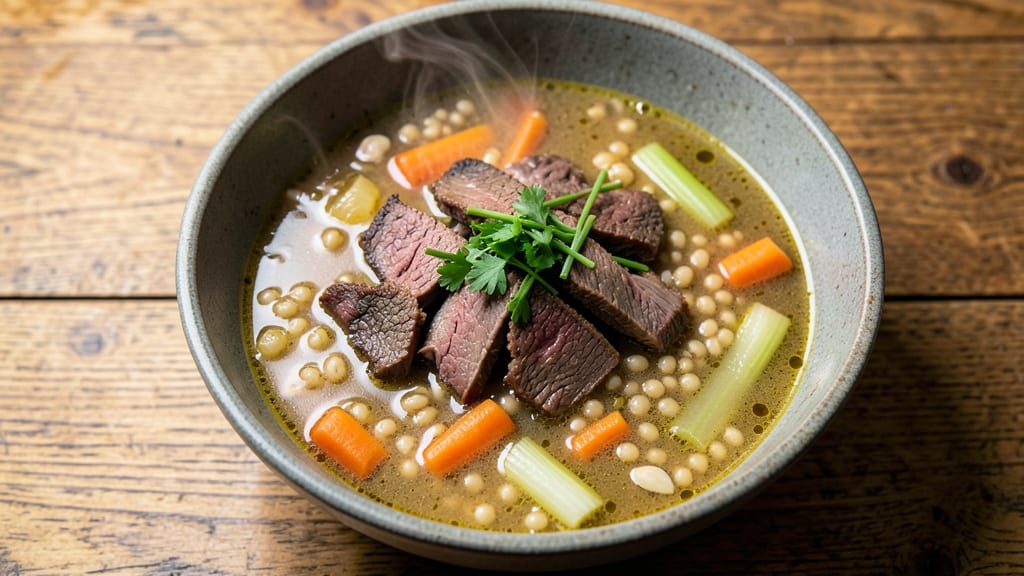
Transforming leftover roast beef into this beef barley soup creates a dish that’s heartier than takeout but far more rewarding. The secret lies in using the roast’s natural juices and depth of flavor, which infuse every spoonful with rich, savory notes that traditional recipes often miss.
What starts as scraps becomes a comforting bowl of soup packed with tender beef, chewy barley, and vegetables that soak up all the goodness.
This recipe builds on the roast’s existing seasoning—no extra spices needed—while adding just enough herbs and aromatics to elevate the broth to restaurant-quality. The barley softens perfectly while holding its texture, and the vegetables caramelize slightly, adding layers of sweetness that balance the meat’s richness.
It’s the kind of soup that tastes even better the next day, making it ideal for meal prep or feeding a crowd.
With minimal prep and under 2 hours of active cooking, this soup delivers maximum flavor with minimal effort. The leftover roast isn’t just repurposed—it’s the star, turning what might otherwise go to waste into a deeply satisfying dish.
Each bite delivers that perfect harmony of tender beef, hearty barley, and a broth so flavorful it’ll have everyone asking for seconds.
Serve it with crusty bread to soak up every last drop of that rich broth, or pair it with a simple green salad for balance. The leftovers reheat beautifully, too, making this the ultimate way to stretch a roast into multiple meals without sacrificing taste.
Here’s how to make it—where every ingredient plays a part in creating something truly special.
Ingredients for beef barley soup recipe with leftover roast
Six servings of restaurant-quality beef barley soup using leftover roast for maximum flavor.
| Ingredient | Amount | Notes |
|---|---|---|
| Leftover Roast Beef 🥩 | 2 cups | Diced into bite-sized pieces |
| Pearl Barley 🌾 | 1 cup | Uncooked, rinsed thoroughly |
| Yellow Onion 🧅 | 1 whole | Diced into small pieces |
| Carrots 🥕 | 4 medium | Peeled and chopped into chunks |
| Celery Stalks 🧆 | 3 whole | Diced into small pieces |
| Garlic Cloves 🧄 | 4 cloves | Minced for depth of flavor |
| Beef Broth 💧 | 6 cups | Low-sodium preferred |
| Water 💧 | 2 cups | For broth consistency |
| Tomato Paste 🍅 | 2 tbsp | For richness and color |
| Dried Thyme 🌿 | 1 tsp | Or 1 tbsp fresh thyme |
| Bay Leaves 🍃 | 2 whole | Removed before serving |
| Salt 🧂 | 1 ½ tsp | Adjust to taste |
| Black Pepper 🌶️ | ½ tsp | Freshly ground preferred |
| Olive Oil 🫒 | 2 tbsp | For sautéing vegetables |
The roast beef is the soul of this soup—look for well-marbled, flavorful cuts that have been seasoned generously. If your leftover roast is dry, braise it briefly in beef broth before dicing to restore moisture. Costco or Whole Foods often carry high-quality roasts that work perfectly. For the barley, Pearl Barley is ideal—it holds its shape better than steel-cut. Rinse it well before cooking to remove any dust or debris. The vegetables should be fresh but don’t need to be perfect—bruised carrots or wilted celery still work, just chop them smaller for even cooking.
No beef broth on hand? Chicken broth with 1 tbsp soy sauce works in a pinch, though the flavor will be slightly different. Fresh thyme is preferable, but dried thyme works at one-third the amount. If you’re missing tomato paste, a handful of sun-dried tomatoes chopped fine adds depth. For the vegetables, baby carrots or pre-chopped celery from the store save time. The key is to keep the aromatics (onion, garlic, celery) finely diced—they’re the flavor foundation. If you’re short on time, a food processor handles the chopping in seconds.
This soup tastes even better the next day as the flavors meld. Store leftovers in the fridge for up to 5 days or freeze for 3 months. For reheating, add a splash of water or broth to prevent drying out. The barley softens further when reheated, so it’s perfect for meal prep. Portion into containers with a side of crusty bread—French baguettes from the bakery section are ideal. If you’re serving a crowd, double the recipe; the ingredients scale perfectly.
Why You'll Love This Recipe
- Zero-Waste Hero: I swear by this trick—turning last night’s roast into today’s soup means no food goes to waste. Just chop the veggies (onion, carrots, celery) while the pot heats, toss in the barley, and let the beef melt into the broth like it’s meant to be there.
- Rich, Deep Umami: That leftover roast? It’s the star. The slow simmer pulls all the savory goodness from the meat, while the barley soaks it up like a sponge. Honestly, the first spoonful makes me pause—it’s that good.
- Meal Prep MVP: Double the batch and freeze half. When you’re too tired to cook later, just reheat and add a splash of water. My kids grab bowls straight from the fridge—no fuss, just warm, hearty comfort.
- Budget Booster: Pearl barley’s cheap, veggies are cheap, and you’re using up protein you already paid for. For under $10, you feed four people a meal that tastes like you slaved over it. (Between us, I’ve done it after a 12-hour shift.)
Step-by-step instructions for beef barley soup with leftover roast
Transform your leftover roast into a hearty, aromatic soup that builds flavor layer by layer.
Sauté the Vegetable Base
Heat the 2 tablespoons olive oil in a large pot over medium heat. Add the diced yellow onion, carrots, and celery stalks, stirring occasionally for 5-6 minutes until the vegetables soften and begin to release their natural juices. This step develops the foundation of your soup's flavor by caramelizing the vegetables before adding liquids.
I like to press down gently on the vegetables with a wooden spoon during the first 2 minutes—this helps them release more moisture and creates a deeper flavor base. Once they're softened but not yet browned, add the minced garlic cloves and cook for 30 seconds until fragrant. The garlic should smell pungent but not burnt, signaling it's ready for the next step.
Build the Flavor Foundation
Stir in the 2 tablespoons tomato paste and cook for 1-2 minutes until it darkens slightly and begins to smell rich and savory. This creates a deep, umami-packed base that will carry through the entire soup. Immediately add the 1 cup pearl barley, stirring to coat the grains with the tomato paste mixture.
Pour in the 6 cups beef broth and 2 cups water, then bring everything to a gentle boil. Once boiling, reduce heat to low-medium and add the 2 whole bay leaves, 1 teaspoon dried thyme, 1.5 teaspoons salt, and 0.5 teaspoon black pepper. The barley will begin to absorb liquid and expand—this is when you'll notice the soup's texture start to transform from thin to hearty.
Incorporate the Roast Beef
Add the 2 cups diced leftover roast beef to the simmering pot. The heat will help the beef reabsorb some of its lost juices, making each bite more tender and flavorful. Stir gently to distribute the beef evenly throughout the soup. Here's the thing—don't worry if the beef doesn't dissolve completely. Those visible pieces will add substantial texture and richness to each spoonful.
Return the soup to a gentle simmer and let it cook uncovered for 30 minutes. This initial cooking time allows the barley to begin breaking down and the flavors to meld together. Check occasionally to ensure the soup isn't boiling too vigorously—you want a steady, gentle simmer that prevents the barley from becoming mushy.
Simmer to Perfect Texture
Continue simmering for an additional 25-30 minutes until the pearl barley is tender but still holds its shape when bitten. The soup should have a thick, hearty consistency with the barley grains easily identifiable. If the soup becomes too thick before the barley is fully cooked, add ½ cup water at a time to reach your desired texture.
Taste and adjust seasoning with additional salt or black pepper as needed. The bay leaves should be removed before serving—simply use a slotted spoon to fish them out. This final adjustment ensures your soup is perfectly balanced, with each component—beef, barley, and vegetables—working together in harmony.
Pro Tips For Making Beef Barley Soup Recipe With Leftover Roast
- SHRED THE MEAT FIRST: Tear that leftover roast into bite-sized chunks before adding it to the pot—no need to slice. The broth will pull the meat apart naturally, but starting with smaller pieces means you won’t end up with chewy chunks lurking at the bottom. (Yes, I’ve found them. You don’t want that.)
- SOAK THE BARLEY 30 MINUTES: Pearl barley swells like a sponge when soaked—skip this, and you’ll be staring at a pot of mushy, undercooked grains after an hour. Toss it in cold water for half an hour before cooking, then drain. Your soup will have plump, al dente barley instead of sad, gummy bits.
- SWEAT THE VEGETABLES LOW AND SLOW: I used to blast the onions, carrots, and celery on high heat to "get it done fast," but that just burns the edges and turns the soup bitter. Instead, cook them on medium-low with a splash of water until the onions are translucent and the celery’s softened—about 8-10 minutes. Patience here makes the broth taste deeper.
- SALT THE BROTH IN LAYERS: Don’t dump all the salt at once—add half when you start the broth (even if it’s just water + bouillon) and the rest later. This keeps the flavors balanced, especially since leftover roast can already be salty. Taste as you go; you’re aiming for a rich, savory base, not a swimming pool.
Regional styles of beef barley soup recipe with leftover roast
Irish Pub Classics
In Irish pubs, this soup often takes center stage as a stew-like version with extra potatoes and carrots. The key difference? A splash of stout beer (like Guinness) replaces some of the broth, adding deep maltiness that pairs perfectly with the roast beef.
Many pubs serve it with a thick slice of soda bread on the side—its slight tang cuts through the richness beautifully. I’ve made this version with 2 cups Guinness instead of water, and it’s a game-changer for beer lovers. 🍺
French Country Twist
French cooks elevate this soup by adding mushrooms (cremini or button) and a splash of dry white wine (like Sauvignon Blanc) when sautéing the vegetables. The wine deglazes the pot, adding brightness that balances the beef’s richness.
A pinch of nutmeg (about ¼ teaspoon) finishes the broth, giving it that classic French bistro touch. Serve it with a baguette and a side of buttery escargot for a full French meal experience.
German Sunday Dinner
In Germany, this soup often becomes a Sunday family tradition, served with dark rye bread and sauerkraut on the side. The secret? Adding a handful of juniper berries (about 5-6 berries) while simmering for a piney, earthy note that complements the beef.
Some versions also include a few slices of smoked bacon for extra depth. The Germans call it "Rindfleisch-Birnen-Suppe" (beef pearl soup) and swear by its warming properties during cold weather. 🌳
Jewish Delicatessen Style
New York delis take this soup to another level by adding horseradish cream (a mix of sour cream, grated horseradish, and lemon juice) as a garnish. The spicy kick cuts through the richness of the beef, making every bite exciting.
Some delis even serve it with matzo balls on the side—a nod to traditional Jewish comfort food. For an extra touch, add a pinch of cinnamon (about ¼ teaspoon) while simmering to echo the warm spices in classic deli dishes.
Modern Fusion Approach
For a contemporary twist, swap the barley for quinoa (½ cup) and add roasted sweet potatoes (1 cup, cubed) to the vegetable mix. The quinoa adds a nutty crunch, while the sweet potatoes bring natural sweetness that balances the beef’s savory notes.
Finish with fresh cilantro and a squeeze of lime for a bright, unexpected flavor profile. This version works perfectly as a meal-prep lunch or a light dinner when paired with a crisp white wine like Pinot Grigio. 🌟
Nutrition facts
Frequently asked questions
Can I use any type of leftover roast beef?
For the best results, choose well-marbled cuts like top round or chuck roast that have been seasoned with herbs or spices. Avoid overly lean cuts (like sirloin) as they can dry out during cooking. If your roast is dry, briefly braise it in beef broth before dicing to restore moisture.
How do I adjust the recipe for fewer/more servings?
The recipe scales easily: reduce ingredients by 1/3 for 4 servings or double for 12. Keep the ratio 1 cup barley to 2 cups beef and 6 cups broth to 2 cups water for proper texture. For larger batches, use a stockpot with a lid to retain heat and moisture.
Why does my barley turn mushy?
Overcooking is the most common cause. Pearl barley should simmer for 45-50 minutes total (not boiling vigorously). If it breaks down too soon, reduce heat to low and add ½ cup water to prevent sticking. Stir occasionally to distribute heat evenly.
Can I make this soup in an Instant Pot?
Yes! Sauté vegetables for 3 minutes, then add all ingredients and cook on high pressure for 15 minutes. Release pressure naturally, then adjust thickness with water if needed. The Instant Pot version cooks 30% faster but requires 10 extra minutes for barley to soften fully.
What if I don't have pearl barley?
Steel-cut oats or wild rice blend work as substitutes, but cooking times vary. For oats, simmer 10 minutes less (they soften faster). Wild rice needs 15 extra minutes. Avoid instant rice—it dissolves completely and changes the soup's texture.