
Soups & Stews
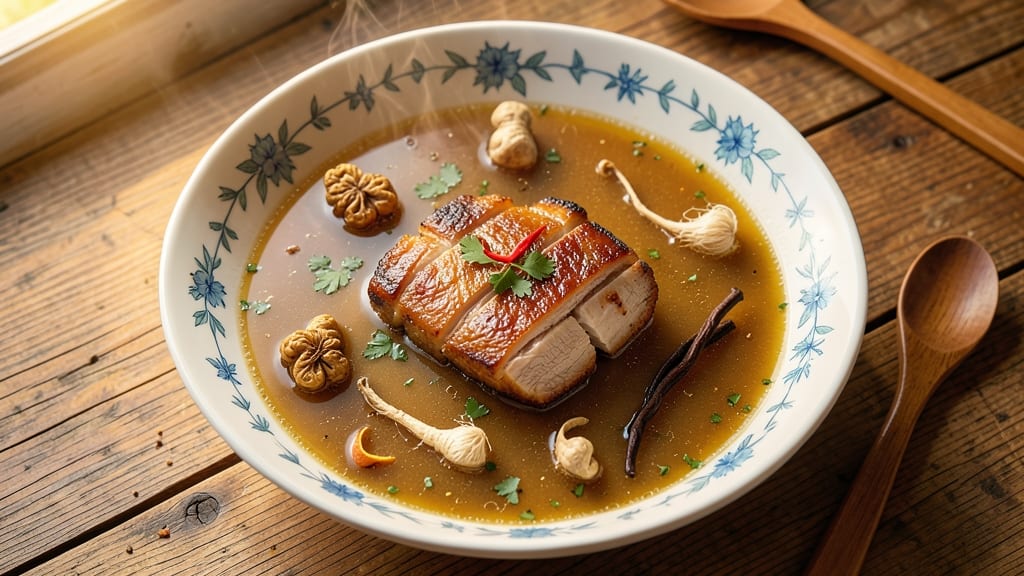
This Ba Zhen soup recipe transforms a traditional Chinese medicinal elixir into a nourishing, fragrant bowl of comfort that strengthens immunity and warms the soul. The eight precious herbs—astragalus, ginseng, codonopsis, and more—simmer with tender pork or chicken to create a savory, aromatic broth that's both restorative and deeply satisfying.
What sets this soup apart is its delicate balance of earthy, slightly sweet herbal notes with rich umami from the protein, making every spoonful a harmonious blend of medicine and flavor.
The foundation of an authentic Ba Zhen soup lies in its slow-simmered broth, where the herbs release their healing properties while the meat becomes fork-tender. Unlike quick soups, this requires patience—at least 2 hours of gentle cooking to develop the complex flavors and extract the maximum benefits from the herbs.
The result is a clear, golden broth that's rich enough to coat the back of your throat but light enough to sip without heaviness, with meat that practically melts at the touch of a spoon.
What makes this recipe truly special is how it bridges tradition and home cooking—no specialized ingredients or techniques are required, just careful layering of flavors. The herbs infuse the broth with subtle sweetness and earthy depth, while the protein adds savory richness.
Each component plays its part: the pork or chicken provides substance, the ginger and scallions brighten the palette, and the herbs deliver their medicinal benefits without overpowering the dish.
Perfect for cold weather, post-illness recovery, or simply as a weekly nourishing meal, this soup delivers restaurant-quality results in your own kitchen. The aromatic steam alone will fill your home with warmth, while the first sip offers a reminder of how good food can be both delicious and deeply healing.
Let's create this elixir together.
Ingredients for ba zhen soup
Eight precious herbs meet tender pork in this fragrant, healing elixir of comfort.
| Ingredient | Amount | Notes |
|---|---|---|
| Pork Shoulder 🥩 | 1 ½ lb | Bone-in for flavor, cut into 2-inch pieces |
| Dried Astragalus Root 🌿 | ½ oz | Sliced thin, available at Asian markets |
| Dried Ginseng Root 🌿 | ¼ oz | Red ginseng preferred for sweetness |
| Dried Codonopsis Root 🌿 | ½ oz | Substitute with dried reishi if unavailable |
| Dried Angelica Root 🌿 | ¼ oz | Also called dong quai |
| Dried Licorice Root 🌿 | ¼ oz | Sweetens the broth naturally |
| Dried Reishi Mushroom 🍄 | ¼ oz | Sliced for easier infusion |
| Fresh Ginger 🧄 | 2 tbsp | Thinly sliced, peeled |
| Green Onions 🧅 | 4 whole | White and green parts separated |
| Garlic Cloves 🧄 | 4 cloves | Minced, not powdered |
| Rock Sugar 🍚 | 2 tbsp | Or substitute with brown sugar |
| Shaoxing Wine 🍷 | ½ cup | Dry Chinese cooking wine |
| Chicken or Pork Broth 💧 | 6 cups | Homemade preferred, low-sodium |
| Sesame Oil 🫒 | 1 tsp | For finishing, not cooking |
| Salt 🧂 | 1 tsp | Adjust to taste at the end |
The herbs are the heart of this soup, so source them carefully. Asian markets are your best bet for authentic dried astragalus, ginseng, and codonopsis—look for packages labeled 'eight treasure herbs' or 'ba zhen tang.' If you can't find all eight, don't stress: reishi mushroom can substitute for angelica, and dried licorice adds natural sweetness. Fresh ginger should be vibrant and firm, not shriveled. For Shaoxing wine, Trader Joe's carries a good budget option, but any dry Chinese cooking wine works. The pork shoulder? Bone-in is key—it adds depth to the broth.
No dried herbs? Fresh alternatives exist: swap codonopsis for fresh burdock root, angelica for fresh celery root. Short on Shaoxing wine? Dry sherry or mirin work in a pinch. The broth is crucial—homemade is ideal, but store-bought low-sodium works if you season it well. For the rock sugar, brown sugar is a perfect substitute, though it lacks the delicate mineral notes. And that sesame oil? Only add it at the very end—it's for aroma, not cooking. The green onions should be washed thoroughly but left whole until the final moment.
This soup tastes even better the next day as flavors meld. Store in the fridge for up to 5 days, or freeze portions for 3 months. The herbs can be prepped ahead—store dried ones in a cool, dark place in airtight containers for up to 6 months. Fresh ginger keeps in the fridge for 2 weeks, wrapped in a damp towel. For meal prep, double the recipe and freeze half—just thaw overnight in the fridge before reheating. The broth reduces as it cooks, so start with 8 cups if you want 6 cups finished.
Why You'll Love This Recipe
- Pantry to Pot: I swear by this soup because it’s that easy—just soak the dried roots overnight (or even 4 hours in hot water) and toss them in with the pork. No chopping, no fuss, just simmer until the meat falls apart and the broth turns golden. Even my lazy Sundays feel productive.
- Rich Without Effort: The pork shoulder melts into tender shreds while the astragalus and angelica deepen the broth into something almost restaurant-quality—earthy, slightly sweet, with just a hint of warmth. Honestly, it’s the kind of flavor that makes you pause mid-sip and think, “This is worth repeating.”
- Weeknight & Recovery: This is my go-to when I’m sick, exhausted, or just need something nourishing. The ginseng and codonopsis give it that gentle energy boost, while the pork makes it filling enough to keep me going. (Yes, even on a Tuesday night when I’d rather eat cereal.)
- Leftovers That Shine: The broth thickens beautifully after the first day, so the second serving tastes even better—like a slow-cooked secret. I freeze portions too; just reheat with a splash of water, and it’s like making fresh soup all over again. Budget-friendly? Absolutely. Waste-free? Even better.
Step-by-step instructions for Ba Zhen soup
Here's how to craft this nourishing eight-treasure elixir with deep medicinal properties.
Prepare the Pork Shoulder and Herbal Medley
Cut the 1.5 lb pork shoulder into 2-inch pieces and set aside. In a clean bowl, combine the 0.5 oz dried astragalus root, 0.25 oz dried ginseng root, 0.5 oz dried codonopsis root, 0.25 oz dried angelica root, 0.25 oz dried licorice root, and 0.25 oz dried reishi mushroom. Rinse these roots briefly under cold water to remove any dust, then drain thoroughly. The roots should look clean but still retain their texture—this ensures they'll infuse properly without turning bitter.
Slice the 2 tbsp fresh ginger thinly and separate the 4 whole green onions into white and green parts. Mince the 4 cloves garlic. These aromatics will form the flavor foundation alongside the herbs. I like to toast the whole garlic cloves in a dry pan for 30 seconds until fragrant before mincing—this deepens their flavor without burning them.
Sear the Pork and Build the Flavor Base
Heat a large pot over medium-high heat and add the pork shoulder pieces in a single layer. Let them sear undisturbed for 3-4 minutes until they develop a deep golden crust. This step is crucial—it locks in juices and builds the soup's rich foundation. Once browned, remove the pork and set aside.
In the same pot, add the prepared herbs and ginger. Toast them for 1 minute until fragrant—you'll smell their earthy, slightly sweet aromas wafting through the kitchen. This brief toasting enhances their medicinal qualities. Immediately add the 0.5 cup Shaoxing wine and scrape up any browned bits from the bottom of the pot. Let the wine simmer for 2 minutes to cook off the alcohol completely.
Simmer the Herbal Broth
Pour in the 6 cups chicken or pork broth and bring to a gentle boil. Add the 2 tbsp rock sugar and 1 tsp salt, stirring until fully dissolved. Return the pork to the pot, reduce heat to low, and cover partially. Let it simmer for 1.5 hours, stirring occasionally to prevent the herbs from sticking to the bottom. The broth should develop a deep amber color and a complex aroma—this indicates the herbs are properly infused.
Here's the thing—don't rush this step. The longer the herbs steep, the more their medicinal properties transfer to the broth. I check the pork occasionally to ensure it's cooking evenly and the broth remains at a gentle simmer. If it reduces too much, add a splash of hot water to maintain the proper consistency.
Finish and Serve with Elegance
After 1.5 hours, remove the pork and strain the broth through a fine-mesh sieve into a clean pot. Discard the herbs and ginger. Return the broth to the pot with the pork and simmer uncovered for another 15 minutes to reduce slightly and intensify the flavors. The pork should be fork-tender, falling apart easily when pierced.
Just before serving, stir in the 1 tsp sesame oil and adjust seasoning with additional salt if needed. The sesame oil adds a delicate nutty aroma that complements the herbal complexity. Ladle the soup into bowls, garnishing each serving with the reserved green onion whites (chopped) and green onion greens (whole). The contrast of colors makes the dish visually appealing while adding freshness to each bite.
Pro Tips For Making Ba Zhen Soup
- Blister the Pork First: I learned this the hard way—skipping the quick sear on the pork shoulder means the herbs won’t infuse properly. Hit the meat with high heat until it’s deeply browned in spots before adding water. The Maillard reaction pulls the flavors out of the pork and into the broth where the roots can soak them up.
- Soak Roots Separately: Don’t toss all four dried roots in together—they absorb moisture at different rates. Soak astragalus and codonopsis (the bulkier ones) for 30 minutes first, then add ginseng and angelica (the pricier, finer ones) just before simmering. This keeps them from turning to mush and wasting their potency.
- Simmer Low and Long: After the initial boil, drop the heat until you’re barely seeing bubbles—this isn’t a race. Ba zhen soup needs 3–4 hours of gentle simmering to let the roots release their medicine without turning bitter. I used to rush it, and the broth always tasted flat.
- Strain Twice: The first strain catches the big chunks, but the second one—using cheesecloth or a fine-mesh sieve—removes the fine herbal sediment that can make the soup taste gritty. Do it while the broth’s still hot, or you’ll regret it later. (Yes, even if you’re impatient like me.)
Serving suggestions for ba zhen soup
Garnish Like a Pro
Elevate your Ba Zhen soup with thoughtful garnishes that highlight its natural beauty. Start by finely chopping the green onion whites and scatter them generously over each bowl—they add a sharp, fresh contrast to the rich herbal broth.
Reserve the green onion greens and place them whole on the side for diners to add at the table, creating a pop of vibrant color.
A drizzle of dark soy sauce (just ½ tsp per bowl) adds depth without overpowering, while a sprinkle of toasted sesame seeds (about ½ tsp) brings nutty crunch. 🌿
Side Dish Harmony
Pair this nourishing soup with simple sides that complement its medicinal qualities.
Steamed jasmine rice (about ½ cup per person) soaks up the fragrant broth beautifully, while a small cucumber salad (thinly sliced cucumbers tossed with 1 tbsp rice vinegar, ½ tsp sugar, and a pinch of salt) provides refreshing contrast.
For extra protein, serve with steamed bok choy (tossed with a pinch of Shaoxing wine and 1 tsp sesame oil). These sides balance the soup's richness while keeping the meal light and healthful.
Wine and Tea Pairings
Enhance the soup’s herbal notes with complementary beverages. A light-bodied Chinese yellow wine like Huangjiu (just 2 oz per serving) complements the ginseng and astragalus flavors without competing. For tea lovers, jasmine green tea (served warm) highlights the soup’s delicate sweetness, while pu-erh tea (brewed strong) adds earthy depth.
Avoid heavy red wines—they’ll clash with the soup’s subtle herbal complexity. A small cup of ginger tea (made from the leftover ginger slices) is a soothing bonus. 🍵
Presentation Tips
Serve this soup in deep, warm bowls to maintain its temperature and enhance aroma. Place a small spoon on the side for easy sipping, and arrange the whole green onion greens diagonally across the bowl for visual appeal.
For a restaurant-worthy touch, use a lattice strainer to float a few dried reishi slices on top of each serving—they’ll infuse the broth with subtle earthy notes as diners enjoy their meal.
Keep the broth slightly reduced so it coats the back of the throat, making every spoonful feel luxurious. ✨
Family-Style Serving
Ba Zhen soup is best enjoyed communally, especially during cold weather or illness. Prepare the broth in a large, shallow pot (like a Le Creuset Dutch oven) so everyone can ladle their own portions.
Set out small bowls of extra sesame oil, dark soy sauce, and chili oil (optional) on the table for customization. Encourage guests to add their own green onion garnishes—it makes the meal interactive and personal.
For a cozy touch, serve with steaming hot water for tea on the side and a small plate of mandarin oranges to cleanse the palate. 🍊
Nutrition facts
Frequently asked questions
Can I make Ba Zhen soup with chicken instead of pork?
Chicken works beautifully—use 1.5 lbs bone-in chicken thighs (they stay juicier than breasts) and follow the same cooking method. The flavor will be lighter but equally nourishing. For extra richness, add 1 chicken wing to the broth for deeper umami.
What if I can't find all eight herbs? Can I substitute?
Yes! The core herbs (astragalus, ginseng, codonopsis) are most important, but you can swap others: use fresh burdock root for angelica, dried goji berries for licorice, or fresh shiitake mushrooms for reishi. The soup will still be delicious and beneficial.
How do I know when the pork is fully cooked?
The pork should be fork-tender and easily shred with a spoon after 1.5 hours of simmering. If it's still slightly firm, cook another 15-20 minutes. The internal temperature should reach 195°F—this ensures all connective tissue breaks down for silky texture.
Can I make this soup in an Instant Pot?
Yes, but with adjustments: Sear the pork first, then add all ingredients (except sesame oil) and cook on high pressure for 30 minutes, followed by a 10-minute natural release. Strain and reduce the broth separately for 15 minutes to concentrate flavors. The pressure cooker speeds things up but may slightly alter the herbal infusion depth.
Why does my broth taste bitter?
Overcooking the herbs causes bitterness. Remove them after 1.5 hours (don't let them simmer longer) and strain immediately. For future batches, reduce cooking time by 10-15 minutes or use younger, less woody roots. A splash of Shaoxing wine at the end can also balance harsh flavors.