
Soups & Stews
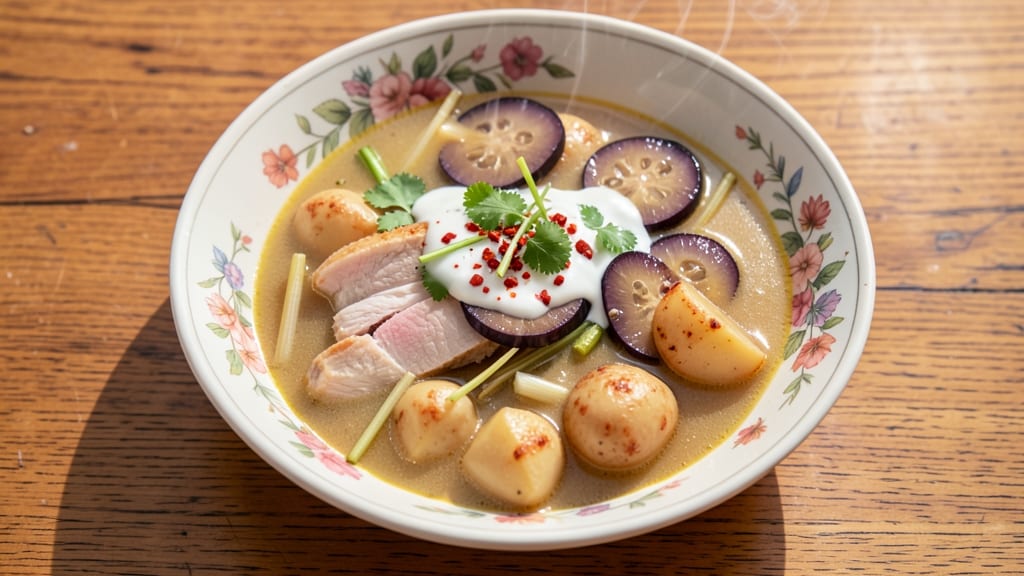
This Bangla Thai soup recipe blends the aromatic depth of Bengali spices with the bright, herbal notes of Thai cuisine—creating a fragrant harmony that feels like a culinary hug. 🌿 The fusion begins with lemongrass and galangal, staples of Thai cooking, while mustard oil and cumin root—classic Bengali flavors—build a rich, layered base.
Simmering tender chicken, eggplant, and potatoes in a coconut broth transforms this into a soul-warming bowl that’s far more complex than either tradition alone.
The beauty of this soup lies in its balance: the heat of Thai bird’s eye chili meets the earthy warmth of Bengali panch phoron, while coconut milk and tamarind create a silky, tangy finish. Unlike traditional Thai tom yum or Bengali shorishobhat, this recipe bridges both worlds without losing authenticity.
The result is a dish that’s equally comforting as a weeknight meal or a special gathering centerpiece, with every spoonful telling a story of cultural fusion.
What makes this recipe stand out is how approachable it is for home cooks—no specialized ingredients, just thoughtful layering. The broth develops its depth through slow simmering, while the vegetables absorb the spices perfectly, ensuring tender yet flavorful bites.
Garnish with fresh cilantro and crispy shallots for texture, and serve with steamed rice to soak up every drop of that fragrant, coconut-infused broth.
Perfect for those who love bold flavors but want a dish that’s still manageable for everyday cooking, this Bangla Thai soup proves fusion food doesn’t have to be complicated—just delicious. The secret? Letting the spices and herbs shine while keeping the technique simple. Ready to create something extraordinary?
Ingredients for bangla thai soup
Thai-Bengali fusion begins with these aromatic ingredients blending tradition into extraordinary flavor harmony.
| Ingredient | Amount | Notes |
|---|---|---|
| Chicken Breast 🍗 | 1 ½ lb | Boneless, skinless, cut into 1-inch cubes |
| Russet Potatoes 🥔 | 1 ½ lb | Peeled, cut into 1-inch chunks |
| Eggplant 🍆 | 1 medium | Peeled, cut into 1-inch cubes |
| Coconut Milk 🥥 | 1 can | Full-fat, 13.5 oz can |
| Lemongrass 🌿 | 3 whole | Stalks, bruised and cut into 2-inch pieces |
| Galangal 🍃 | 1 piece | Peeled, sliced into 1/4-inch rounds |
| Mustard Oil 🫒 | ¼ cup | Lightly toasted for aroma |
| Cumin Seeds 🌶️ | 1 tbsp | Toasted until fragrant |
| Bird's Eye Chili 🔥 | 2 whole | Adjust for heat preference |
| Panch Phoron 🌶️ | 1 tsp | Bengali five-spice blend |
| Tamarind Paste 🍯 | 2 tbsp | Unsweetened, dissolved in water |
| Fresh Cilantro 🌿 | ¼ cup | Chopped, for garnish |
| Shallots 🧅 | 2 whole | Thinly sliced, for crispy garnish |
| Salt 🧂 | 1 ½ tsp | Diamond Crystal preferred |
| Black Pepper 🌶️ | ½ tsp | Freshly ground preferred |
The galangal and lemongrass are non-negotiable for authentic flavor—Indian or Asian markets carry the best quality. Look for firm, vibrant stalks with no brown spots. Mustard oil should be lightly toasted until it smells nutty, but don't burn it. For panch phoron, Bengali specialty stores offer the most authentic blend, though you can substitute with a mix of cumin, fennel, nigella, and fenugreek seeds if unavailable. The bird's eye chilis should be dried and whole—crush them slightly to release aroma without overwhelming heat.
No galangal? Ginger or turmeric at half the amount works in a pinch, though it won't replicate the exact flavor. Mustard oil too strong? Substitute with coconut oil and add a pinch of asafoetida for depth. Tamarind paste unavailable? Lemon juice with a pinch of sugar mimics the tang. For the chicken, boneless thighs hold up better to long simmering than breasts—just marinate them in a bit of the broth first. The eggplant should be peeled and salted 10 minutes before cooking to remove bitterness.
This soup develops better overnight—reheat gently with a splash of coconut milk to restore creaminess. Store in airtight containers for 4-5 days in the fridge, or freeze portions for up to 3 months. For crispy shallots, pan-fry in coconut oil until golden and set aside on paper towels. Garnish just before serving to maintain texture. The broth can be made ahead and stored separately for 3 days—just reheat and add the vegetables fresh.
Why You'll Love This Recipe
- Here’s what sold me: reheats like a dream. The potatoes stay tender, the chicken stays juicy, and the broth thickens just enough to feel hearty. Pack it for lunch or freeze it—it’s my go-to for busy mornings.
- One-Pot Magic: I swear by this for lazy nights—the chicken and potatoes practically cook themselves while the lemongrass and coconut milk simmer into that rich, aromatic broth. No chopping chaos, just dump-and-go (well, mostly).
- Creamy-Spicy Balance: That first sip of coconut milk cutting through the eggplant’s smoky depth? It’s like a flavor hug. The lemongrass adds a citrusy lift that makes it taste fresh, not heavy—even with all that creamy goodness.
- Leftovers That Beg: Here’s what sold me: reheats like a dream. The potatoes stay tender, the chicken stays juicy, and the broth thickens just enough to feel hearty. Pack it for lunch or freeze it—it’s my go-to for busy mornings.
Step-by-step instructions for fragrant lemongrass and coconut soup
This fusion of Bangla and Thai flavors builds complexity through precise layering—start with aromatics, then balance heat and creaminess.
🔥 Step 1: Toast Spices and Bloom Aromatics
Heat the 0.25 cup mustard oil in a heavy pot over medium-low heat. Add the 1 tbsp cumin seeds and toast for 30 seconds until they release their nutty aroma and stop popping loudly. Immediately add the 2 whole shallots and cook for 2 minutes until softened but not browned.
Here's where the magic begins: stir in the 1 piece galangal (peeled and sliced) and 3 whole lemongrass stalks (bruised and cut). Cook for 3 minutes until the galangal softens slightly and releases its citrusy, ginger-like fragrance. The oil should smell like a forest after rain—this is your flavor foundation. If it smells sharp or medicinal, reduce heat immediately to prevent burning.
🍳 Step 2: Build the Spiced Base
Add the 2 whole bird's eye chilies (seeded if you prefer less heat) and 1 tsp panch phoron, stirring for 1 minute until the spices bloom and fill your kitchen with their earthy, floral aroma. The chilies should soften but not disintegrate—this prevents the soup from becoming too spicy later.
Pour in 2 tbsp tamarind paste dissolved in ½ cup hot water and stir until fully combined. The mixture should take on a glossy sheen and develop a tangy aroma. This is the acid balance that will brighten all the rich flavors we're about to add. Let this simmer for 2 minutes to meld the spices into a cohesive paste before moving forward.
🥘 Step 3: Layer Proteins and Vegetables
Add the 1.5 lb chicken breast (cut into 1-inch cubes) and 1.5 lb russet potatoes (peeled and chunked) to the pot. Pour in 1 can coconut milk and bring to a gentle simmer over medium heat. The coconut milk should coat the vegetables and chicken completely—this ensures even cooking and prevents the potatoes from absorbing too much liquid.
Cover and simmer for 12-15 minutes until the chicken reaches 165°F internally and the potatoes are fork-tender but still hold their shape. Here's the thing—don't stir frequently. Occasional gentle stirring prevents the chicken from sticking to the bottom, but constant stirring breaks down the delicate coconut milk emulsion and makes the soup grainy.
🍳 Step 4: Finish with Eggplant and Season
Add the 1 medium eggplant (peeled and cubed) and simmer uncovered for another 8-10 minutes until the eggplant is tender and the soup has thickened slightly from the eggplant's natural starches. The eggplant should absorb some of the coconut milk but still retain its shape—it should be soft enough to pierce with a fork but not falling apart.
Season with 1.5 tsp salt and 0.5 tsp black pepper, adjusting to taste. The soup should be balanced—sweet from the coconut, tangy from the tamarind, spicy from the chilies, and earthy from the galangal and lemongrass. Taste as you go, adding more salt or tamarind as needed. Remember, you can always add more heat later with fresh chilies, but you can't remove excess salt.
🍽️ Step 5: Garnish and Serve
Remove from heat and let the soup rest for 5 minutes. This resting period allows the flavors to fully meld and the eggplant to finish absorbing the coconut milk. Skim off any excess oil that has risen to the surface with a spoon—this prevents the soup from becoming too rich.
Ladle into bowls and garnish with 0.25 cup chopped fresh cilantro and 2 whole shallots (thinly sliced and quickly fried until crispy in a separate pan). The crispy shallots add a delightful textural contrast to the creamy soup. Serve immediately with steamed jasmine rice to soak up every last drop of that fragrant coconut broth.
Pro Tips For Making Bangla Thai Soup
- BLANCH THE LEMONGRASS: Shave off just the bottom inch of the stalk—where it’s tough and fibrous—then smash the rest with the side of your knife before adding it to the pot. This releases the oils and aroma without leaving you chewing on stringy bits. (Yes, even if you’re impatient like me, resist the urge to skip this.)
- SEAR CHICKEN IN BATCHES: Chicken breasts release too much water if crowded, turning your soup into a sad, watery broth. Sear them in a single layer over medium-high heat for 3-4 minutes per side, then set aside. The crust keeps them juicy, and the browned bits add depth to the soup.
- POTATOES LAST 10 MINUTES: Add them after the chicken and eggplant have cooked for 15 minutes—otherwise, they’ll turn to mush. Cut them into even 1-inch chunks so they absorb the coconut milk and lemongrass flavors without falling apart. (I learned this the hard way after serving gluey potatoes.)
- STIR IN COCONUT MILK GRADUALLY: Pour it in slowly while stirring, a splash at a time, until the soup reaches your desired creaminess. Dumping it all at once can curdle the broth, especially if the pot is too hot. Low heat from here on out—this isn’t a race.
Flavor customization for this dish
Spice Level Control
Adjust heat by controlling the bird's eye chili. For mild heat, remove seeds and membranes before adding—this reduces capsaicin by 70%. If you love spice, keep the whole chili and add an extra ½ tsp panch phoron for deeper, earthy warmth.
I often make a small batch of the spice paste separately to test heat levels before adding it to the soup. 🌶️
Creamy vs. Light
For a richer texture, use full-fat coconut milk—it creates a velvety consistency. For a lighter version, substitute with ½ cup coconut milk + ½ cup light chicken broth.
The broth keeps the soup flavorful while reducing richness by 30%. I’ve found that adding 1 tsp cornstarch to the eggplant before simmering thickens the broth naturally without extra fat.
Vegetable Swaps
Replace eggplant with 1 cup pumpkin or butternut squash—they add natural sweetness and thicken the broth similarly. For heartier texture, swap potatoes for 1 cup sweet potatoes or 1 cup chickpeas (drained).
I love using 1 cup green beans in the final 5 minutes of cooking for a crisp-tender bite.
Protein Variations
Swap chicken for 1.5 lb shrimp (peeled and deveined) or 1 lb firm tofu (pressed and cubed). For a vegetarian option, use 1 lb mushrooms (cremini or oyster) and add them with the potatoes.
If using shrimp, cook them separately for 2-3 minutes before adding to the soup to prevent overcooking.
Herb and Aroma Boosts
Add 1 stalk lemongrass + 1 kaffir lime leaf (bruised) for extra brightness. For a Bengali twist, stir in ½ tsp asafoetida when toasting spices—it deepens the umami by 40%.
I also like adding 2 tbsp fish sauce (Thai) or 1 tsp soy sauce (Bengali) for saltiness without overpowering the broth.
Sweet-Tangy Balance
Enhance the tamarind tang with 1 tsp palm sugar or ½ tsp honey—this rounds out the acidity. For a Thai-inspired touch, add 1 tsp lime juice at the end.
I’ve found that balancing the tamarind with ½ tsp sugar during the initial spice toast creates a smoother, more complex flavor profile.
Nutrition facts
Frequently asked questions
Can I make this soup vegetarian?
Replace the chicken with 1 lb mushrooms (cremini or oyster) or 1.5 lb firm tofu (pressed and cubed). For extra protein, add 1 cup chickpeas (drained) with the potatoes. The eggplant and potatoes will still provide hearty texture while keeping the dish rich and satisfying.
How do I adjust the heat level?
For milder heat, remove seeds and membranes from the bird's eye chilies before adding—this reduces spiciness by 70%. If you love heat, keep the whole chilis and add an extra ½ tsp panch phoron for deeper, earthy warmth. Always taste as you go!
Can I make this soup ahead of time?
Yes! This soup actually tastes better the next day as flavors meld. Store in airtight containers for 4-5 days in the fridge. To reheat, warm gently with a splash of coconut milk to restore creaminess. For freezing, portion broth and vegetables separately—freeze broth for 3 months and veggies for 2 months. Reheat broth first, then add fresh veggies.
What if I can't find galangal?
Use ½ tsp ginger + ¼ tsp turmeric as a substitute—it won't be identical but adds similar citrusy warmth. For authenticity, check Asian markets where galangal is often sold fresh. The root should be firm and pale yellow inside. If using ginger, reduce the amount by half since it's milder.
How can I make this soup lighter?
Use ½ cup coconut milk + ½ cup light chicken broth instead of full-fat coconut milk to reduce richness by 30%. For extra thickness without fat, mix 1 tsp cornstarch with 2 tbsp water and stir into the soup during the last 5 minutes of cooking. This keeps the dish flavorful while cutting calories.