
Soups & Stews
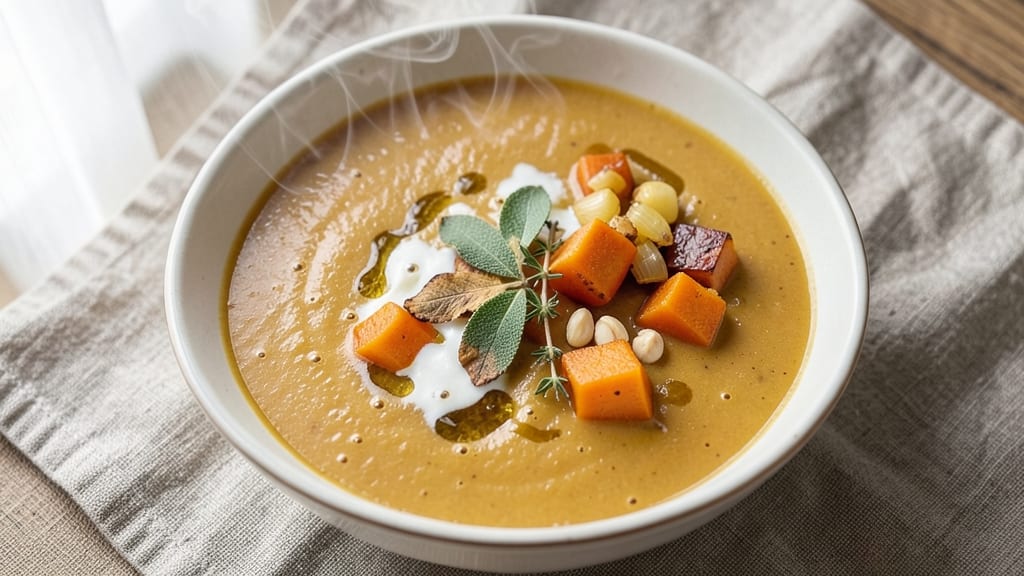
This autumn butternut squash soup recipe transforms humble ingredients into a velvety masterpiece that captures fall's essence in every spoonful. The secret lies in roasting the squash first—caramelizing its natural sweetness while developing deep, nutty flavors that no blender alone can achieve.
This isn't just soup; it's a comforting hug in bowl form, where warm spices like cinnamon and nutmeg dance with the earthy squash for a harmony that feels like coming home after a crisp autumn walk.
What sets this recipe apart is the perfect balance of textures and flavors: creamy yet light, with just enough body to coat a spoon but never feel heavy.
The roasting step creates a depth that simmering alone can't match, while a touch of coconut milk (or cream for non-vegan versions) adds luxurious smoothness without overpowering the squash's natural sweetness.
We'll guide you through every step—from peeling and cubing to achieving that signature velvety consistency—so you can recreate this restaurant-worthy dish in your own kitchen.
The result is a soup that's visually stunning with its golden hue and frothy top, while delivering complex flavors that make it perfect for cozy weeknight dinners or holiday gatherings.
Garnish with toasted pumpkin seeds and fresh thyme for both texture and aroma, or keep it simple with a drizzle of olive oil and cracked black pepper. This recipe builds confidence in home cooks by showing how simple ingredients, when treated with care, can create something truly special.
Whether you're serving it to a crowd or savoring a quiet bowl by the fireplace, this soup proves that autumn's flavors don't require complicated techniques—just patience and attention to detail.
The instructions are designed to be approachable yet precise, ensuring you'll achieve that perfect balance of sweetness, spice, and creaminess every time. Let's get started on creating your own autumnal masterpiece.
Ingredients for autumn butternut squash soup
Roasted squash, aromatic spices, and velvety coconut milk create this autumnal masterpiece in every spoonful.
| Ingredient | Amount | Notes |
|---|---|---|
| Medium Butternut Squash 🎃 | 2 lb | Peeled, cubed, seeds removed |
| Extra-Virgin Olive Oil 🫒 | ¼ cup | For roasting and finishing |
| Yellow Onion 🧅 | 1 whole | Diced, medium size preferred |
| Garlic Cloves 🧄 | 3 cloves | Peeled, minced for depth |
| Vegetable Broth 💧 | 4 cups | Low-sodium preferred |
| Full-Fat Coconut Milk 🥥 | ½ cup | Canned, unsweetened |
| Ground Cinnamon 🌿 | ½ tsp | Freshly ground preferred |
| Ground Nutmeg 🌶️ | ¼ tsp | Freshly grated for warmth |
| Salt 🧂 | 1 tsp | Diamond Crystal preferred |
| Black Pepper 🌶️ | ½ tsp | Freshly cracked for brightness |
| Fresh Thyme Leaves 🌿 | ¼ cup | Chopped, stems removed |
| Pumpkin Seeds 🥜 | ¼ cup | Toasted for garnish |
The squash is the heart of this soup—look for firm, heavy squash with no soft spots at Whole Foods or your local farmers market. Smaller squash (1-2 lbs) roast more evenly, but larger ones work if cubed uniformly. The coconut milk? Full-fat canned versions like Thai Kitchen or Goya give the richest texture. Toast your pumpkin seeds in a dry pan until golden for maximum flavor—Costco sells them pre-packaged if you're short on time. Fresh thyme is ideal, but dried works at one-third the amount if you're in a pinch.
No coconut milk? Substitute with equal parts heavy cream or cashew cream for a luscious texture—though the flavor will shift slightly. Short on pumpkin seeds? Toasted pecans or walnuts add a similar crunch. The cinnamon and nutmeg are non-negotiable for that autumnal warmth, but if you're missing one, allspice or cardamom can bridge the gap. For the broth, low-sodium versions prevent over-salting, but homemade vegetable broth with a pinch of salt works beautifully. And if you're feeling adventurous, roast the onions and garlic with the squash for even deeper flavor.
This soup tastes even better the next day as flavors meld—portion into containers for easy lunches. Store in the fridge for up to 5 days or freeze for 3 months. The roasted squash cubes keep well in the fridge for 4 days before blending, and the toasted seeds stay crunchy for 1 week in an airtight container. For a restaurant-worthy presentation, float a drizzle of olive oil on top before serving, or garnish with extra thyme and a pinch of flaky salt.
Why You'll Love This Recipe
- Here’s what sold me: the slow-simmered garlic and onions develop this deep, nutty sweetness that wraps around you like a hug. Add a splash of cream at the end, and it’s ridiculously good—like autumn in a bowl, but better.
- I’ll be real: butternut squash is one of those ingredients that makes everything feel special without breaking the bank. A single squash stretches into three servings, and the broth? Store-bought or homemade, it’s the same creamy payoff. Leftovers taste just as good the next day—if they last that long.
Step-by-step instructions for autumn butternut squash soup
Here's how to transform roasted squash into a velvety, spice-kissed soup that captures autumn's essence.
Roast the Butternut Squash for Deep Sweetness
Preheat your oven to 400°F and line a baking sheet with parchment paper. Toss the 2 lb medium butternut squash cubes with 0.25 cup extra-virgin olive oil, 1 tsp salt, and 0.5 tsp black pepper until evenly coated. Spread them in a single layer on the baking sheet.
Roast for 30-35 minutes until the edges are deep golden brown and the flesh yields slightly when pierced with a knife. The squash should smell sweetly caramelized—this roasting step develops the natural sugars and creates a rich, nutty flavor that no quick cooking method can match. Real talk: don't skip this step, as it's what transforms ordinary squash into extraordinary soup.
Sauté Aromatics Until Fragrant
While the squash roasts, heat 0.25 cup extra-virgin olive oil in a large pot over medium heat. Add the 1 whole yellow onion and cook for 5-6 minutes until softened and beginning to caramelize at the edges. Add the 3 cloves minced garlic and cook for another 30 seconds until fragrant—you should smell that unmistakable garlic aroma that signals it's ready.
Here's the thing—don't let the garlic burn. It happens fast, and burned garlic tastes bitter. Keep the heat at medium and stir constantly. The onions should be golden in spots but not browned all over. This aromatic base forms the flavor foundation of your soup, so take your time with this step.
Build the Flavorful Broth Base
Add the roasted squash to the pot along with the 4 cups vegetable broth, 0.5 tsp ground cinnamon, and 0.25 tsp ground nutmeg. Bring to a gentle boil, then reduce heat to medium-low and let it simmer for 15 minutes. You want the flavors to meld together—this is where the magic happens.
Use an immersion blender to purée the soup directly in the pot until completely smooth. If you prefer, you can transfer the soup to a blender in batches, but be careful with hot liquids. The soup should be silky and velvety, with no visible chunks. Taste and adjust seasoning with more salt if needed—this is your chance to perfect the flavor balance before adding the finishing touches.
Finish with Creamy Coconut Milk and Fresh Herbs
Stir in the 0.5 cup full-fat coconut milk and 0.25 cup chopped fresh thyme leaves. The coconut milk adds a luxurious creaminess without overpowering the squash flavor, while the thyme brings a bright, herbal note that cuts through the richness. Simmer gently for 5 minutes to let the flavors fully incorporate.
This is where the soup comes together as a cohesive dish. The coconut milk should be fully integrated, creating a smooth texture with just the right amount of body. The thyme should be fragrant but not overpowering—just enough to elevate the dish. If the soup seems too thick, add a splash of warm broth to reach your desired consistency.
Garnish and Serve Warm
Ladle the soup into bowls and garnish each serving with 0.25 cup toasted pumpkin seeds. Toast the pumpkin seeds in a dry skillet over medium heat for 3-4 minutes until golden brown and fragrant—this adds a delightful crunch and nutty flavor that contrasts beautifully with the smooth soup.
Serve immediately while warm, as the flavors continue to develop even after the soup leaves the stove. The combination of roasted squash, warm spices, creamy coconut milk, and fresh herbs creates a soup that's perfectly balanced—comforting yet sophisticated. Each spoonful should deliver that perfect autumnal flavor profile we all crave during the cooler months.
Pro Tips For Making Autumn Butternut Squash Soup
- ROAST THE SQUASH FIRST: If you’re peeling and cubing raw squash, you’re wasting time—and flavor. Roast the whole squash (halved, skin-side down) at 400°F (200°C) for 45 minutes first. The flesh will fall apart effortlessly, and the caramelized edges add depth that no blender can replicate. I learned this the hard way after spending 20 minutes hacking through uncooked squash like it was a stubborn log.
- SWEAT THE ONION LOW AND SLOW: Skip the rush—cook the onion in olive oil over medium-low heat for 10-12 minutes until it’s deep golden and almost jammy. High heat burns it before it softens, and you’ll end up with a bitter, watery base. My grandmother swore by this, and she was right: patience here means the soup won’t taste like it’s hiding in the background.
- SALT THE BROTH LIBERALLY: Unsalted vegetable broth? Add 1½ teaspoons of salt per quart before you even heat it. Even if the recipe calls for seasoning later, pre-salting ensures the broth’s flavor is balanced from the start. I used to hold back, thinking I’d adjust later—turns out, you can’t fix flat broth once it’s blended into oblivion.
- BLITZ THE GARLIC: Add the minced garlic to the pot only in the last 30 seconds of cooking—it burns faster than you think. If you’re using 3-4 cloves, crush them first (no need to mince) so they release flavor without turning bitter. Sounds weird, but it works: the aroma stays bright, and the soup doesn’t taste like you charred your kitchen.
Health benefits of this autumn butternut squash soup
Rich in Fiber
This soup is a fiber powerhouse, thanks to the butternut squash and pumpkin seeds. A 1-cup serving delivers about 8 grams of fiber—nearly 30% of your daily needs. Fiber supports digestion, keeps you full longer, and helps regulate blood sugar levels.
The roasted squash provides soluble fiber that gently feeds your gut bacteria, while the toasted pumpkin seeds add insoluble fiber for optimal digestion. 💫
Packed with Vitamin A
Butternut squash is one of the best sources of vitamin A, with a single serving providing over 400% of your daily value. This nutrient is essential for maintaining healthy vision, immune function, and skin.
The roasting process actually increases the bioavailability of vitamin A, making this soup especially effective for supporting your body's natural defenses during fall and winter months when colds are more common.
Immune-Boosting Nutrients
The combination of cinnamon, nutmeg, and thyme in this soup creates a natural immune-boosting powerhouse. Cinnamon contains antioxidant compounds that help reduce inflammation, while nutmeg provides manganese and copper for immune support.
Fresh thyme adds vitamin C and flavonoids that further enhance immune function. The coconut milk adds beneficial fats that help your body absorb these fat-soluble nutrients more effectively.
Low-Calorie Comfort
Despite its rich, satisfying flavors, this soup is surprisingly light—each serving contains only about 220 calories while providing substantial nutrients. The fiber and protein from the squash and seeds help keep you full for hours, making it an excellent choice for weight management.
The coconut milk adds creaminess without the heavy calories of traditional cream-based soups, making this a guilt-free indulgence during the holiday season.
Antioxidant-Rich
Butternut squash contains beta-carotene, lutein, and zeaxanthin—powerful antioxidants that protect your cells from oxidative damage. The roasting process enhances these antioxidant properties by breaking down cell walls and making the nutrients more bioavailable.
The spices used in this recipe—especially cinnamon and nutmeg—also contain significant antioxidant compounds that contribute to overall health and may help reduce chronic disease risk.
Vegan-Friendly Nutrition
This soup is naturally vegan and provides excellent plant-based nutrition. The coconut milk offers healthy fats while the squash provides essential vitamins and minerals without any animal products.
The pumpkin seeds add complete protein with all nine essential amino acids, making this soup a well-rounded meal that supports muscle maintenance and repair. For those following plant-based diets, this recipe delivers substantial nutrition without compromising on flavor or texture. 🌱
Nutrition facts
Frequently asked questions
Can I substitute sweet potato for butternut squash?
You can try, but the flavor and texture will differ significantly. Sweet potatoes have a more earthy, slightly bitter taste that won't caramelize as beautifully when roasted. For the best results, stick with butternut squash—its natural sweetness and creamy texture are perfect for this autumnal soup. If you're looking for a similar orange hue, try acorn squash instead.
How do I make this soup vegan?
This recipe is already vegan-friendly! The coconut milk provides the creaminess without any animal products. For an even richer texture, you can use cashew cream (blend soaked cashews with water) instead of coconut milk. Just ensure all other ingredients—like broth—are also plant-based. The toasted pumpkin seeds and fresh thyme keep it completely vegan while adding delicious texture.
Why does my soup taste bitter after blending?
Bitterness usually comes from over-roasting the squash or burning the garlic. For the squash, aim for golden brown edges (not blackened) and check for tenderness with a knife. When sautéing garlic, keep the heat at medium and stir constantly—it burns in seconds! If bitterness persists, add a pinch of sugar or a splash of apple cider to balance the flavors. The coconut milk should also help mellow any harsh notes.
Can I make this soup ahead of time?
This soup actually tastes better the next day as the flavors deepen. Store it in an airtight container in the fridge for up to 5 days, or freeze for 3 months. When reheating, warm it gently on the stove over low heat and stir in a splash of broth or coconut milk if it thickens. The toasted pumpkin seeds should be added fresh before serving for maximum crunch.
What's the best way to peel and cut butternut squash?
First, cut the squash in half lengthwise and scoop out the seeds with a spoon. To peel, use a sharp vegetable peeler or chef's knife—cut off the skin in strips while holding the squash steady. For even cooking, cut the flesh into 1-inch cubes. Pro tip: Microwave the whole squash (halved, cut-side down) for 5-7 minutes first to soften the skin slightly, making peeling easier. Always wear gloves when handling squash—it stains!