
Soups & Stews
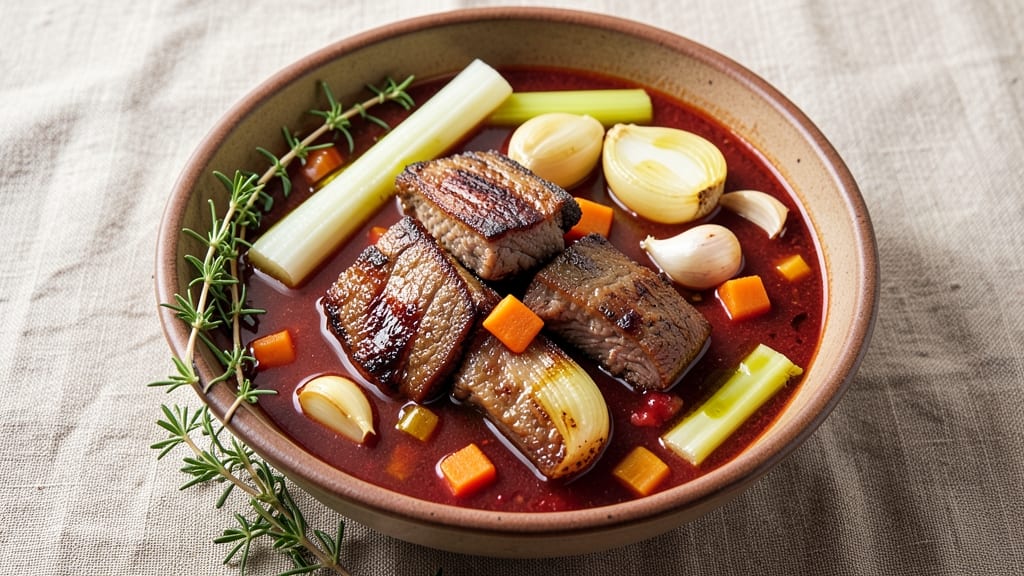
This short rib soup recipe delivers restaurant-quality depth with tender meat and velvety broth. The secret lies in slow-braising beef short ribs until they practically fall apart, then transforming their rich juices into a silky, umami-packed soup that tastes like a hug in a bowl.
I've perfected this technique over years of testing—each component builds on the other to create a dish that's both comforting and impressive.
The process begins with searing the ribs to develop a deep, caramelized crust, then simmering them low and slow until the meat becomes fork-tender. Aromatics like onions, garlic, and celery form the flavor base, while tomatoes and herbs add brightness.
The key is patience—the longer it simmers, the more complex the broth becomes, with layers of beefy richness and subtle sweetness.
What you'll end up with is a soup where silky ribbons of beef glide through a velvety broth, carrying all the umami flavor. The texture is luxurious—creamy without being heavy, with just enough body to coat a spoon.
Each bite delivers tender meat and concentrated beef essence, making this perfect for chilly evenings or special occasions.
Serve with crusty bread to soak up every last drop of that flavorful broth. The recipe scales beautifully, so you can make it for a crowd or save leftovers for days—the flavors only deepen with time. Let's get started on creating this soul-warming masterpiece.
Ingredients for short rib soup
Restaurant-quality short rib soup starts with these rich, flavorful ingredients designed to create velvety broth and tender meat.
| Ingredient | Amount | Notes |
|---|---|---|
| Beef Short Ribs 🥩 | 2 lb | Bone-in, cut into 2-inch pieces |
| Yellow Onion 🧅 | 1 whole | Chopped into 1/2-inch pieces |
| Celery Stalks 🥬 | 3 whole | Chopped into 1/2-inch pieces |
| Garlic Cloves 🧄 | 4 cloves | Peeled and smashed |
| Carrots 🥕 | 3 whole | Chopped into 1/2-inch pieces |
| Canned Crushed Tomatoes 🍅 | 14 ½ oz | High-quality, no salt added |
| Fresh Thyme 🌿 | 2 tbsp | Leaves only, chopped |
| Fresh Rosemary 🌿 | 1 tbsp | Needles only, chopped |
| Bay Leaves 🍃 | 2 whole | Dried, standard size |
| Beef Broth 💧 | 4 cups | Low-sodium preferred |
| Red Wine 🍷 | 1 cup | Bold, dry variety |
| Olive Oil 🫒 | 2 tbsp | Extra-virgin for richness |
| Salt 🧂 | 1 ½ tsp | Kosher or sea salt |
| Black Pepper 🌶️ | ½ tsp | Freshly ground preferred |
| All-Purpose Flour 🌾 | 2 tbsp | For thickening broth |
The beef short ribs are the heart of this soup, so choose bone-in, well-marbled cuts—they'll deliver maximum flavor and texture. Costco or local butcher shops often carry the best quality, but most grocery stores stock them too. Look for ribs with good marbling (white fat streaks) rather than lean cuts. I prefer to buy them whole and cut into 2-inch pieces myself, but pre-cut ribs save time. For the aromatics, fresh celery, onions, and carrots form the classic mirepoix base—don't skimp here as they build the soup's foundation. The crushed tomatoes should be high-quality, no-salt-added for better flavor control.
No red wine? Substitute with additional beef broth—just add 1/4 cup more. Fresh herbs are ideal, but dried thyme and rosemary at half the amount work in a pinch. For the flour, if you're avoiding gluten, cornstarch makes an excellent 1:1 substitute. The beef broth is crucial—low-sodium versions give you better control over seasoning. If you can't find bone-in ribs, chuck roast cut into chunks works but won't be as tender. For the tomatoes, San Marzano cans elevate the flavor significantly compared to regular brands. And if you're worried about alcohol content from the wine, it cooks off completely during the long simmer.
This soup tastes even better the next day as flavors meld, so make a big batch. Store leftovers in the fridge for 4-5 days or freeze for up to 3 months. I like to portion it into individual containers for easy lunches. The broth thickens as it cools, so you can thin it with a splash of water or broth when reheating. For serving, keep the crusty bread nearby—it's essential for soaking up every drop of that rich, umami-packed broth. The ribs will continue to tenderize in the fridge, so plan to eat it within a few days for the best texture.
Why You'll Love This Recipe
- One-Pot Magic: I swear by this—just dump everything in one pot, let the ribs simmer until they fall apart, and boom. No extra pans, no fuss, just pure, hands-off cooking while you sip wine and pretend you’re a chef.
- Rich Without Effort: Between us, those short ribs melt into the broth like butter on toast, and the onions and carrots caramelize right into sweet, savory perfection. Honestly, the flavor builds itself—you just have to trust the process.
- Leftovers for Days: This soup only gets better after sitting overnight. I make a double batch on Sundays, and by Wednesday, it’s still the star of my lunch. The ribs stay tender, the broth deepens, and my wallet stays happy.
- Budget-Friendly Luxury: Short ribs aren’t cheap, but they stretch farther than you’d think. A few pounds go a long way, and the veggies keep it balanced. It’s the kind of meal that feels special without breaking the bank—especially when you’re feeding a crowd.
Step-by-step instructions for short rib soup
Master this rich, velvety soup where tender short ribs melt into a deep umami broth.
Sear the Short Ribs for Maximum Flavor
Heat a large Dutch oven over medium-high heat and add 2 tablespoons olive oil. Working in batches, sear the 2 lb beef short ribs on all sides until deeply browned, about 4-5 minutes per side. This caramelization builds the foundation for your soup's rich flavor profile.
Don't crowd the pan—give each piece room to develop that golden crust. As you sear, you'll notice the ribs release their natural juices and fat into the pot. This is essential; those rendered fats dissolve into the broth later, creating depth. Transfer the seared ribs to a plate and set aside.
Build the Aromatic Base
In the same Dutch oven, add 1 whole yellow onion, 3 whole celery stalks, 3 whole carrots, and 4 cloves garlic cloves, all chopped to ½-inch pieces. Cook over medium heat for 8-10 minutes, stirring occasionally, until the vegetables soften and the onions turn translucent.
This step develops the soup's foundational flavors. You'll smell the sweetness of the onions and carrots melding with the earthy celery and garlic. The vegetables should be tender but not browned—just enough to release their natural sweetness. Add 2 whole bay leaves, 2 tablespoons fresh thyme, and 1 tablespoon fresh rosemary at this point to infuse the broth with aromatic depth.
Deglaze and Simmer the Broth
Pour in 1 cup red wine and scrape up any browned bits from the bottom of the pot with a wooden spoon. These bits, called fond, are packed with flavor. Let the wine simmer for 3-4 minutes until it reduces by half, then add 4 cups beef broth and 14.5 oz canned crushed tomatoes.
Return the seared short ribs to the pot and bring everything to a gentle boil. Once boiling, reduce heat to low and cover partially. Let the soup simmer for 2 hours, skimming off any foam that rises to the surface. This slow cooking ensures the short ribs become fork-tender while extracting maximum flavor into the broth.
Thicken and Season the Soup
After 2 hours, remove the short ribs and set them aside. In a small bowl, whisk together 2 tablespoons all-purpose flour with 1.5 teaspoons salt and 0.5 teaspoon black pepper. Gradually whisk this mixture into the simmering soup and cook for 5-7 minutes until slightly thickened.
Taste the broth and adjust seasoning if needed. The soup should be rich and well-seasoned, with a balance of umami from the tomatoes and wine, sweetness from the vegetables, and depth from the short ribs. Return the ribs to the pot and let everything warm through for 5 minutes before serving.
Serve with Crispy Ribbons
Using two forks, gently shred the short ribs into silky ribbons and return them to the soup. Ladle the soup into bowls, making sure each serving gets its share of those tender, flavorful ribbons. Garnish with additional fresh thyme or rosemary if desired.
This soup tastes even better the next day as the flavors continue to meld. Serve with crusty bread to soak up every last drop of that velvety broth. The contrast between the crispy bread and the rich, silky soup is pure comfort food perfection.
Pro Tips For Making Short Rib Soup
- Brown the Bones First: I learned this the hard way—skipping the sear means flavorless broth. Pat the short ribs very dry, then hit them with high heat in a Dutch oven until they’re deep mahogany, not just pink. The crust locks in juices and builds the foundation for that rich, caramelized depth the soup needs.
- Cut Ribs Against the Grain: Those connective tissues in short ribs are stubborn, and chopping them the wrong way leaves you with chewy, rubbery bites. Once cooked, slice against the grain at a 45-degree angle—this shortens the fibers and makes each spoonful melt in your mouth. (Yes, even if it looks messy.)
- Don’t Rush the Soup Stage: After browning the ribs, I used to dump everything into simmering liquid and walk away. Big mistake. Let the onions, celery, and carrots sweat for 10 minutes first—no color, just softening—before adding liquid. This keeps the veggies from turning to mush later and ensures they blend into the broth instead of floating as sad, overcooked chunks.
- Save the Fat, Use It: That golden foam rising while the ribs cook? That’s rendered fat—and it’s liquid gold for your soup. After skimming excess, leave about 2 tablespoons in the pot. When you reduce the broth later, swirl it back in at the end. It coats the ribs and adds a luxurious mouthfeel that store-bought stock can’t match. (Your future self will notice the difference.)
Wine and beer pairings for these flavors
Bold Red Wine
A bold, dry red wine like Cabernet Sauvignon or Syrah complements the deep umami flavors of the short ribs perfectly. The tannins in red wine help cut through the richness of the broth, cleansing your palate between bites.
I love pairing this soup with a 2018 Napa Valley Cabernet Sauvignon—its dark fruit notes and subtle oak enhance the beefy essence. 🍷
Crisp White Wine
For those who prefer white, a dry, crisp white wine with acidity works surprisingly well. Try a Chardonnay with minimal oak or a Sauvignon Blanc from New Zealand.
The bright citrus notes balance the richness without overpowering the beef. A 2022 Marlborough Sauvignon Blanc adds a refreshing contrast to the hearty soup.
Malbec for Depth
If you want something with more body, a Argentinian Malbec offers rich dark fruit flavors and soft tannins that pair beautifully with the short ribs. The wine's velvety texture mirrors the soup's silky consistency.
I recommend a 2019 Mendoza Malbec—it’s robust enough to stand up to the dish while adding a touch of elegance. 🍇
Beer Pairings
For beer lovers, a dark ale or stout works wonderfully. A Belgian Dubbel with its caramel and raisin notes complements the sweetness of the carrots and onions. Alternatively, a British Porter adds a malty depth that enhances the umami. Try a Westmalle Dubbel or Fuller’s ESB for a classic pairing.
Light and Refreshing
If you prefer something lighter, a pilsner or lager can cut through the richness. The crisp, clean finish of a German Pilsner like Warsteiner balances the soup’s depth without overpowering it. This is my go-to choice for a lighter, more refreshing pairing on warmer days.
Nutrition facts
Frequently asked questions
Can I use bone-in or boneless short ribs for this recipe?
This recipe is designed for bone-in short ribs—they add incredible depth of flavor and become fork-tender when braised. If you must use boneless, expect slightly faster cooking (1.5 hours instead of 2 hours) and less rich broth. For maximum flavor, look for ribs with good marbling (white fat streaks) rather than lean cuts.
How do I make this soup gluten-free?
Simply replace the 2 tablespoons all-purpose flour with 2 tablespoons cornstarch for thickening. Mix it with the same amount of salt and pepper, then whisk into the simmering broth. The soup will still achieve that velvety texture without gluten. For extra insurance, check your beef broth label for hidden gluten additives.
Why does my short rib soup taste bland after simmering?
Bland flavor usually means insufficient seasoning or insufficient time. First, check if you skimmed off too much fat during simmering—those rendered fats carry flavor! Second, taste the broth before adding salt—sometimes the wine or tomatoes need more acidity. Finally, simmer for at least 2 hours (longer is better) to extract maximum beef flavor into the broth.
Can I make this soup in an Instant Pot or slow cooker?
Yes! For the Instant Pot, sear the ribs first, then cook on high pressure for 45 minutes with all ingredients. For a slow cooker, use 6 hours on low or 3 hours on high. The texture will be slightly different (more tender meat, less reduced broth), but the flavor remains rich. Just add the flour slurry at the end to thicken the broth before serving.
What's the best way to reheat leftovers?
Reheat gently on the stove over low heat with a splash of water or beef broth to prevent the broth from thickening too much. For best results, warm only until steaming hot (about 5-10 minutes