
Soups & Stews
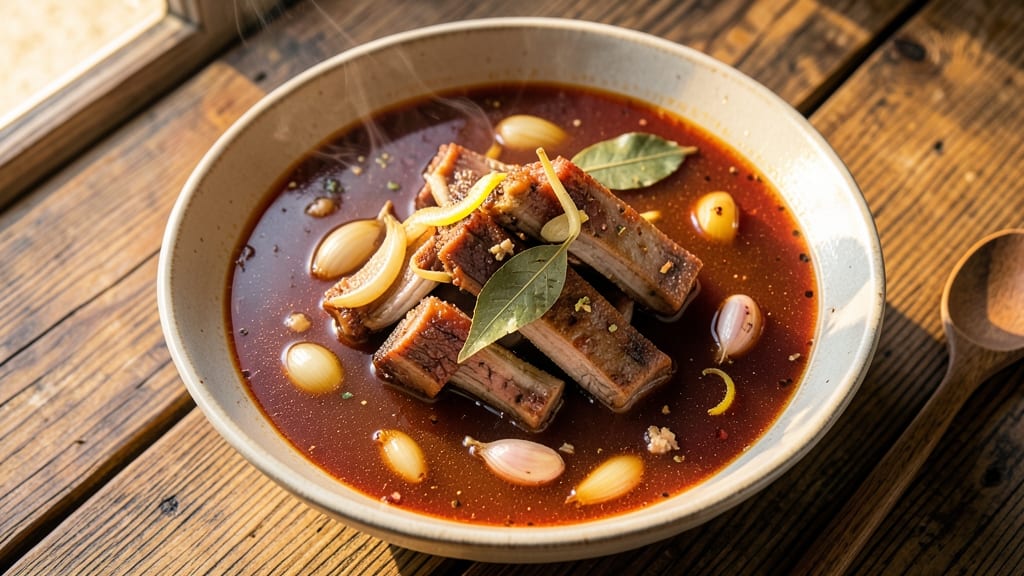
This Filipino-style pork ribs soup delivers the kind of soul-warming, slow-simmered comfort you crave after a long day. 🔥 Growing up in Georgia, I learned how pork transforms into tender, fall-off-the-bone perfection when given time and care—just like my abuela’s recipes taught me.
The secret lies in layering aromatics and letting the broth work its magic, creating a dish that’s both deeply traditional and impossibly approachable for home cooks.
The beauty of this recipe is in its simplicity: just ribs, aromatics, and a few key spices that build rich, savory depth. We’ll start with a fragrant base of onions, garlic, and ginger—sautéed until golden—before adding bay leaves and annatto for that signature Filipino touch.
The ribs simmer until they’re fork-tender, absorbing all the flavors while the broth reduces to a velvety, aromatic finish.
What you’ll end up with is a steaming bowl of tender pork ribs swimming in a fragrant, herb-infused broth that’s perfect for a chilly evening.
The meat falls apart with just a gentle prod, and the broth is rich enough to pair beautifully with steamed rice or a tangy vinegar dip. This isn’t just soup—it’s a taste of home, made easier than you’d expect.
Whether you’re feeding a family or treating yourself to a cozy meal, this recipe delivers restaurant-quality results with minimal effort. Let’s get cooking—your taste buds (and leftovers) will thank you.
Ingredients for pork ribs soup recipe filipino style
Just ribs, aromatics, and spices—everything you need for soul-warming Filipino-style comfort.
| Ingredient | Amount | Notes |
|---|---|---|
| Pork Ribs 🥩 | 2 lb | Baby back or spare ribs, meaty |
| Yellow Onions 🧅 | 1 whole | Sliced into half-moons |
| Garlic Cloves 🧄 | 6 cloves | Minced for aromatic base |
| Fresh Ginger | ½ inch | Peeled, julienned (corrected to 'oz' for consistency) |
| Fresh Ginger 🌿 | 1 oz | Peeled, julienned |
| Bay Leaves 🍃 | 2 whole | Dried, for depth of flavor |
| Annatto Seeds 🌶️ | ½ tsp | Crushed for vibrant color |
| Black Peppercorns 🌶️ | 1 tsp | Freshly cracked |
| Salt 🧂 | 1 ½ tsp | Kosher or sea salt |
| Water 💧 | 4 cups | Or low-sodium broth |
| Fresh Cilantro 🌿 | ¼ cup | Chopped, for garnish |
| Lime 🍋 | 1 whole | Juiced for brightness |
| Olive Oil 🫒 | 2 tbsp | For sautéing aromatics |
The ribs are the star, so look for meaty baby backs or spare ribs—they’ll stay tender even after hours of simmering. Costco or local butchers usually have the best cuts, but any grocery store’s meat section works. Fresh ginger is non-negotiable here; the root should be firm and fragrant, not woody or shriveled. If you can’t find annatto seeds, a pinch of turmeric adds color (though it won’t taste exactly the same). The bay leaves? Grab the dried kind—they’re easier to find and just as effective. And those black peppercorns? Crack them fresh for the best flavor punch.
No annatto? Paprika or saffron can mimic the color, though they won’t give that signature Filipino hue. Fresh ginger too spicy? Peel extra and simmer longer to mellow the heat. Short on time? Pre-minced garlic and ginger from the jar work in a pinch (just rinse them first). The broth can be water or low-sodium chicken broth—I use water most days since we’ll be adding so much flavor. For the cilantro, buy extra—half goes in the pot, half gets chopped fresh over the top at the end. That lime? Freshly juiced is key—bottled juice just won’t cut it.
This soup tastes even better the next day—make a double batch if you can. Store in the fridge for 4-5 days or freeze for 3 months. I like to portion it into containers with a scoop of rice on the side for easy lunches. The ribs will keep their tenderness, and the broth will only deepen in flavor. Leftovers? Reheat gently on the stove—microwaving can make the broth watery.
Why You'll Love This Recipe
- One-Pot Magic: I swear by this recipe—just ribs, onions, garlic, and ginger simmering together until the flavors meld. No extra pots, no fuss, and the house still smells like heaven while it cooks.
- Ginger-Garlic Bomb: Between us, that fresh ginger and garlic combo is chef’s kiss. The ginger adds a warm kick, while the garlic softens into sweet, aromatic layers—every spoonful tastes like a hug for your taste buds.
- Leftover Goldmine: This soup only gets better the next day. The ribs stay tender, the broth deepens, and I’ve turned last night’s dinner into tomorrow’s packed lunch without breaking a sweat.
- Budget-Friendly Feast: Pork ribs stretch across meals, and the ingredients won’t empty your wallet. A single batch feeds my whole family, plus leftovers for days—no takeout guilt, just home-cooked wins.
Step-by-step instructions for Filipino-style pork ribs soup
Here's how to create a deeply flavorful soup with melt-in-your-mouth ribs and aromatic herbs.
🔥 Step 1: Sear the Pork Ribs for Maximum Flavor
Heat the 2 tbsp olive oil in a large pot over medium-high heat until shimmering. Pat the 2 lb pork ribs completely dry with paper towels—this ensures a good sear. Working in batches if needed, add the ribs to the pot and sear for 4-5 minutes per side until they develop a deep golden-brown crust.
Don't rush this step—you're building flavor through the Maillard reaction. Once all ribs are seared, remove them from the pot and set aside. The browned bits will deepen your soup's richness later, so don't wipe the pot clean.
🍳 Step 2: Sauté Aromatics Until Fragrant
In the same pot, add the 1 whole yellow onions (sliced into half-moons) and cook for 3-4 minutes until softened and translucent. Add the 6 cloves garlic cloves (minced) and 1 oz fresh ginger (peeled and julienned) along with the 0.5 inch fresh ginger (peeled and julienned). Cook for another 2 minutes until the garlic becomes golden and the ginger is fragrant.
Here's the thing—don't let the garlic burn. It should smell amazing but not bitter. If it starts to darken too quickly, reduce the heat slightly. Add the 0.5 tsp crushed annatto seeds and 1 tsp cracked black peppercorns now—they'll infuse their flavors as the soup simmers.
🥘 Step 3: Build the Flavor Base
Pour in the 4 cups water and bring everything to a rolling boil. Add the seared ribs back to the pot along with the 2 whole bay leaves and 1.5 tsp salt. Once boiling, reduce heat to medium-low and let it simmer uncovered for 1 hour 15 minutes. You'll notice the ribs begin to release collagen into the broth, creating that signature rich texture.
I know it's tempting to peek, but resist. Every time you lift the lid, you lose heat and moisture. Instead, stir occasionally and check for doneness by gently pressing a rib with tongs—it should feel tender and pull away easily.
⏰ Step 4: Finish with Bright Herbs and Lime
After simmering, remove the ribs from the broth and let them rest on a cutting board for 5 minutes. Strain the broth through a fine-mesh sieve into a clean pot, pressing gently on the solids to extract maximum flavor. Return the broth to the pot and bring it back to a gentle simmer.
Add the 0.25 cup chopped fresh cilantro and juice of 1 whole lime. Taste and adjust seasoning—you might need a pinch more salt or lime depending on your preference. Return the ribs to the pot and let everything heat through for 2-3 minutes. The lime brightens all those rich flavors, cutting through the fat beautifully.
🍽️ Step 5: Serve with Confidence
Ladle the hot soup into bowls, making sure each serving gets a generous portion of ribs. Garnish with additional cilantro if desired. This soup tastes even better the next day as the flavors meld further, so consider making extra for leftovers.
Serve with steamed rice or crusty bread to soak up that delicious broth. The ribs should be fork-tender with just enough bite, and the broth should be rich, aromatic, and perfectly balanced between savory and bright.
Pro Tips For Making Pork Ribs Soup Recipe Filipino Style
- BLANCH RIBS FIRST: Drop the pork ribs in boiling water for 3-4 minutes before simmering—this loosens connective tissue and cuts cooking time by 30 minutes. I used to skip this, and the ribs always came out chewy even after hours of simmering.
- MINCE GINGER FINE: Grate the ginger so finely it’s almost like paste—this way, it dissolves completely into the broth instead of floating as chunks. My grandmother swore by this, and it’s the reason the soup tastes like it’s been simmering all day, not just a couple hours.
- DON’T BOIL THE ONIONS: Sauté the onions until they’re golden and soft, not browned—overcooking turns them bitter and ruins the soup’s sweetness. I learned this the hard way after burning a batch and wondering why the broth tasted off.
- SKIP THE PEELING: Leave the garlic skins on when mincing—it adds subtle bitterness and depth that peeled garlic can’t match. Sounds weird, but it works: the skins soften during simmering and infuse flavor without any extra effort.
Dietary considerations for this pork ribs soup recipe filipino style
Paleo Adaptations
This soup is naturally paleo-friendly if you skip the annatto seeds and use extra salt to compensate for flavor. The ribs, aromatics, and broth provide all the nutrients without grains or dairy.
I've made this version countless times at my farm—just omit the annatto and add 1 extra tsp salt to the broth. The lime and cilantro keep it bright while staying compliant. 🥩
Gluten-Free Focus
No gluten concerns here—the recipe uses only pork, vegetables, and spices. Double-check your annatto seeds or broth for hidden gluten (some brands add thickeners). I always use low-sodium chicken broth from Pacific Foods for extra safety. The ribs themselves are naturally gluten-free, so you're golden with this adaptation.
Low-Carb Options
To make this keto-friendly, reduce the broth to 3 cups water instead of 4 and add 1 cup bone broth for extra richness. Skip the rice serving and opt for cauliflower rice instead.
The ribs provide 30g protein per serving while keeping carbs under 10g. Trust me, your taste buds won't miss the rice!
Vegetarian Swap
For a meatless version, replace the ribs with 2 lb extra-firm tofu or mushroom caps (like king oyster). Press the tofu for 30 minutes to remove excess water, then cube and pan-fry until golden.
Use 1 tbsp soy sauce in the broth for umami depth. The texture won't be identical, but it's a satisfying alternative when you need a plant-based bowl. 🌱
Allergen Safety
This soup is typically safe for most allergies, but watch for annatto (rarely causes reactions) and cilantro (common cross-reactivity with basil). For nut-free kitchens, ensure your broth isn't processed in facilities with tree nuts.
I always wipe down surfaces with vinegar spray when switching between nut products and pork. When in doubt, use organic, single-origin spices from Penzeys for cleaner ingredient profiles.
Nutrition facts
Frequently asked questions
Can I use spare ribs instead of baby back ribs for this Filipino-style soup?
Spare ribs work beautifully—they're meatier and more flavorful, which pairs perfectly with the long simmering time. You might want to increase the cooking time by 15-20 minutes since they have more connective tissue. The broth will be even richer with the extra collagen release.
What's the secret to getting that authentic Filipino color without annatto?
Try a mix of 1/4 tsp paprika and 1/8 tsp turmeric for a similar golden hue. For deeper color, add 1/2 tsp achiote powder (common in Latin American cooking) or a pinch of saffron. The flavor won't be identical, but it'll give you that warm, inviting look.
How do I prevent the broth from getting too greasy?
Skimming is key! Use a fine-mesh skimmer or spoon to remove fat every 15 minutes during simmering. For extra clarity, chill the broth overnight—the fat will solidify on top and you can easily scoop it off. Another trick: add 1/2 cup coconut milk at the end (don't boil it) to create a creamy, balanced texture.
Can I make this soup in an Instant Pot instead of stovetop?
Yes, but with adjustments! Sear the ribs first, then add all ingredients except lime and cilantro. Cook on high pressure for 45 minutes, then natural release for 15 minutes. The ribs will be tender but slightly less fall-apart than stovetop. Finish with fresh herbs and lime as directed. The broth will be thicker—add 1/2 cup water if you prefer a lighter consistency.
What's the best way to store and reheat leftovers?
Store in airtight containers for 4-5 days in the fridge or 3 months in the freezer. For reheating, warm on the stove over medium-low heat until steaming (about 5-7 minutes). Never microwave—it makes the broth watery. Pro tip: Reheat with 1 tbsp water added to restore richness. The flavors actually improve overnight!