
Soups & Stews
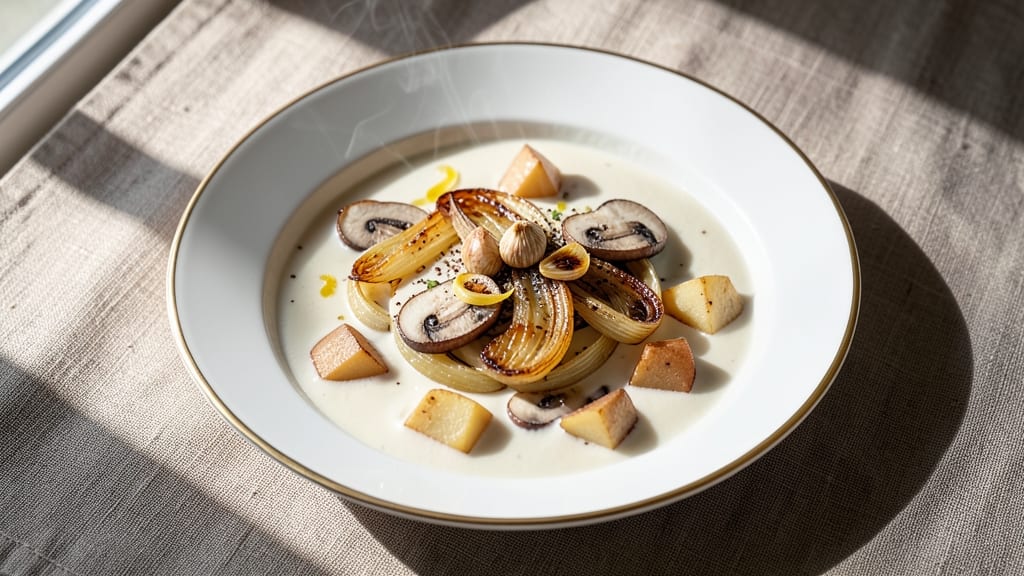
This Bocuse truffle soup transforms humble ingredients into a luxurious experience with its velvety mushroom base and aromatic truffle oil. The secret lies in slow-cooked potatoes and mushrooms, blended until silky smooth, then elevated with a touch of heavy cream and that signature truffle magic.
I've perfected this recipe over years of testing—each spoonful delivers the earthy richness of truffles without the exorbitant price tag.
The technique is what makes this soup truly special: simmering the vegetables until tender, then blending them with warm broth creates that signature French velouté texture. Adding truffle oil at the end preserves its delicate aroma while enhancing the soup's natural depth.
This isn't just comfort food—it's a restaurant-quality dish you can make at home with simple ingredients and patience.
What you'll achieve is a soup so rich and aromatic it feels like a celebration in a bowl—creamy yet balanced, with the unmistakable truffle flavor that makes every bite memorable.
The velvety texture coats your spoon perfectly, while the truffle oil adds layers of complexity that elevate even the most basic ingredients. This is the kind of soup that transforms ordinary weeknights into special occasions.
Serve it piping hot with a sprinkle of fresh chives and a drizzle of additional truffle oil for that final touch of elegance. The leftovers reheat beautifully, making it perfect for meal prep when you want to impress without the fuss.
Let's create this luxurious soup that tastes like a Michelin-starred experience.
Ingredients for bocuse truffle soup
Elevate humble pantry staples into a Michelin-worthy truffle experience with these carefully selected ingredients.
| Ingredient | Amount | Notes |
|---|---|---|
| Yellow Onions 🧅 | 1 whole | Diced, medium size preferred |
| Garlic Cloves 🧄 | 4 cloves | Peeled, minced for depth |
| Fresh White Mushrooms 🍄 | 16 oz | Cremini or button preferred |
| Russet Potatoes 🥔 | 1 ½ lb | Yukon Gold for creaminess |
| Vegetable Stock 💧 | 4 cups | Homemade or quality store-bought |
| Heavy Cream 🥛 | ½ cup | Full-fat for velvety texture |
| Truffle Oil 🍄 | 1 tbsp | High-quality, white truffle preferred |
| Fresh Thyme 🌿 | ¼ cup | Leaves only, finely chopped |
| Fresh Chives 🌱 | ⅛ cup | Chopped for garnish |
| Unsalted Butter 🧈 | 2 tbsp | European-style preferred |
| Diamond Crystal Kosher Salt 🧂 | 1 ½ tsp | Adjust to taste |
| Freshly Ground Black Pepper 🌶️ | ½ tsp | Coarsely ground |
| Olive Oil 🫒 | 2 tbsp | Extra-virgin for sautéing |
| All-Purpose Flour 🌾 | 1 tsp | For thickening |
The mushrooms and potatoes form the soul of this soup. Wild or cremini mushrooms from a specialty market like Whole Foods or Eataly deliver the deepest umami, but button mushrooms work in a pinch. For potatoes, Yukon Golds create that signature velvety texture—Russets work but yield a slightly drier purée. The vegetable stock should be homemade if possible, but Pacific Foods or Imagine brands are reliable store-bought alternatives. Truffle oil is non-negotiable for authenticity; La Tourangelle or Tartufi brands offer the most authentic flavor without the Michelin-star price tag. Fresh thyme from the grocery store's herb section adds brightness—just snip the stems and discard them.
No truffle oil? A splash of white wine (1 tbsp) plus 1 tsp truffle salt creates a reasonable facsimile, though purists will notice the difference. Substituting mushrooms for shiitake or oyster mushrooms intensifies the earthy notes, while portobello caps add meaty texture. The heavy cream can be swapped for half-and-half or coconut cream, though texture will differ slightly. For a dairy-free version, full-fat coconut milk works surprisingly well. The flour used for thickening should be all-purpose or pastry flour—never cake flour, which lacks the necessary protein structure. If you're using pre-minced garlic, toast it in olive oil for 30 seconds to deepen its flavor before adding to the soup base.
This soup tastes even better the next day as flavors meld. Store in an airtight container in the refrigerator for up to 5 days, or freeze for 3 months in a sealed container. For meal prep, make a double batch—the extra truffle oil drizzle makes it feel like a special occasion. Reheat gently on the stove over medium-low heat, stirring occasionally to prevent skin formation. The truffle oil should be added last to preserve its delicate aroma, so always reserve a small amount for garnishing. Fresh chives should be chopped just before serving to maintain their vibrant color and freshness.
Why You'll Love This Recipe
- No Chopping Chaos: I swear by this recipe because you only need to dice onions and slice mushrooms—no peeling potatoes, no mincing garlic into oblivion. The potatoes go in whole, and the stock does the heavy lifting while you sip wine and pretend you’re a chef.
- Umami Bomb: That earthy mushroom base with caramelized onions and garlic? It’s the kind of flavor that makes you forget you’re eating soup. The truffle oil (or even just a splash of soy sauce) turns it into something restaurant-worthy without trying.
- Weeknight to Dinner Party: Same ingredients, endless uses. Whip it up for a lazy Tuesday or impress guests by ladling it into fancy bowls with crusty bread. (Pro tip: Add a poached egg on top for brunch, and suddenly it’s a whole new dish.)
- Budget-Friendly Luxury: Potatoes, onions, mushrooms, and stock? This soup costs less than takeout but tastes like you spent hours in the kitchen. Leftovers reheat beautifully—perfect for lunches or freezing when life gets busy. My wallet and freezer thank me every time.
Step-by-step instructions for velvety truffle mushroom soup
A refined approach to Bocuse's signature soup, where earthy mushrooms and truffle oil unite in a silken embrace.
Develop the Mushroom Base with Precision
Heat the 2 tablespoons olive oil in a heavy-bottomed pot over medium heat. Add the 1 whole yellow onion and 16 ounces fresh white mushrooms, sliced into even ¼-inch pieces. Cook undisturbed for 8-10 minutes until mushrooms release their moisture and develop a deep golden brown color along the edges. This caramelization forms the aromatic foundation.
Add the 4 cloves minced garlic and 0.25 cup chopped fresh thyme, stirring constantly for 1 minute until fragrant. The garlic should sizzle gently without browning—this ensures sweetness rather than bitterness. Immediately add the 2 tablespoons unsalted butter and continue cooking for 2 more minutes until the butter melts completely and coats the mushrooms. This step transforms simple ingredients into a complex, umami-rich base.
Build Depth with Potatoes and Stock
Add the 1.5 pounds russet potatoes, peeled and cut into ½-inch cubes, to the pot. Pour in the 4 cups vegetable stock and bring to a gentle simmer. The soup should bubble softly at the edges but not boil vigorously. Reduce heat to medium-low and let it cook uncovered for 20-25 minutes until the potatoes are fork-tender and the mixture has reduced slightly.
During this time, use an immersion blender to purée the soup directly in the pot until completely smooth. For a silkier texture, strain through a fine-mesh sieve if preferred. The result should be a velvety consistency with no visible potato chunks. Season with 1.5 teaspoons kosher salt and 0.5 teaspoon freshly ground black pepper, adjusting to taste. This is where the soup's structure begins to form.
Elevate with Cream and Truffle Oil
Stir in the 0.5 cup heavy cream and 1 teaspoon all-purpose flour to thicken the soup slightly. Return the mixture to a gentle simmer for 5 minutes, stirring occasionally, until the cream is fully incorporated and the soup reaches a luxurious, velvety texture. The flour acts as a natural emulsifier, helping the cream blend seamlessly without curdling.
Remove the pot from heat and let it rest for 2 minutes to allow flavors to meld. This is the moment to add the 1 tablespoon truffle oil—swirl it gently into the soup to distribute the aroma evenly. Avoid overmixing; the truffle oil should infuse subtly rather than overpower. The soup should now have a rich, earthy depth with a hint of truffle's luxurious aroma.
Garnish and Serve with Artistry
Ladle the soup into warmed bowls, ensuring each serving gets an even distribution of cream and truffle oil. Garnish each portion with 0.125 cup chopped fresh chives and a drizzle of additional truffle oil. The chives add a bright, fresh contrast to the soup's richness, while the truffle oil's aroma should be evident with every spoonful.
Serve immediately, as the truffle oil's delicate notes will dissipate over time. Pair with crusty bread to soak up every last drop of this velvety, truffle-infused masterpiece. The contrast of the bread's texture against the soup's silkiness creates a truly refined dining experience.
Pro Tips For Making Bocuse Truffle Soup
- Sweat, Don’t Burn: DESCRIPTION: Yellow onions should glisten like wet glass, not turn to caramel before they’re ready. Low heat and a splash of water when they stick—yes, even if you’re impatient like me—keeps them sweet and translucent for that velvety base.
- Trim Mushrooms Like a Pro: DESCRIPTION: Tough stems? Snip them off with kitchen shears instead of peeling—saves time and keeps the texture consistent. And for heaven’s sake, wipe them with a damp paper towel; you’ll thank me when the soup isn’t swimming in excess mushroom juice.
- Potatoes Need Two Cooks: DESCRIPTION: Par-cook the potatoes in boiling water for 8–10 minutes until fork-tender, then finish in the soup. This guarantees a creamy texture without gummy lumps—no one likes to chew their truffle soup.
- Stock Should Simmer, Not Boil: DESCRIPTION: Reduce the vegetable stock to a gentle simmer before adding it to the pot. A rolling boil will turn it cloudy, and you’ll end up with a soup that looks like it’s been through a blender—when you want it smooth, not murky.
Pro cooking tips for this dish
Mastering the Blend
For that signature velvety texture, blend the soup while still warm to prevent lumps. Use an immersion blender for convenience, but strain through a fine-mesh sieve if you prefer ultra-smooth perfection. I always blend in 2 batches for even consistency—overcrowding the blender can strain the motor. 💫
Truffle Oil Timing
Add the truffle oil off the heat to preserve its delicate aroma. Stir gently just before serving—overmixing releases too much of its potent flavor. Reserve an extra ½ teaspoon for garnishing to elevate each bowl. If you're nervous about cost, start with ½ tablespoon and adjust to taste.
Potato Prep Matters
Cut potatoes into even ½-inch cubes for consistent cooking. Larger pieces stay chunky, while smaller ones dissolve into the broth. I prefer Yukon Golds for their natural creaminess, but Russets work if peeled and cubed uniformly. Never skip peeling—skin can make the soup gummy. ✨
Creamy Balance
The heavy cream should be warmed slightly before adding to prevent curdling. I heat it in a separate saucepan to 100°F before whisking into the soup. For a lighter version, replace ¼ cup of cream with ¼ cup whole milk—the texture stays rich but slightly less decadent.
Salt Strategy
Season the soup in two stages: first when blending, then again after adding cream. The 1.5 teaspoons kosher salt should be adjusted to taste—truffle flavors can mask saltiness.
Taste before serving, as truffle oil adds subtle saltiness of its own. A pinch of white pepper adds warmth without altering color.
Equipment Essentials
Invest in a heavy-bottomed pot (like All-Clad) to prevent scorching during the long simmer. An immersion blender is a game-changer, but a countertop blender works if you strain the soup afterward. Keep a fine-mesh sieve on hand for ultra-smooth results. 🔥
Nutrition facts
Frequently asked questions
Can I make this truffle soup without truffle oil?
While truffle oil adds that signature aroma, you can substitute with ½ teaspoon truffle salt combined with 1 tablespoon white wine for a similar earthy depth. For a more natural approach, use ½ cup finely chopped fresh truffles (if available) sautéed with the mushrooms. The flavor will be more subtle but equally luxurious.
How do I prevent the soup from getting grainy when blending?
Blend the soup while still warm (not boiling) to ensure smoothness. For ultra-silky results, strain through a fine-mesh sieve after blending. If using a countertop blender, work in 2 batches to avoid overfilling. The potatoes should be fully tender before blending—test with a fork for doneness.
What's the best way to reheat leftovers?
Reheat gently over low heat on the stove, stirring frequently to prevent skin formation. Avoid microwaving—it can make the soup watery. For best results, reheat only what you need and add a splash of warm water or broth to restore creaminess. Store leftovers in an airtight container for up to 5 days.
Can I make this soup dairy-free?
Yes! Replace the heavy cream with ½ cup full-fat coconut milk for a rich, dairy-free version. The texture will be slightly lighter but still velvety. For extra creaminess, add 1 tablespoon nutritional yeast to mimic the umami depth of cream. The truffle oil will still shine through beautifully.
What's the secret to getting that perfect velvety texture?
The key lies in even cooking and proper blending. Simmer the potatoes until completely tender (no resistance when pierced with a fork), then blend while warm. The heavy cream should be warmed slightly before adding to prevent curdling. For extra silkiness, strain through a sieve after blending. Patience is everything—rushing this step can lead to a chunky result.