
Soups & Stews
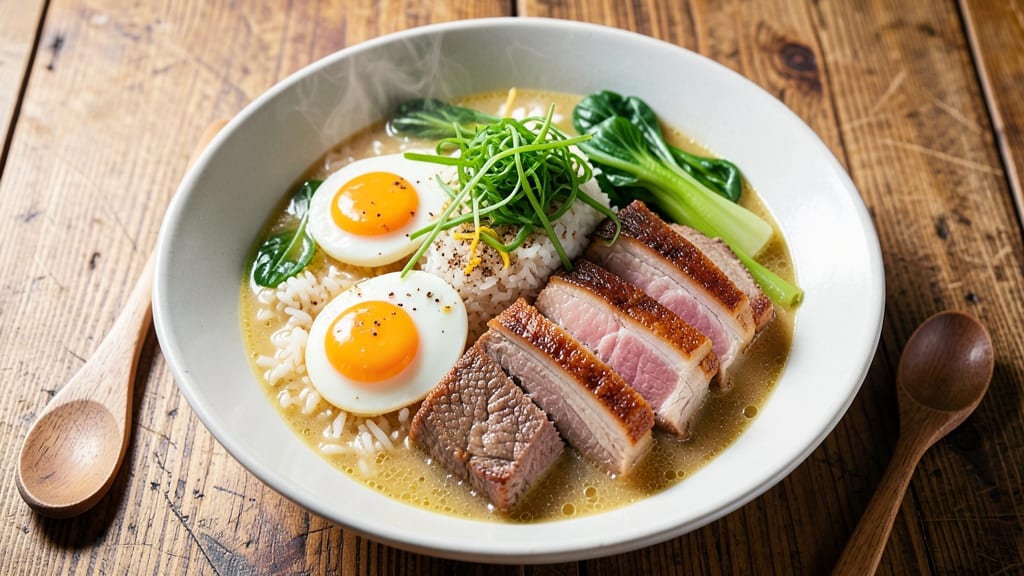
This bihon soup recipe brings comfort in every spoonful—silky egg ribbons swirling through creamy rice porridge, topped with wok-tossed crunch. 💛 A staple in Filipino kitchens, this dish transforms simple ingredients into a deeply satisfying meal that warms the soul and feeds the family.
The secret lies in slow-simmered broth and perfectly cooked rice, achieving that ideal porridge consistency without lumps.
What sets this recipe apart is its versatility—whether you prefer bihon na baka (beef), bihon na baboy (pork), or a lighter fish-based version, the base technique remains the same.
The broth builds rich, savory depth, while the egg ribbons add a delicate, almost custard-like texture that contrasts beautifully with the wok-tossed greens or pork belly. It’s the kind of dish that tastes even better the next day, making it perfect for meal prep.
By the time you’re done, you’ll have a bowl of restaurant-quality bihon—creamy, aromatic, and packed with protein. The egg ribbons melt into the porridge, creating a luxurious mouthfeel, while the wok-tossed garnishes add a satisfying crunch.
Serve it with a squeeze of calamansi for brightness, and you’ve got a dish that’s as nourishing as it is delicious.
This recipe honors tradition while adapting to modern kitchens—no special equipment needed, just patience and a few key techniques. Let’s get cooking!
Ingredients for bihon soup
Creamy rice porridge, silky egg ribbons, and wok-tossed protein transform simple ingredients into restaurant-quality bihon.
| Ingredient | Amount | Notes |
|---|---|---|
| Short-Grain White Rice 🍚 | ½ cup | Uncooked, jasmine preferred |
| Large Eggs 🥚 | 4 whole | Fresh, room temperature |
| Beef Chuck Roast 🥩 | 8 oz | Lean cut, thinly sliced |
| Pork Belly 🐷 | 6 oz | Skin-on, thinly sliced |
| Baby Bok Choy 🥬 | 2 whole | Trimmed, quartered |
| Green Onions 🧅 | 3 whole | White and green parts |
| Garlic Cloves 🧄 | 4 cloves | Minced, aromatic |
| Ginger Root 🌿 | 1 inch | Fresh, julienned |
| Chicken Broth 💧 | 4 cups | Homemade or low-sodium |
| Soy Sauce 🍶 | 2 tbsp | Dark soy preferred |
| Sesame Oil 🫒 | 1 tbsp | Toasted, for aroma |
| Calamansi Juice 🍋 | 2 tbsp | Or lime in a pinch |
| Vegetable Oil 🫒 | 2 tbsp | High smoke point |
| Salt 🧂 | 1 tsp | Diamond Crystal preferred |
| White Pepper 🌶️ | ¼ tsp | Freshly ground |
The rice is the foundation—jasmine rice yields the ideal creamy texture, but short-grain white works too. For the protein, beef chuck roast delivers deep flavor when thinly sliced, while pork belly adds luxurious richness. Look for marbled cuts at Filipino markets or your grocery store's meat counter. Freshness matters: eggs should be room temperature for perfect ribbons, and ginger should smell vibrant, not musty. Baby bok choy adds color and crunch, but any tender green will work.
No pork belly? Thinly sliced chicken thighs or extra beef will keep the dish hearty. Short on soy sauce? Coconut aminos or tamari work in a pinch, though dark soy's depth is ideal. Calamansi is the signature brightener, but lime or lemon juice provides similar tang. The broth can be store-bought, but homemade chicken or vegetable broth elevates the dish. For the wok-tossed greens, spinach or cabbage can substitute—just adjust cooking time to avoid wilting.
This soup tastes even better reheated—3-4 days in the fridge or 3 months frozen. Store the broth and rice separately to prevent mushiness. For meal prep, portion into containers with the protein and greens on top. Garnish with extra green onions and a drizzle of sesame oil just before serving. The egg ribbons should be delicate—don't overmix when incorporating them into the porridge.
Why You'll Love This Recipe
- One-Pot Magic: I swear by this recipe when I’m too tired to wash dishes—just brown the meats, toss in the rice and broth, and let it simmer. The eggs poach right in the broth, and the bok choy wilts in minutes. No extra pots, no stress.
- Rich, Layered Bite: That combo of tender beef chuck and fatty pork belly? Chef’s kiss. The rice soaks up all the deep, savory broth while the eggs add a silky contrast—every spoonful has texture and flavor. Honestly, it’s the kind of dish that makes you slow down.
- Leftovers That Feel Fresh: Between us, this soup actually tastes better the next day. The flavors meld into something even richer, and reheating it is a breeze. I make a big batch on Sundays and grab a bowl for lunch all week—no sad, dry leftovers here.
- Budget-Friendly Feast: Pork belly and beef chuck might sound fancy, but they stretch across multiple servings without breaking the bank. Plus, short-grain rice and eggs are pantry staples. It’s my go-to when I need to feed a crowd or just treat myself without guilt.
Step-by-step instructions for bihon soup
Master the art of silky egg ribbons and wok-tossed crunch with this precise technique.
🍳 Step 1: Prepare the Egg Ribbons
Whisk the 4 whole large eggs with 1 tbsp sesame oil, 2 tbsp calamansi juice, 1 tsp salt, and 0.25 tsp white pepper in a bowl until completely smooth. Heat 2 tbsp vegetable oil in a wok over medium-high heat until shimmering. Pour the egg mixture into the wok in a thin, even stream while continuously stirring with a heatproof spatula.
Keep stirring vigorously for 30-45 seconds until the egg forms delicate, translucent ribbons that cling to the spatula. Remove from heat immediately—the ribbons should still be slightly undercooked in the center. Transfer to a plate and cover loosely with a clean kitchen towel to keep them pliable. This quick cooking prevents rubbery eggs while maintaining their signature silky texture.
🔥 Step 2: Sear the Meats and Aromatics
In the same wok, add 2 tbsp vegetable oil and heat over high heat. Add the 8 oz sliced beef chuck roast and 6 oz sliced pork belly (skin-side down first). Sear for 2-3 minutes until the pork skin crisps and the beef develops a deep brown crust. Remove meats and set aside.
In the same wok, add 4 cloves minced garlic and 1 inch julienned ginger root. Stir-fry for 30 seconds until fragrant—you should smell the garlic blooming and ginger releasing its bright aroma. Add the 2 whole quartered baby bok choy and 3 whole sliced green onions (white parts only), tossing for 1 minute until the bok choy wilts slightly. This quick stir-fry preserves the vegetables' vibrant color and crisp-tender texture.
🥘 Step 3: Build the Broth Base
Return the seared meats to the wok and pour in 4 cups chicken broth. Add 2 tbsp soy sauce and bring to a gentle simmer over medium heat. The broth should bubble softly—if it boils vigorously, reduce heat to maintain a steady simmer. Let it cook for 5 minutes to allow the flavors to meld and the meats to reabsorb any released juices.
Here's where the magic happens: The soy sauce should infuse the broth with umami depth while the meats tenderize just enough to hold their shape. Add the green onion white parts back to the wok and simmer for another 2 minutes. This step ensures the broth carries all the aromatic layers we've built so far.
🥘 Step 4: Assemble and Finish
Add the 0.5 cup uncooked short-grain white rice to the simmering broth. Stir gently to distribute the rice evenly but avoid breaking the grains. Return to a simmer and cook for 10-12 minutes until the rice is tender but still slightly firm—it will finish cooking in the hot soup. The rice should absorb just enough liquid to become translucent at the edges.
Gently fold in the prepared egg ribbons just before serving. The residual heat from the soup will finish cooking them perfectly. Divide the soup among bowls, ensuring each serving gets its share of egg ribbons, tender meats, and wok-tossed vegetables. The contrast of silky eggs against the crisp-tender bok choy and tender meats creates the signature bihon experience.
Pro Tips For Making Bihon Soup
- PARBOIL THE BOK CHOY: I learned this the hard way—raw baby bok choy sinks like a stone and turns to mush in broth. Give those leaves a quick 30-second blanch in boiling water first, then shock in ice water. They’ll stay crisp, hold their shape, and absorb flavor instead of turning into soup sludge.
- SALT THE BROTH LIKE THE SEA: Bihon soup needs bold flavor, not shy broth. After simmering beef chuck and pork belly, add 2 teaspoons of salt per 4 cups of water—more if your meat’s unsalted. Taste and adjust; this isn’t the time to play it safe. (Yes, even if you’re impatient like me.)
- SEAR THE MEAT IN BATCHES: Crowding the pot kills the crust, and crust equals flavor. Work in two batches: beef chuck first until deeply browned (8-10 minutes), then pork belly until it renders fat and caramelizes. Skip the rush—this is where the depth of taste hides.
- USE DAY-OLD RICE: Freshly cooked rice turns to glue in broth. Save a cup of cooked rice from yesterday’s meal (or cook extra) and add it cold to the simmering pot. It’ll plump up perfectly, soak up the broth, and give that authentic bihon texture without falling apart. (Your future self will thank you.)
Serving suggestions for leftovers
Garnish Like a Pro
Top your bihon with crispy fried shallots for a nutty crunch—just toss 6-8 thinly sliced shallots in 1 tbsp vegetable oil until golden. The aroma alone elevates the dish.
I also love adding quick-pickled red onions for tangy brightness: thinly slice ½ red onion, soak in ¼ cup vinegar and 1 tsp sugar for 10 minutes. 🌟
Bowl Presentation
Serve bihon in warm, wide bowls to showcase the layers. Start with a base of steamed jasmine rice (½ cup per bowl) for heartiness, then ladle the creamy porridge over it. Arrange the egg ribbons in concentric circles on top—they’ll melt slightly into the soup, creating visual drama.
Sprinkle with toasted sesame seeds for texture and a final drizzle of sesame oil.
Side Pairings
Pair with steamed dumplings (siopao) for a Filipino feast—split open the buns and stuff with pork or shrimp. For a lighter option, serve with garlic fried rice to soak up any remaining broth.
I also recommend sliced cucumbers with chili-lime dressing to cut through the richness. The contrast of cool, crisp veggies balances the warm, creamy soup perfectly.
Drink Recommendations
A Filipino iced coffee (kapeng barako) with its bold, slightly bitter notes complements the soup’s savory depth. For something lighter, try calamansi soda—mix ½ cup calamansi juice with 1 cup sparkling water and a touch of honey.
If you prefer beer, a cold San Miguel Pale Pilsen cleanses the palate without overpowering the dish’s delicate flavors. 🍺
Meal Prep Tips
Store components separately to maintain texture: refrigerate the porridge base in one container and the egg ribbons, meats, and veggies in another. Reheat the porridge first, then gently fold in the egg ribbons just before serving to keep them silky.
For the wok-tossed greens, blanch them in boiling water for 30 seconds, shock in ice water, and store in a sealed bag—they’ll stay vibrant for up to 3 days.
Family-Style Serving
For gatherings, serve bihon in a large communal pot at the center of the table. Use a ladle with a strainer to let guests scoop their own portions, ensuring everyone gets the creamy rice, tender meats, and egg ribbons.
Keep a small bowl of extra calamansi juice on the table so everyone can adjust the brightness to taste. The shared experience makes it feel like a home-cooked celebration. 💛
Nutrition facts
Frequently asked questions
Can I make bihon soup with any type of rice?
Short-grain white rice (like jasmine) works best for its creamy texture, but sushi rice or arborio rice are good substitutes. Avoid long-grain rice—it won't achieve that signature porridge consistency. For extra richness, try glutinous rice, though it requires longer cooking.
How do I fix rubbery egg ribbons?
Rubbery eggs happen when overcooked. Keep the wok at medium-high heat and stir constantly for only 30-45 seconds. Remove immediately when translucent—undercooked ribbons will finish in the hot soup. Cover with a towel to retain moisture while waiting to serve.
What if I don't have calamansi?
Use lime or lemon juice (equal parts) for brightness, or substitute with vinegar—just reduce to 1 tbsp and add a pinch of sugar to balance. For extra zing, add a dash of fish sauce (½ tsp) to the broth. The acidity is key for that authentic tang!
Can I make bihon soup vegetarian?
Replace the meat with mushrooms (shiitake or oyster)—sauté them until golden for umami. Add tofu—pressed and cubed, or tempeh—marinated in soy sauce and sesame oil. Boost flavor with miso paste (½ tsp)—it deepens the broth beautifully.
Why is my rice turning mushy?
Overcooking is the culprit! Start with uncooked rice—it absorbs liquid gradually. Simmer gently for 10-12 minutes until tender but still firm. If using pre-cooked rice, reduce the broth by 1 cup—it releases moisture. Stir occasionally to prevent sticking.