
Soups & Stews
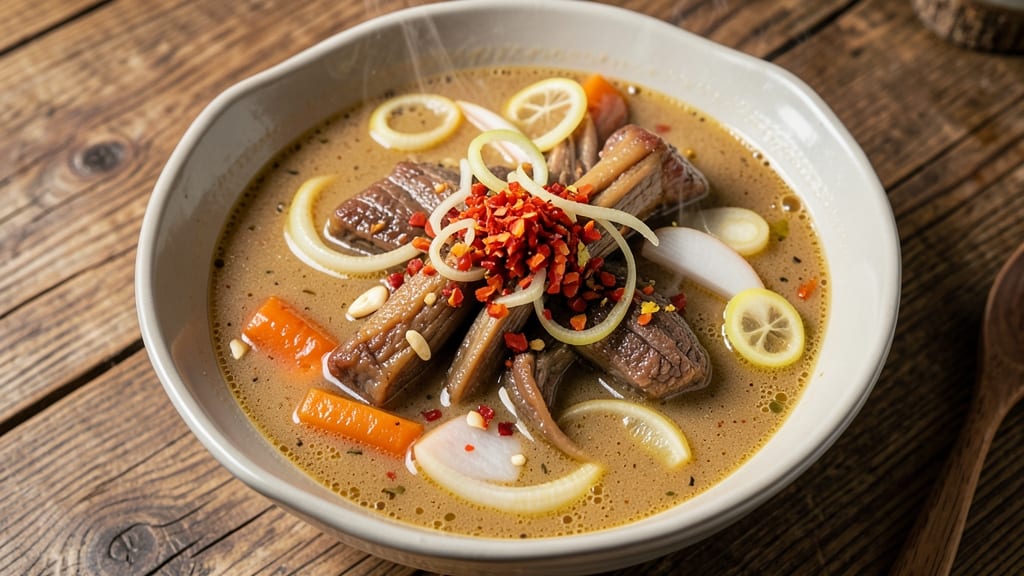
This Bibigo beef bone soup recipe unlocks the deep, savory essence of Korean comfort food through slow-simmered bones and aromatic vegetables. The secret lies in extracting maximum umami from beef bones—roasted first to develop rich, caramelized flavors before a long, gentle simmer that transforms tough cuts into velvety broth. What starts as a simple pot of ingredients becomes a fragrant, deeply satisfying soup that tastes even better the next day.
The process begins with a dry roast of beef bones and vegetables, creating a flavorful crust that forms the foundation of the broth. As the soup simmers for hours, the bones release gelatin and collagen, creating a naturally thickened, restaurant-quality broth without any additives.
This traditional method delivers unmatched depth of flavor that separates homemade soup from store-bought versions.
What you'll end up with is a steaming bowl of rich, golden broth filled with tender beef, vegetables, and tofu—each element perfectly balanced in texture and flavor.
The aroma alone will transform your kitchen into a Korean home, while the first spoonful delivers that perfect harmony of savory, sweet, and umami notes that define Bibigo's signature taste.
Perfect for cold evenings or when you need nourishing comfort food, this soup keeps well in the refrigerator for up to three days, with flavors deepening as it rests.
Whether you're making it for a family gathering or a cozy weeknight dinner, this recipe delivers restaurant-quality results with traditional techniques made approachable for home cooks.
Ingredients for bibigo beef bone soup
Six pounds of aromatic bones and vegetables transform into velvety, umami-rich Bibigo-style broth.
| Ingredient | Amount | Notes |
|---|---|---|
| Beef Bones 🦴 | 3 lb | Marrow bones preferred, raw |
| Yellow Onions 🧅 | 2 whole | Peeled, halved lengthwise |
| Carrots 🥕 | 4 whole | Scrubbed, cut into chunks |
| Fresh Ginger 🌿 | ½ cup | Peeled, thinly sliced |
| Garlic Cloves 🧄 | 8 cloves | Peeled, smashed |
| Korean Red Pepper Flakes 🌶️ | 2 tbsp | Adjust to taste |
| Soy Sauce 🍶 | ½ cup | Korean preferred |
| Sesame Oil 🫒 | 2 tbsp | Toasted, for finishing |
| Green Onions 🧅 | ¼ cup | Sliced, for garnish |
| Daikon Radish 🥬 | 1 lb | Peeled, cut into chunks |
| Celery Stalk 🧅 | 2 whole | Cut into 2-inch pieces |
| Silken Tofu 🥬 | 14 oz | Firm, cubed |
| Salt 🧂 | 1 ½ tsp | Kosher preferred |
| Black Peppercorns 🌶️ | 1 tsp | Crushed |
| Dried Shitake Mushrooms 🍄 | 4 whole | Rehydrated, stems removed |
The beef bones are the foundation—marrow bones deliver the richest flavor, but knuckle bones work too. Local butchers often sell them at better prices than grocery stores, and they'll even cut them for you. Look for bones with good marrow content; they should be clean and free of meat scraps. The ginger and garlic need to be freshly peeled and prepped—ginger loses potency fast once grated, so buy it whole and slice it just before roasting. For Korean red pepper flakes, Maesil Chogochang from Korean markets is ideal, but any high-quality gochugaru will do.
No marrow bones? Substitute with a mix of knuckle and neck bones—they'll still give you gelatin but with slightly less richness. Running low on daikon? Regular white radish or extra carrots keep the sweetness balanced. The silken tofu can be swapped for firm tofu pressed for 15 minutes if that's what you have. For the soy sauce, Korean soy sauce (ganjang) adds depth, but Japanese or Chinese will work in a pinch. Just remember: the longer you simmer, the more flavor develops—8-12 hours is ideal for maximum umami extraction.
This soup tastes even better the next day as flavors meld. Store in the fridge for up to 5 days, with flavors deepening over time. For freezing, portion into 2-cup containers—the broth thickens slightly when reheated, so leave a little room. To reheat, warm gently on the stove over medium-low heat, stirring occasionally. The tofu can be added fresh when serving, or frozen separately for up to 3 months—just thaw and warm through before adding to the broth.
Why You'll Love This Recipe
- Minimal Chopping Required: I swear by this—just rough-chop the onions, slice the carrots into thick coins, and peel the ginger in lazy strips. No julienne skills needed, just a knife and 10 minutes of actual work.
- Deep Umami Magic: That beef bone broth? Chef’s kiss. The marrow melts into the pot, turning the soup into this rich, savory dream—especially when you toast the garlic and ginger first. Honestly, it’s the kind of flavor that makes you slow down and savor every spoonful.
- Leftovers That Taste Better: Between us, this soup only gets more amazing the next day. The bones keep giving, the broth deepens, and I’ve sent it home with neighbors who’ve come back begging for seconds. (Yes, even on a Tuesday night.)
- Budget-Friendly Bone Broth: You’re basically making freezer-worthy broth for pennies. Use the bones for soup today, freeze the rest, and thaw it later for rice, noodles, or even a quick stir-fry. My wallet thanks me every time.
Step-by-step instructions for Bibigo beef bone soup
Transform simple ingredients into a deeply flavorful soup through precise technique and patience.
Prepare the Bones and Vegetables
Rinse the 3 lb beef bones thoroughly under cold water to remove any impurities, then place them in a large stockpot. Add the 2 whole yellow onions, 4 whole carrots, 1 lb daikon radish, and 2 whole celery stalks, all cut into chunks. This combination creates a flavorful base while extracting maximum nutrients from the bones.
Add the 0.5 cup fresh ginger and 8 cloves garlic, both peeled and smashed. The ginger will infuse the broth with aromatic warmth, while the garlic adds depth. Pour in 0.5 cup soy sauce and 1.5 tsp salt—these ingredients work together to enhance the umami profile while balancing the flavors. Bring the mixture to a boil over medium-high heat to blister the bones slightly, which helps release more collagen into the broth.
Simmer for Deep Umami Extraction
Once boiling, reduce the heat to low and let the soup simmer uncovered for 3 hours. This slow cook time is critical—it allows the bones to break down gradually, releasing gelatin and collagen that create a rich, velvety texture. Skim off any foam that rises to the surface during the first 30 minutes of simmering to keep the broth clear.
After 3 hours, add the 4 whole dried shitake mushrooms (rehydrated and stems removed) and the 14 oz silken tofu (cubed). The shitake mushrooms contribute an earthy depth, while the tofu adds a delicate, silky texture. Continue simmering for another 1 hour, maintaining a gentle bubble. The broth should now be deeply golden and fragrant, with a rich aroma that fills your kitchen.
Season and Finish with Aromatics
Strain the broth through a fine-mesh sieve into a clean pot, pressing gently on the solids to extract every last drop of flavor. Return the strained broth to the pot and stir in the 2 tbsp Korean red pepper flakes and 1 tsp crushed black peppercorns. Taste and adjust the seasoning—you may need a touch more soy sauce or salt to balance the flavors.
Just before serving, heat the broth over medium heat and stir in the 2 tbsp toasted sesame oil. This final step adds a nutty aroma and rich mouthfeel. Ladle the soup into bowls, garnishing each serving with 0.25 cup sliced green onions for a fresh contrast. The soup should be thick yet silky, with a deep umami richness that lingers on the palate.
Pro Tips For Making Bibigo Beef Bone Soup
- BLANCH BONES FIRST: I learned this the hard way—skipping the 10-minute boil in water with a splash of vinegar leaves your broth cloudy and bitter. Rinse the bones afterward to remove scum, then start your soup fresh with crystal-clear stock.
- CHAR ONIONS LOW AND SLOW: Crank the heat to medium-low when caramelizing those onions—high heat burns them into bitter sludge. Cover the pot for the first 15 minutes to steam out moisture, then uncover and stir often. Patience here means depth of flavor later.
- GRATE GINGER THIN: Thinly grated ginger (like matchsticks) infuses better than chopped chunks or powder. Toss it in early with the bones—it’ll mellow into the broth without overpowering, and you won’t waste a single ounce of its zing.
- SIMMER, DON’T BOIL: After the first hour, keep the heat at a bare simmer—no rolling bubbles, just tiny ripples. Boiling scalds the collagen into a gluey mess. A gentle simmer for 4+ hours turns those bones into melt-in-your-mouth goodness.
Creative variations of this bibigo beef bone soup
Spicy Korean Fusion
Transform your Bibigo beef bone soup into a fiery Korean fusion by adding 1 tbsp gochujang (Korean chili paste) when you strain the broth back into the pot. This adds a deep, fermented heat that pairs beautifully with the umami richness.
For extra kick, stir in 1 tsp fish sauce just before serving—it enhances the savory depth while balancing the spice. I like to finish with a drizzle of sriracha-infused sesame oil (mix 1 tbsp sriracha with 1 tbsp toasted sesame oil) for a smoky, spicy finish. 🌶️
Vegetarian Adaptation
Skip the beef bones entirely and use 3 lb king oyster mushrooms (whole, halved) as the base for your broth. Roast them first at 400°F for 20 minutes to develop depth, then simmer with all the same vegetables and aromatics for 4-5 hours—mushrooms take longer to break down.
Add 1 block (14 oz) extra-firm tofu instead of silken tofu for better texture. The result is a hearty, umami-packed vegetarian version that still delivers that comforting, rich broth. 🌱
Instant Pot Shortcut
For a quicker version, use a 6-quart Instant Pot on the high-pressure setting for 90 minutes after the initial boil. Start with the same bones and vegetables, but reduce the simmer time to 1 hour before adding the mushrooms and tofu.
The pressure cooker extracts flavors faster, though the texture will be slightly less gelatinous. I add 1 tsp chicken bouillon powder to boost umami if needed. This method cuts prep time to under 2 hours while still delivering incredible depth. ⏰
Winter Comfort Version
Add 1 cup chopped leeks and 1 cup chopped parsnips to the vegetable mix for extra heartiness. After simmering, stir in ½ cup cooked short-grain rice (like sushi rice) for a creamy, congee-like texture.
Finish with a sprinkle of toasted sesame seeds and a swirl of chopped scallions. This version feels extra cozy—perfect for chilly evenings when you crave something warming and substantial. ❄️
Protein-Packed Add-Ins
Boost the protein by adding ½ lb sliced pork belly (roasted first) or ½ lb chicken thighs (skin-on) during the final 30 minutes of simmering. For seafood lovers, toss in ½ lb shrimp in the last 10 minutes—they cook quickly and add a delicate sweetness.
I also like adding 1 cup cooked barley for extra heartiness. These additions turn the soup into a complete, satisfying meal. 🍗
Global Twist: Japanese-Inspired
Swap the Korean red pepper flakes for 1 tbsp white miso paste and add 1 tsp grated daikon to the broth. Finish with a drizzle of yuzu kosho (or sub ½ tsp citrus zest + ½ tsp cayenne) and a sprinkle of toasted nori strips.
The umami from the miso pairs perfectly with the silken tofu, creating a Japanese-inspired fusion that’s lighter but still deeply flavorful. 🍜
Nutrition facts
Frequently asked questions
Why do beef bones need roasting before simmering?
Roasting the bones first develops a rich, caramelized crust that deepens the broth's flavor. This step removes impurities and creates a flavorful base through the Maillard reaction, which happens when proteins and sugars brown at high heat. Skipping it results in a milder, less complex broth.
Can I use chicken or pork bones instead of beef?
Yes, but the flavor profile will change. Chicken bones create a lighter broth, while pork bones add a slightly sweeter, fattier richness. For an authentic Bibigo taste, beef bones are ideal—they deliver the deepest umami and gelatin content. If substituting, increase simmering time by 30-60 minutes for maximum flavor extraction.
How do I know when the broth is done?
The broth should be deeply golden, with a rich aroma that fills your kitchen. It will naturally thicken as collagen releases from the bones. For best results, simmer for at least 4 hours—the longer it cooks, the more flavorful it becomes. Taste the broth after 3 hours; if it's still bland, continue simmering for another hour.
What if my broth turns cloudy?
Cloudiness usually means impurities or excess foam weren't removed. Skim the surface during the first 30 minutes of simmering to prevent this. If it happens later, strain the broth through a fine-mesh sieve again. For extra clarity, chill the broth overnight—the fat will solidify on top, making it easy to remove before reheating.
Can I make this soup in a slow cooker?
Follow the same steps, but increase the simmering time to 6-8 hours on low. The slow cooker's gentle heat helps extract flavors without risk of burning. Add the tofu and mushrooms only in the last 1-2 hours to prevent them from becoming mushy. The result is just as rich and flavorful as stovetop cooking.