
Soups & Stews
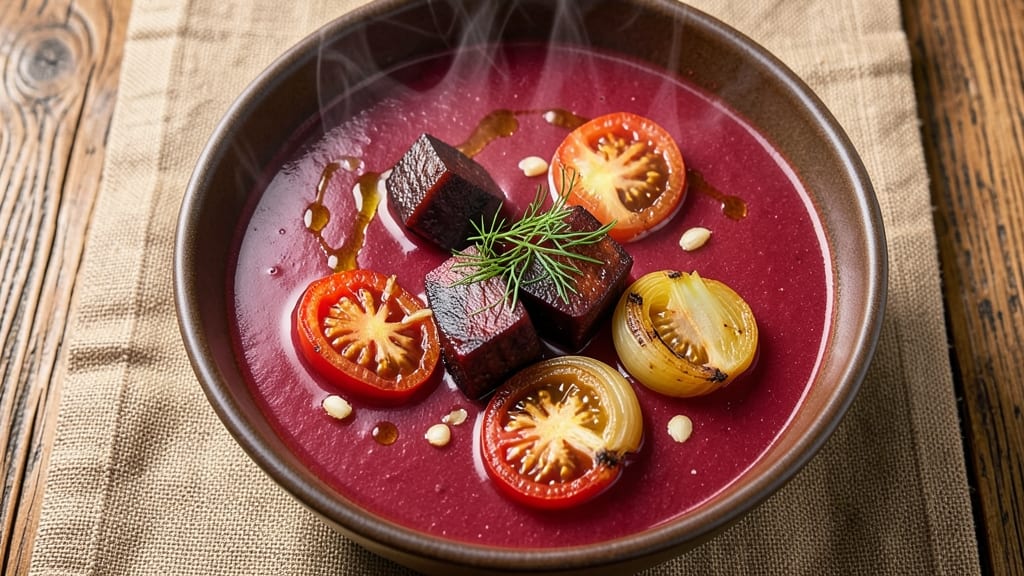
This beetroot tomato soup recipe transforms humble ingredients into a velvety masterpiece where earthy beets meet bright tomatoes in perfect harmony. The secret lies in roasting the vegetables first—caramelizing their natural sugars for depth that simmering alone can't match.
What starts as a simple blend of roasted produce becomes a rich, silky-smooth soup with just the right balance of sweetness and acidity.
The process is straightforward but yields professional results: roast, blend, simmer, and season thoughtfully. No dairy or meat here—just plant-based richness from the vegetables themselves, with a touch of coconut milk adding luxurious creaminess without overpowering.
The texture is what makes it special: smooth yet substantial, with just enough body to coat a spoon while remaining light enough for summer suppers.
What you'll end up with is a soup that's as beautiful as it is delicious—deep ruby-red with flecks of caramelized vegetables, served with a sprinkle of fresh herbs or a swirl of olive oil.
The flavors develop beautifully over time, making it perfect for meal prep or serving fresh at your next gathering. This isn't just soup; it's a comforting, vibrant centerpiece that proves plant-based cooking can be deeply satisfying.
Pair it with crusty bread for dipping or a simple green salad to balance the richness. The recipe scales effortlessly, so you can make just enough for two or feed a crowd. Ready to create this velvety, earthy-sweet masterpiece? Let's get started with the ingredients you'll need.
Ingredients for beetroot tomato soup
Roasted beets and tomatoes create this velvety soup's signature depth and color.
| Ingredient | Amount | Notes |
|---|---|---|
| Medium Beetroots 🍠 | 2 whole | Organic preferred, skins on |
| Medium Tomatoes 🍅 | 4 whole | Roma or vine-ripened preferred |
| Yellow Onion 🧅 | 1 whole | Yellow or red variety |
| Garlic Cloves 🧄 | 4 cloves | Freshly minced for aroma |
| Extra-Virgin Olive Oil 🫒 | ½ cup | High quality, fruity |
| Vegetable Stock 💧 | 2 cups | Low-sodium preferred |
| Full-Fat Coconut Milk 🥥 | ½ cup | Canned, for creaminess |
| Fresh Thyme Leaves 🌿 | ¼ cup | Or 1 tbsp dried thyme |
| Fresh Basil Leaves 🌿 | ¼ cup | For finishing touch |
| Lemon Juice 🍋 | 1 tbsp | Freshly squeezed |
| Maple Syrup 🍯 | 1 tbsp | For subtle sweetness |
| Salt 🧂 | 1 ½ tsp | Diamond Crystal preferred |
| Black Pepper 🌶️ | ½ tsp | Freshly cracked |
The beets are the star—organic from Whole Foods or your local farmers market if possible. Their natural sweetness caramelizes beautifully when roasted, giving the soup that rich, earthy base. Trader Joe's has great pre-washed beets if you're short on time, but I always peel and cube mine myself for better control. The tomatoes should be firm but ripe; Roma holds up best to roasting. Skip the pre-chopped bags—they bruise too easily. For the onion, yellow or red both work, but yellow adds a touch more sweetness when caramelized. Garlic? Freshly minced makes all the difference—pre-minced loses its punch fast.
No fresh thyme? Dried works at one-third the amount, but fresh is ideal. Short on basil? Fresh parsley gives a similar brightness. The coconut milk adds richness without dairy—full-fat canned is best, but light works in a pinch. No maple syrup? Agave or date syrup keeps it vegan. The vegetable stock is non-negotiable for flavor—low-sodium so you control the seasoning. For the olive oil, fruity varieties like California Early Harvest add floral notes that complement the beets. Want more acidity? Add an extra tablespoon of lemon juice or a splash of apple cider vinegar.
Roasted veggies keep 3-4 days in the fridge, but blend fresh for best texture. The finished soup reheats beautifully—just add a splash of water or stock if it thickens. Portion into jars for 5 days of easy lunches. For extra vibrancy, reserve some fresh basil and basil leaves for garnish. Freezes well for 3 months—just thaw overnight in the fridge. The longer it sits, the more the flavors meld, so making a double batch is always worth it.
Why You'll Love This Recipe
- Foolproof Roast: I swear by roasting the beets and tomatoes first—it’s the secret to that deep, caramelized sweetness without peeling or chopping much. Just toss them in the oven with olive oil and salt, and let the heat do the work.
- Earthy Garlic Kiss: That moment when the garlic hits the pot? Pure magic. The roasted beets and tomatoes mingle with the sharp, toasty garlic, creating a balance that’s rich but never heavy—like a hug in a bowl.
- Leftover Goldmine: This soup only gets better the next day. The flavors meld into something even more complex, and it reheats like a dream. I’ve had it cold with crusty bread for lunch or warmed up for dinner—no waste, all win.
- Budget Brightener: Beets and tomatoes are cheap, seasonal staples that pack serious flavor. No fancy ingredients, no markup—just honest, satisfying food that feeds four for under $10. (Yes, even on a Tuesday night.)
Step-by-step instructions for beetroot tomato soup
This velvety soup delivers deep earthy flavors with a touch of sweetness—let's make it together.
Roast the Vegetables for Rich Depth
Preheat your oven to 400°F. Peel and chop the 2 whole medium beetroots into 1-inch cubes, then halve the 4 whole medium tomatoes and quarter the 1 whole yellow onion. Toss everything with 0.25 cup extra-virgin olive oil, 1 tsp salt, and 0.25 tsp black pepper on a baking sheet.
Roast for 25-30 minutes until the beetroots are tender and the edges are caramelized. The tomatoes should collapse slightly and develop concentrated sweetness. This roasting step builds the soup's complex flavor foundation—don't skip it. Stir halfway through for even browning.
Sauté Garlic and Build the Base
While the vegetables roast, heat 0.25 cup extra-virgin olive oil in a large pot over medium heat. Add the 4 cloves minced garlic and sauté for 30 seconds until fragrant but not browned. Immediately add the roasted vegetables to the pot, scraping up any browned bits from the bottom.
Pour in the 2 cups vegetable stock and bring to a gentle simmer. Let it cook uncovered for 10 minutes until the flavors meld. The soup should smell like a cozy autumn morning—earthy, slightly sweet, with a hint of garlic's warmth. If it looks too thick, add 2 tablespoons water to loosen it.
Blend Until Silky Smooth
Using an immersion blender, blend the soup directly in the pot until completely smooth. For a perfectly velvety texture, strain through a fine-mesh sieve if needed to remove any fibrous bits. The result should be a rich, deep red-orange color with no visible chunks.
Return the soup to the pot and stir in the 0.5 cup full-fat coconut milk, 1 tbsp maple syrup, and 1 tbsp lemon juice. Taste and adjust seasoning with remaining 0.5 tsp salt and 0.25 tsp black pepper—this is where the magic happens. The coconut milk adds creaminess, the maple syrup balances acidity, and the lemon brightens everything up.
Finish with Fresh Herbs
Reduce heat to low and stir in the 0.25 cup fresh thyme leaves and 0.25 cup fresh basil leaves. Let the soup simmer gently for 5 minutes to infuse the herbs' bright flavors. Remove from heat and let it rest for 10 minutes—this allows the flavors to fully develop.
Before serving, taste again and make any final adjustments. The soup should be perfectly balanced between sweet, earthy, and tangy. Ladle into bowls and garnish with additional fresh basil leaves if desired. Serve with crusty bread to soak up every last drop of this velvety masterpiece.
Pro Tips For Making Beetroot Tomato Soup
- Peel Beets Cold: I learned this the hard way—roasting beets raw is a pain, and peeling them hot is a mess. Pop them in the fridge for 30 minutes after roasting, then the skins slide off like magic. No scrubbing, no frustration, just smooth, vibrant beets ready to blend.
- Sweat Onions Low: Skip the high heat—you’re not searing steak here. Cook onions over medium-low with a splash of water until they’re translucent and just starting to caramelize. That slow cook keeps the soup from tasting bitter and builds real depth. (Yes, even if you’re impatient like me.)
- Blend in Stages: Dumping everything raw into the blender? Bad idea. First blend the roasted beets and tomatoes until smooth, then add the onion-garlic base. This prevents a gritty texture and lets you adjust consistency without overworking the soup. Trust me, your future self will notice.
- Finish with Oil: This isn’t the prettiest method, but it’s the tastiest. After blending, drizzle in 1-2 tablespoons of extra-virgin olive oil and pulse just once. It coats the soup, balances acidity, and adds a silky richness. No need to emulsify—just swirl it in.
Make-ahead tips for leftovers
Roast Ahead
The real secret to make-ahead success is roasting the vegetables first. Toss your beetroots, tomatoes, and onions with oil and salt, then roast them at 400°F for 25-30 minutes.
Store these roasted veggies in an airtight container in the fridge for up to 4 days—they'll keep their caramelized sweetness perfectly. When ready to make the soup, simply sauté the garlic, add the roasted veggies, and proceed with the recipe.
This shortcut saves you 30 minutes of active prep time. 🌱
Complete Soup Prep
For a fully made-ahead soup, blend and season everything as directed, then store in glass jars or airtight containers in the refrigerator. The flavors actually deepen overnight, becoming more complex and balanced. I recommend making a double batch—this soup tastes even better the next day.
Just reheat gently on the stovetop with a splash of water or stock if needed. The coconut milk may separate slightly, but stir it back together when reheating. ⏰
Freezer-Friendly
This soup freezes beautifully for up to 3 months without losing texture or flavor. After blending, let it cool completely before transferring to freezer-safe containers, leaving 1-inch headspace for expansion.
When ready to serve, thaw overnight in the fridge, then reheat on the stove over low heat to preserve its silky consistency. The only adjustment you might need is a pinch of salt to compensate for any water loss during freezing. ❄️
Portion Control
For perfect single servings, divide the cooled soup into quart-sized mason jars before freezing. This makes it easy to grab just what you need for lunch—no defrosting the whole batch. I like to keep one jar in the fridge for quick access while freezing extras.
The jars also reheat evenly, preventing hot spots that can thin the soup unevenly. Label with dates to track freshness—this soup stays delicious for 5 days in the fridge or 3 months frozen. 📅
Flavor Boost Tip
Before storing, stir in an extra ½ teaspoon of black pepper and 1 tablespoon of lemon juice. The acidity helps preserve the vibrant color and brightens the flavors after reheating.
For extra richness, add a splash of coconut milk when reheating—it blends right in and restores the creamy texture. This simple adjustment makes all the difference when serving leftovers. 💡
Reheating Perfection
Never microwave this soup—it breaks down the delicate texture. Instead, heat it gently on the stovetop over low-medium heat, stirring occasionally. If it thickens too much, add 1-2 tablespoons of water or vegetable stock to restore its velvety consistency.
For extra vibrancy, finish with fresh herbs and a drizzle of olive oil just before serving. The contrast of warm soup with cool garnishes makes it even more satisfying. 🔥
Nutrition facts
Frequently asked questions
Can I make this soup without coconut milk?
For a dairy-free alternative, try ½ cup cashew cream (blended soaked cashews with water) or ¼ cup nutritional yeast for a cheesy flavor. If you prefer a thinner texture, omit the coconut milk entirely and add ¼ cup extra vegetable stock instead. The soup will still be delicious—just slightly lighter.
Why does my soup taste too bitter?
Bitterness usually comes from over-roasting the beets or tomatoes. Keep the oven time to 25-30 minutes—no longer! Balance the flavor with 1 extra tablespoon of maple syrup or ½ teaspoon of sugar, plus a splash of lemon juice to brighten. If the bitterness persists, strain out any over-roasted pieces before blending.
How can I make this soup spicier?
Add ½ teaspoon of smoked paprika or ¼ teaspoon of cayenne pepper when sautéing the garlic. For heat with depth, stir in 1 teaspoon of harissa paste after blending. Garnish with sliced jalapeños or a drizzle of hot sauce before serving. Start with small amounts—you can always add more!
Can I use canned tomatoes instead of fresh?
Yes, but choose high-quality crushed tomatoes (like San Marzano) with minimal additives. Drain them well after roasting to avoid excess liquid. For extra richness, add 1 teaspoon of tomato paste when sautéing the garlic. The texture will be slightly different but still delicious.
What's the best way to store leftovers?
Transfer to airtight glass containers and refrigerate for up to 5 days. For freezing, cool completely first, then portion into freezer-safe jars with 1-inch headspace. Thaw overnight in the fridge and reheat gently on the stove—never microwave. The coconut milk may separate slightly, but stir it back together when reheating.