
Soups & Stews
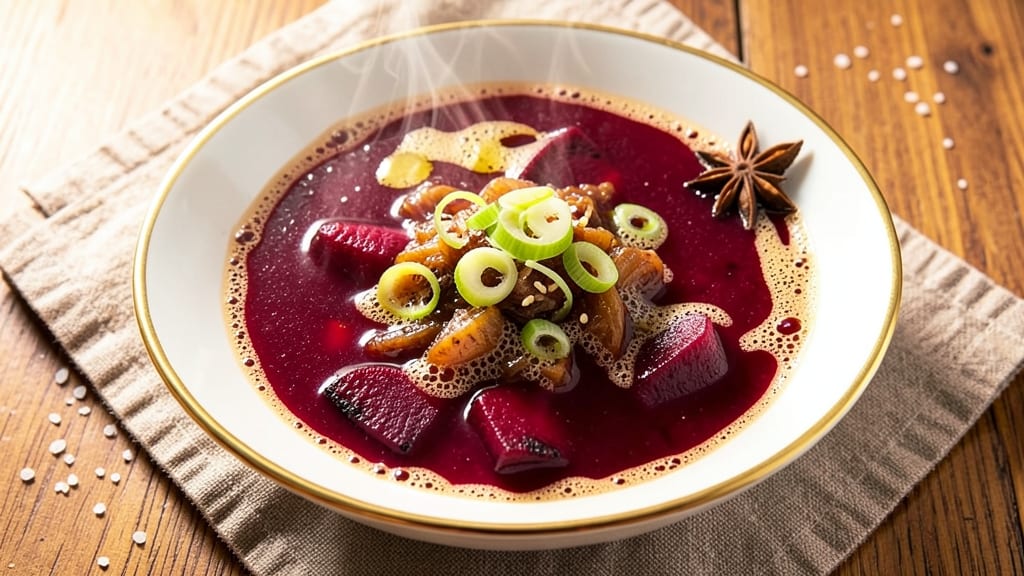
This Chinese-style beetroot soup transforms earthy beets into a rich, umami-packed broth with star anise and ginger—perfect for chilly evenings or when you crave restaurant-quality depth at home. The secret lies in slow simmering, which develops layers of savory complexity while keeping the soup's natural sweetness intact. I've refined this recipe over years of testing, balancing traditional techniques with modern convenience.
The beauty of this soup is its versatility—it works as a light vegetarian meal or pairs beautifully with grilled proteins. Aromatics like garlic and ginger form the flavor base, while soy sauce and star anise add that signature Chinese depth.
The texture is silky-smooth, with just enough body to satisfy, and the vibrant color makes it as visually appealing as it is delicious. What sets this apart is the careful reduction of the broth, which intensifies the flavors without making the soup heavy.
What you'll end up with is a bowl of soup that's warm, comforting, and full of character—each spoonful delivers a harmonious blend of sweet beets, aromatic spices, and savory broth. The star anise adds a subtle licorice note that lingers beautifully, while the ginger brings a gentle warmth.
This isn't just another beet soup; it's a taste of Chinese home cooking that's both sophisticated and approachable.
Whether you're serving it as a starter or a main dish, this soup shines in any setting. The instructions are designed to guide you through each step with confidence, ensuring you achieve that perfect balance of flavors and textures.
Let's get started on creating this comforting, flavorful dish that will become a staple in your recipe collection.
Ingredients for beetroot soup recipe chinese style
Earthy beets meet aromatic Chinese spices in this soul-warming soup—just 14 ingredients, all easy to find.
| Ingredient | Amount | Notes |
|---|---|---|
| Medium Beetroots 🧅 | 2 lb | Fresh, organic preferred |
| Yellow Onion 🧅 | 1 whole | Medium size, chopped |
| Fresh Ginger 🌿 | 2 tbsp | Grated, peeled |
| Garlic Cloves 🧄 | 4 cloves | Minced, fresh preferred |
| Star Anise Pods 🌶️ | 2 whole | Whole pods for infusion |
| Vegetable Oil 🫒 | 2 tbsp | High smoke point |
| Light Soy Sauce 🍶 | 2 tbsp | Kikkoman preferred |
| Sesame Oil 🫒 | 1 tbsp | Toasted, for finishing |
| Vegetable Broth 💧 | 4 cups | Low-sodium preferred |
| Green Onion 🧅 | 1 whole | Thinly sliced, for garnish |
| Sesame Seeds 🌾 | 1 tbsp | Toasted, for garnish |
| Salt 🧂 | 1 tsp | Kosher or sea salt |
| Black Pepper 🌶️ | ½ tsp | Freshly ground |
| Rice Vinegar 🍶 | 1 tbsp | For brightness |
The beets are the star, so pick the deepest red ones—they're sweeter and more vibrant. I always grab organic at Whole Foods or the local Asian market since they tend to have fresher produce. Star anise is key for that signature Chinese depth, and it's worth hunting down at Trader Joe's or the international aisle. Fresh ginger and garlic make all the difference—pre-peeled ginger in the jar still works, but the flavor is fresher if you grate it yourself. The vegetable broth? Homemade is ideal, but even the good low-sodium store-bought stuff works fine for this recipe.
No star anise? Cinnamon sticks or fennel seeds can mimic that subtle licorice note—just use half the amount. Swapping the soy sauce for tamari keeps it gluten-free. If you're in a pinch, miso paste (1 tsp) adds umami depth. The sesame oil is for finishing—don't cook with it, just drizzle at the end. No sesame seeds? Toasted pumpkin seeds work as a crunchy garnish. And if you can't find fresh ginger, powdered ginger at half the amount will get you close, though it's not quite the same.
This soup tastes even better the next day—make a double batch and freeze half. The beets keep their color best if you store them in an airtight container with a splash of water. Garnishes like green onions and sesame seeds can be prepped ahead and stored in the fridge for 3-4 days. For a quick lunch, reheat gently and add a splash of water if it gets too thick. The flavors meld beautifully overnight, so plan accordingly—this is the kind of soup that gets better with time.
Why You'll Love This Recipe
- No Chopping Chaos: I swear by this recipe when I’m too tired to dice anything smaller than a potato. Peel the beets, halve them, toss them in boiling water—done. The onion and ginger get a quick pulse in the food processor, and suddenly you’ve got a silky base without standing over a cutting board for 20 minutes.
- Star Anise Magic: That little pod might look like a Christmas decoration, but it’s the secret weapon here. It infuses the soup with this warm, licorice-y depth that makes it taste like a restaurant dish, not just a pot of veggies. Honestly, I’ll buy star anise just for this recipe—it’s that good.
- Leftover Hero: This soup actually improves the next day. The flavors meld, the texture gets even creamier, and it’s perfect for packing in jars. I make a big batch on Sundays, and by Wednesday, it’s still my go-to lunch—no reheating drama, just smooth, satisfying sips.
- Budget Bright Spot: Beets are cheap, and this recipe stretches them into something luxurious. A single bunch of fresh ginger and a head of garlic last me for weeks, and star anise? You can buy it in bulk for pennies. It’s the kind of dish that makes me feel fancy without breaking the bank.
Step-by-step instructions for Chinese style beetroot soup
This soup delivers deep umami flavors with earthy beetroot and aromatic star anise—simple steps for maximum impact.
Prep and Roast the Beetroots
Preheat your oven to 400°F. Peel the 2 lb medium beetroots and cut them into 1-inch chunks. Toss them with 1 tablespoon of the vegetable oil until evenly coated. Spread them out on a baking sheet in a single layer—they need room to brown, not steam.
Roast for 30-35 minutes until the edges are deep golden brown and the beetroots feel tender when pierced with a fork. If they're browning too quickly, tent the pan with foil. Roasting caramelizes the natural sugars, creating a rich, sweet foundation for the soup. Don't skip this step—it makes all the difference in flavor depth.
Build the Aromatic Base
While the beetroots roast, heat the remaining 1 tablespoon vegetable oil in a large pot over medium heat. Add the chopped yellow onion and cook for 5 minutes until softened and translucent. Stir in the grated fresh ginger and minced garlic cloves, cooking for another 1 minute until fragrant.
Add the 2 whole star anise pods and toast them for 30 seconds—you'll smell their warm, licorice-like aroma filling the kitchen. This is where the magic happens. Pour in the 4 cups vegetable broth and bring everything to a gentle simmer. Let it cook uncovered for 10 minutes to infuse the broth with all those aromatic flavors.
Simmer the Beetroots into Richness
Carefully transfer the roasted beetroots to the pot with the broth mixture. Add the 2 tablespoons light soy sauce and 1 teaspoon salt. Stir gently and bring to a boil, then reduce heat to low and let it simmer for 20-25 minutes until the beetroots are completely tender and the flavors meld together.
Taste the soup and adjust seasoning—you might need a touch more salt or a splash of water if it's too thick. The star anise should be infused but not overpowering. If it tastes too strong, remove the pods now. The soup should be velvety with a deep, earthy sweetness from the beetroots and a subtle umami kick from the soy and star anise.
Finish with Brightness and Garnish
Remove the pot from heat and stir in the 1 tablespoon rice vinegar—this brightens the soup and cuts through the richness. Add the 1 tablespoon sesame oil and the 0.5 teaspoon black pepper, stirring gently to incorporate. The sesame oil adds a nutty depth while the vinegar gives that signature tang.
Ladle the soup into bowls and garnish each serving with thinly sliced green onion and toasted sesame seeds. The green onion adds freshness while the sesame seeds provide a satisfying crunch. Serve immediately while the star anise aroma is still vibrant—this soup tastes best fresh from the pot.
Pro Tips For Making Beetroot Soup Recipe Chinese Style
- PEEL BEETS AFTER COOKING: I learned this the hard way—raw beet peels stain like war paint. Toss whole, unpeeled beets into the pot with the onion and ginger, then peel them after simmering (they’ll slide right off). The skin won’t even turn the soup pink—it’ll stay clean.
- CHAR THE ONION LOW: Skip the rush: cook the onion with ginger and garlic at low heat until it’s deep golden, not brown. Too much heat burns the sweetness, and you’ll taste it in every spoonful. I used to speed this up, but the soup just never had that rich, caramel depth afterward.
- CRUSH STAR ANISE: Whole star anise pods float and underseason the soup. Lightly crush them with the flat of a knife before adding—just enough to bruise, not pulverize. This guarantees the aroma infuses evenly without turning the soup bitter.
- STRAIN FOR SILK: After simmering, resist the urge to blend everything. Strain the soup through a fine-mesh sieve for a velvety texture—no grit, no surprises. Save the solids for stir-frying with a splash of soy sauce if you’re feeling fancy (or just toss them).
Flavor customization for this recipe
Spicy Ginger Kick
For a fiery twist, add 1 tbsp fresh chili paste (like Sichuan chili oil) or 1 tsp crushed red pepper flakes when you stir in the soy sauce. This amplifies the ginger's warmth and creates a bold, balanced heat that pairs beautifully with the beets' sweetness.
I love using Lao Gan Ma chili crisp for that signature Chinese heat—just ½ tsp adds just the right amount of spice without overpowering. 🌶️
Smoky Charcoal Infusion
Swap the vegetable broth for charcoal-infused broth (available at Asian markets) or add 1 tsp smoked salt at the end. This gives the soup a subtle smokiness that mimics traditional Chinese street food flavors.
For a DIY version, simmer 1 tbsp toasted sesame seeds in the broth for 5 minutes before adding the beets—this adds a nutty, smoky depth that elevates the entire dish. ⚡
Creamy Coconut Twist
Stir in ½ cup coconut milk during the final 5 minutes of simmering for a velvety texture. This balances the earthiness of the beets with a tropical sweetness. I recommend Thai Kitchen coconut milk for its rich, creamy consistency.
Garnish with toasted coconut flakes for added crunch and a visual pop of color. This variation works beautifully for a lighter, more refreshing take on the classic recipe.
Umami Mushroom Boost
Add ½ cup sliced shiitake mushrooms (fresh or rehydrated) to the aromatic base along with the onions. Their meaty texture and deep umami flavor complement the beets perfectly. For extra richness, use dried shiitake mushrooms—soak them first and add the soaking liquid to the broth.
This version feels heartier and more complex, making it ideal for a main-course soup. 💫
Sweet and Tangy Finish
Balance the earthy flavors with a touch of sweetness by adding 1 tbsp honey or maple syrup along with the rice vinegar. This creates a beautiful contrast between the beets' natural sweetness and the tangy brightness.
For a more traditional Chinese touch, use hoisin sauce (1 tsp) instead of soy sauce—it adds a sticky, slightly sweet dimension that pairs wonderfully with the star anise. 🍯
Herbal Freshness
Brighten the soup with 1 tbsp chopped cilantro or Thai basil at the end. This adds a fresh, herbaceous note that cuts through the richness. I especially love using Thai basil because its anise-like flavor complements the star anise beautifully.
For an extra layer of complexity, add ½ tsp lemongrass paste (or 1 stalk, finely chopped) when building the aromatic base. This infusion adds a citrusy aroma that elevates the entire dish. ✨
Nutrition facts
Frequently asked questions
Why roast the beetroots instead of boiling them?
Roasting caramelizes the natural sugars in the beets, creating a deeper, sweeter flavor that forms the foundation of the soup. This method also intensifies their earthy notes, which pair beautifully with the star anise and ginger. Plus, roasting gives the soup a richer, more complex taste that simmering alone can't achieve.
Can I make this soup without star anise?
Yes! Star anise adds a subtle licorice note, but you can substitute with ½ tsp ground cinnamon or ½ tsp fennel seeds for a similar aromatic depth. If you omit it entirely, the soup will still be delicious—just slightly less complex. The ginger and garlic will carry the flavor profile beautifully.
How do I adjust the thickness of the soup?
If the soup is too thick after simmering, add ½ cup hot water or broth at a time until it reaches your desired consistency. For a thicker texture, simmer uncovered for an extra 5-10 minutes to reduce the liquid. The key is balance—this soup should coat the back of a spoon but still be easy to ladle.
Is this soup spicy?
Not at all! The recipe includes ginger and black pepper for warmth, but no chili or heat. For a spicy version, add ½ tsp red pepper flakes or 1 tsp chili oil when finishing the soup. The original version is designed to be comforting and aromatic, with just a hint of ginger's natural spice.
Can I use canned beets instead of fresh?
Fresh beets are ideal for their vibrant color and sweeter taste, but you can use canned beets in a pinch. Drain and rinse them well, then simmer in the broth for 15-20 minutes until tender. The texture will be slightly softer, but the flavor will still be delicious. For best results, roast fresh beets whenever possible.