
Soups & Stews
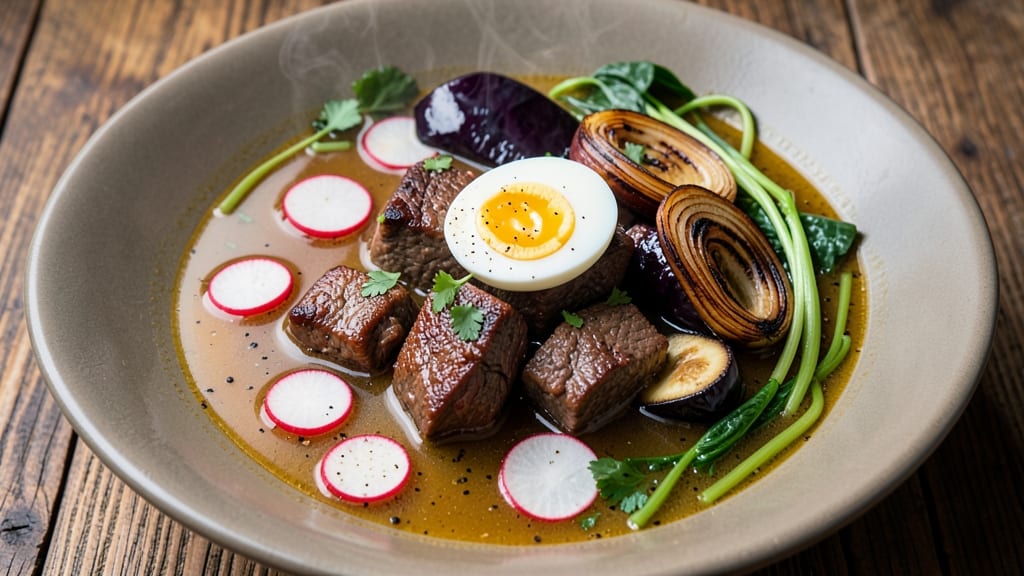
This beef sinigang soup recipe delivers the perfect balance of tangy tamarind broth and melt-in-your-mouth beef—Filipino comfort food at its finest. The secret lies in slow-cooking the beef until fork-tender while building layers of sour, savory, and umami flavors through traditional techniques.
What sets this version apart is the authentic tamarind base, which transforms simple ingredients into something deeply satisfying.
The recipe begins with a rich beef broth infused with tamarind blocks for that signature tang, then simmers with tender beef chunks until they practically fall apart.
Vegetables like radish, eggplant, and kangkong (water spinach) are added just before serving to preserve their texture, creating a vibrant, hearty soup that's both nourishing and deeply flavorful. This is the kind of dish that warms the soul and brings a taste of the Philippines to your kitchen.
What you'll achieve is a tender beef sinigang with a broth so balanced in sour and savory notes that it becomes addictive after just one bite. The tamarind's bright acidity cuts through the richness of the beef, while aromatics like garlic, ginger, and shrimp paste add depth.
Each spoonful delivers a harmonious blend of textures and flavors that make this soup a standout centerpiece for any meal.
Serve it steaming hot with steamed white rice to soak up every last drop of that flavorful broth. The beauty of this recipe is its versatility—adjust the sourness to your preference or swap in your favorite vegetables while keeping the core technique intact. Let's get cooking!
Ingredients for beef sinigang soup
Six ingredients for the broth, six more for the veggies—simple but deeply flavorful.
| Ingredient | Amount | Notes |
|---|---|---|
| Beef Chuck Roast 🥩 | 2 lb | Cut into 1.5-inch cubes |
| Tamarind Blocks 🍈 | 2 pieces | Or 2 tbsp tamarind paste |
| Radishes 🥕 | 2 cups | Sliced into 1-inch pieces |
| Eggplant 🍆 | 1 lb | Cut into 1-inch cubes |
| Kangkong (Water Spinach) 🌿 | 1 lb | Trimmed and washed |
| Onion 🧅 | 1 whole | Large, sliced into wedges |
| Garlic Cloves 🧄 | 6 cloves | Minced |
| Ginger 🌿 | 1 inch | Fresh, sliced thinly |
| Shrimp Paste 🦐 | 1 tbsp | Or bagoong alamang |
| Fish Sauce 🍶 | 2 tbsp | Or soy sauce for vegetarian |
| Green Chili Peppers 🌶️ | 2 whole | Sliced diagonally |
| Salt 🧂 | 1 tsp | Adjust to taste |
| Black Peppercorns 🌶️ | ½ tsp | Crushed |
| Cooking Oil 🫒 | 2 tbsp | Vegetable or canola |
The beef is non-negotiable—chuck roast gives you that melt-in-your-mouth texture. Grab it from the butcher counter if you can, or the pre-cubed packs at Asian markets save time. Tamarind blocks are key for authentic tang—Filipino stores carry them, or use paste if that's what you've got. Look for firm, bright green kangkong (water spinach) at Asian grocers—it wilts fast, so buy fresh and use within 2 days. The shrimp paste should smell funky but not rotten—Red Boat is a solid brand if you're hunting for it.
No tamarind blocks? Lime juice plus a pinch of sugar is a decent stand-in, though it won't be identical. Skip the shrimp paste? Extra fish sauce or a dash of soy sauce adds umami. Eggplant too watery? Pat it dry first—Asian eggplants are ideal, but regular ones work too. The green chilies can be swapped for silverskin onions or Thai bird's eye chilies if you're feeling spicy. For the broth, beef stock cubes in a pinch, but homemade is always better. And trust me, the fish sauce is worth hunting down—it's the secret to that umami punch.
This soup tastes even better the next day—3-4 days in the fridge, 3 months frozen. I always double the broth and freeze portions for lazy nights. Store the veggies separately if prepping ahead—toss them into the hot broth for just 2-3 minutes before serving. Leftovers? Rice and sinigang is a match made in heaven. Keep the tamarind blocks in a dry, airtight container for up to 6 months—they'll last longer than your fridge's veggie drawer.
Why You'll Love This Recipe
- One-Pot Magic: I swear by this recipe when I’m too tired to wash extra bowls—just toss everything into one pot, simmer, and walk away. The tamarind blocks dissolve into that signature tangy broth with zero fuss, while the beef and veggies cook right in the same liquid. (Yes, even on a Tuesday night.)
- Tamarind Tang Explosion: That first sip of broth—sour, rich, and just a little sweet—is what makes this dish dangerously addictive. The tamarind blocks infuse the broth with depth, and the beef chuck roast melts into tender, flavor-packed chunks that soak up every last drop. Honestly, I’ve seen grown adults take seconds just for the broth.
- Weeknight Crowd-Pleaser: This soup feeds a family of four (or a couple of hungry teens) without breaking the bank or requiring a second trip to the store. The radishes add crunch, the eggplant soaks up the broth, and the kangkong wilts into a perfect texture—everyone gets something they’ll actually eat. Between us, it’s my go-to for game days or when friends drop by unannounced.
- Leftovers That Taste Better: The best part? The flavor deepens the next day. Reheat it, and suddenly the beef is even more tender, the broth more concentrated, and the veggies—well, they’re still there, but now they’re better. I freeze portions too; just thaw and simmer, and it’s like making fresh soup all over again. Solid move for lazy Wednesdays.
Step-by-step instructions for beef sinigang soup
This one-pot wonder delivers melt-in-your-mouth beef and vibrant vegetables in a tangy tamarind broth.
Sear the Beef Chuck for Rich Flavor
Heat the 2 tablespoons cooking oil in a large pot over medium-high heat. Once shimmering, add the 2 lb beef chuck roast cut into 1.5-inch cubes in a single layer. Let them sear undisturbed for 3-4 minutes until developing a deep golden crust—this locks in juices and builds flavor.
Real talk: Don't crowd the pot or the beef will steam instead of brown. Work in batches if needed, setting aside seared beef as you go. Once all pieces are golden, remove them and set aside temporarily. You'll notice the pot smells incredible at this point—that's your first layer of flavor locked in.
Build the Aromatic Base
In the same pot, reduce heat to medium and add the sliced 1 whole onion and 2 whole green chili peppers. Sauté for 3 minutes until the onions soften and the chilies darken slightly. Add the 6 cloves minced garlic and 1 inch sliced ginger, cooking for another 1 minute until fragrant.
Here's where the magic starts: Stir in the 1 tablespoon shrimp paste and let it toast for 30 seconds—you'll see it darken and smell intensely umami. This is the soul of the soup. Immediately pour in 2 tablespoons fish sauce and scrape up any browned bits from the bottom with a wooden spoon. These bits are packed with flavor.
Create the Tangy Tamarind Broth
Add 8 cups water to the pot (enough to cover ingredients) and bring to a boil. Drop in the 2 pieces tamarind blocks and let the mixture simmer for 10 minutes. You'll see the tamarind soften and the broth develop a bright, citrusy tang—this is your signature sinigang flavor.
Strain the broth through a fine-mesh sieve to remove tamarind fibers, then return it to the pot. Add the seared beef back in along with 1 teaspoon salt and ½ teaspoon crushed black peppercorns. Bring to a gentle simmer and let it cook uncovered for 1 hour, skimming any foam that rises to the surface. The beef should be fork-tender but not falling apart.
Add Vegetables for Perfect Texture
About 20 minutes before the beef is done, add the 1 lb eggplant cut into 1-inch cubes and the 2 cups radishes sliced into 1-inch pieces. These vegetables cook quickly and absorb the broth beautifully. Stir gently to distribute them evenly.
In the final 5 minutes of cooking, add the 1 lb trimmed kangkong (water spinach). You'll see it wilt dramatically as it cooks—this is perfect. The spinach should be bright green but still slightly crisp with a bite. Taste the broth and adjust seasoning if needed; you might want to add a splash more fish sauce for depth.
Finish and Serve with Confidence
Remove the pot from heat and let the soup rest for 5 minutes. This resting period allows all the flavors to meld together perfectly. Ladle the hot soup into bowls, making sure each serving gets a good portion of beef, vegetables, and broth.
Serve immediately with steamed rice on the side. The contrast of the warm, tangy soup with cool rice makes every bite complete. The beef should be so tender it practically melts in your mouth, while the vegetables retain just enough texture to satisfy. Trust me, this is where home cooking feels like a restaurant experience.
Pro Tips For Making Beef Sinigang Soup
- Sear the Chuck First: I learned this the hard way—skipping the sear means flavorless beef. After browning the chuck roast in small batches (don’t crowd the pan!), you’ll get that deep, caramelized crust that cuts through the tangy tamarind later. Use medium-high heat and let it sit undisturbed for 2-3 minutes per side.
- Soak Tamarind Properly: Tamarind blocks are stubborn—just tossing them in won’t do. Soak them in 2 cups hot water for at least 15 minutes (or up to an hour if you’re impatient like me) to extract the full sour punch. Strain out the fibers and reserve the liquid—this is your broth’s soul.
- Add Eggplant Last: Eggplant turns mushy fast in broth. Toss it in raw for the last 5-7 minutes of cooking—just until tender but still holding shape. If you’re using long, skinny varieties, slice them into thick rounds so they don’t disintegrate into the soup.
- Simmer Low and Slow: Sinigang needs time to develop depth, not a rushed boil. After adding all ingredients, reduce heat to a gentle simmer (small bubbles, occasional skimming of foam). Rushing this step makes the broth taste flat—trust me, the extra 20 minutes pays off.
Best sauces and condiments for this beef sinigang soup
Tamarind Broth Enhancers
For an extra layer of depth, add 1 tablespoon of palm sugar while simmering the tamarind blocks—this balances the sourness beautifully.
I often stir in ½ cup of coconut milk during the last 10 minutes of cooking for a creamy twist, especially when serving to kids or guests who prefer richer flavors. 🌱
Umami Boosters
If you want to intensify the savory notes, toast 1 tablespoon of shrimp paste for an extra 30 seconds until it darkens significantly. For a vegetarian version, replace fish sauce with 2 tablespoons of soy sauce plus 1 teaspoon of miso paste—this combo mimics the umami complexity.
Trust me, the difference is noticeable!
Spice and Heat Adjustments
Crank up the heat with 1 sliced Thai bird's eye chili or ½ teaspoon of ground chili flakes for a spicier kick. For smoky depth, add 1 teaspoon of smoked paprika when building the aromatic base.
I like to serve extra chili slices on the side so everyone can adjust to their preference. 🌶️
Fresh Herbs for Brightness
Finish the soup with 2 tablespoons of chopped cilantro or 1 tablespoon of Thai basil just before serving—these herbs add a fresh, bright contrast to the tangy broth.
For a more aromatic touch, lightly crush 2-3 sprigs of fresh lemongrass and simmer them in the broth for the last 15 minutes. The citrusy aroma elevates the dish instantly.
Acidity Balancers
If the tamarind broth tastes too sharp, balance it with 1 tablespoon of fish sauce or a pinch of sugar to taste. For a fruity twist, add 2 slices of fresh pineapple during the last 10 minutes of cooking—the natural sweetness mellows the acidity beautifully.
This works especially well if you're serving the soup with grilled meats or seafood.
Garnishes for Presentation
Top each bowl with crushed roasted peanuts for texture or lime wedges for a zesty finish. For a restaurant-style touch, drizzle with chili oil or toasted sesame oil just before serving. These garnishes not only look impressive but also add another layer of flavor that ties everything together. ✨
Nutrition facts
Frequently asked questions
Can I use regular vinegar instead of tamarind blocks?
You can try, but it won't taste the same. Tamarind blocks provide a complex, fruity sourness that vinegar can't replicate. For a closer substitute, mix 2 tablespoons of lime juice with 1 teaspoon sugar—this mimics some of the tamarind's depth. If you're feeling adventurous, try 1 tablespoon of calamansi juice (Filipino lime) for the most authentic tang.
Why does my beef sinigang broth taste too sour?
Over-soaking the tamarind blocks or using too much can make the broth overly acidic. To fix it, balance the sourness by adding 1 tablespoon of fish sauce or a pinch of palm sugar while simmering. For a fruity twist, stir in 2 slices of fresh pineapple during the last 10 minutes—the natural sweetness will mellow the acidity beautifully.
Can I make this soup in an Instant Pot?
Sauté the beef, aromatics, and shrimp paste as directed, then add the tamarind blocks, water, and beef. Cook on high pressure for 30 minutes, followed by a 10-minute natural release. Add the vegetables during the last 5 minutes of cooking to keep them crisp. The Instant Pot version is even more convenient for busy weeknights!
What vegetables can I substitute if I can't find kangkong or eggplant?
No problem! Swap kangkong for baby spinach or green cabbage, and eggplant for zucchini or potatoes. Radishes can also be replaced with carrots or daikon radish if needed. Just adjust cooking times—harder vegetables like potatoes should go in earlier, while delicate greens like spinach should be added last.
How do I make this soup spicier without overpowering the flavor?
Start with 1 sliced Thai bird's eye chili or ½ teaspoon of ground chili flakes while building the aromatic base. For a smoky touch, add 1 teaspoon of smoked paprika with the garlic and ginger. Serve extra chili slices on the side so everyone can adjust to their preference—this keeps the balance perfect while letting heat lovers customize their bowl.