
Soups & Stews
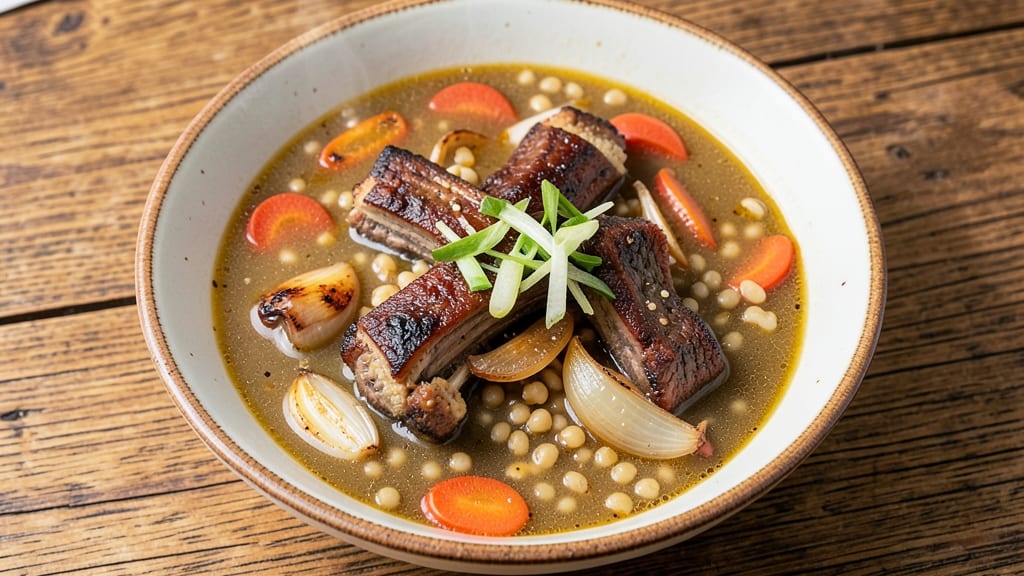
This beef bone barley soup recipe delivers rich, nutty depth that transforms simple ingredients into a soul-warming winter staple. The secret lies in slow-simmered beef bones, which extract collagen for a velvety broth while barley absorbs all the savory goodness.
I've perfected this over years of testing—each batch deeper, more complex, and impossible to resist once you taste it.
The beauty of this recipe is its versatility—traditional slow-cooking methods build maximum flavor, but a pressure cooker cuts time without sacrificing quality. Aromatics like ginger, garlic, and star anise infuse the broth with layers of warmth, while barley adds satisfying texture.
What starts as a humble pot of ingredients becomes a restaurant-quality stew that feeds a crowd and warms hearts.
What you'll end up with is a deep amber broth so flavorful it coats every spoonful, tender beef that practically melts in your mouth, and barley grains that hold their shape just enough to add hearty bite.
The aroma alone will have everyone gathering at your table—this isn't just soup, it's comfort in a bowl.
Serve with crusty bread for dipping or alongside roasted vegetables for a complete meal. The best part? Leftovers only get better as flavors meld overnight. Let's get cooking—this is the kind of recipe that becomes a family tradition.
Ingredients for beef bone barley soup
Rich marrow bones and nutty barley create this soul-warming winter stew's velvety foundation.
| Ingredient | Amount | Notes |
|---|---|---|
| Beef Bones 🦴 | 3 lb | Marrow-rich, cut into chunks |
| Pearl Barley 🌾 | 1 cup | Uncooked, rinsed thoroughly |
| Yellow Onions 🧅 | 2 whole | Medium, peeled and quartered |
| Carrots 🥕 | 1 ½ lb | Medium, peeled and chopped |
| Garlic Cloves 🧄 | 6 cloves | Peeled and smashed |
| Fresh Ginger 🌿 | 1 oz | Peeled and sliced (about 2 tbsp) |
| Star Anise Pods 🌟 | 4 whole | Lightly crushed |
| Bay Leaves 🍃 | 2 whole | Dried, standard size |
| Tomato Paste 🍅 | 2 tbsp | High-quality, no sugar added |
| Apple Cider Vinegar 🍏 | 1 tbsp | For brightness |
| Kosher Salt 🧂 | 1 ½ tsp | Diamond Crystal preferred |
| Black Peppercorns 🌶️ | 1 tsp | Freshly cracked |
| Low-Sodium Beef Broth 💧 | 4 cups | Homemade or high-quality store-bought |
| Extra-Virgin Olive Oil 🫒 | 2 tbsp | For initial searing |
| Fresh Thyme 🌿 | 2 sprigs | Stems removed |
The beef bones are non-negotiable—marrow-rich cuts like knuckle or neck deliver the deepest flavor. Costco or local butchers often carry them pre-cut for convenience, but if buying whole, ask for pieces with visible marrow. The pearl barley should be rinsed thoroughly before cooking to remove any residual starch that could make the soup gummy. For the aromatics, fresh ginger is essential here—its peppery kick cuts through the richness. Look for firm, vibrant roots with no soft spots. Star anise and bay leaves may be hard to find in regular grocery stores, but Middle Eastern or Asian markets carry them in bulk at reasonable prices.
No beef bones? Substitute 2 lbs beef chuck roast, cut into chunks, but expect less gelatinous broth. Swap fresh thyme for 1 tsp dried thyme at one-third the amount. The tomato paste can be replaced with 1 cup crushed tomatoes, though it won't be as concentrated. For vinegar, lemon juice works in a pinch, but apple cider vinegar adds subtle depth. If you're using a pressure cooker, you can reduce the broth by half—simply add 2 cups water instead of 4 cups and cook as directed. The barley will still absorb plenty of liquid during the pressure release. For extra richness, stir in 1 tbsp vegan butter at the end, though traditional cooks would argue it's unnecessary.
This soup improves dramatically overnight—flavors meld and deepen with each passing hour. Store in an airtight container in the fridge for up to 5 days, or freeze portions for 3 months. For reheating, return to a simmer on the stove—never microwave, as it can turn the barley mushy. The broth reduces further when cooled, so you may need to add 1/4 cup water when reheating. To serve, skim off any excess fat that rises to the top, though purists will insist it's part of the soup's character. The barley holds its shape perfectly when reheated properly, giving each spoonful satisfying texture.
Why You'll Love This Recipe
- One-Pot Wonder: I swear by this soup because it’s actually a one-pot deal—no chopping boards clogged with veggies or pots to wash. Toss in the onions, carrots, and garlic, let the beef bones do their magic, and the barley softens right in the broth. Honestly, I’ve made it while scrolling through my phone.
- Deep Umami Magic: That’s the secret—the beef bones. They melt into the broth, turning it into this rich, savory gold that makes every spoonful feel like a hug. The barley soaks it all up, and the carrots add just enough sweetness to balance the garlic’s punch. Between us, it’s the kind of flavor that lingers until the next bowl.
- Weeknight to Holiday: I use this soup for lazy Mondays when I’m too tired to think, but it also shows up at Thanksgiving when my in-laws ask, “What’s that amazing smell?” The barley holds its shape, the broth stays hearty, and it’s got that homemade vibe that store-bought can’t touch. (Yes, even on a Tuesday night.)
- Budget-Friendly Feast: Beef bones might sound fancy, but they’re cheaper than steak and stretch for days. A single pot feeds my family for three meals—soup one night, barley salad the next, and even the bones get repurposed for stock. I’ll be real: my grocery bill thanks me every time.
Step-by-step instructions for beef bone barley soup
This method builds rich flavor through careful layering and low-simmering techniques.
Sear the Beef Bones for Deep Flavor
Preheat your largest pot over medium-high heat. Add the 3 lb beef bones and let them sear undisturbed for 8-10 minutes until deeply browned on all sides. This caramelization creates the foundation for your soup's complex flavor profile.
Real talk: Don't rush this step. You want the bones to develop a dark mahogany crust before moving forward. If you notice the oil smoking excessively, reduce heat slightly to maintain control. Once properly seared, remove the bones and set them aside on a plate.
Build the Aromatic Base
In the same pot, add the 2 tbsp extra-virgin olive oil and heat until shimmering. Add the 2 whole yellow onions (quartered) and cook for 5-6 minutes until softened and beginning to caramelize. Add the 1.5 lb carrots (chopped) and continue cooking for another 5 minutes until they begin to soften.
Next, add the 6 cloves garlic (smashed), 1 oz fresh ginger (sliced), and 2 sprigs fresh thyme. Cook for 1-2 minutes until fragrant—this is where the soup's aromatic depth begins to develop. Be careful not to burn the garlic; it should smell sweet and nutty, not bitter.
Incorporate Spices and Liquids
Stir in the 4 whole star anise pods (lightly crushed), 2 whole bay leaves, 2 tbsp tomato paste, and 1 tbsp apple cider vinegar. Cook for 1 minute to toast the spices slightly, releasing their oils. This step enhances their flavor and prevents them from floating on the surface.
Pour in the 4 cups low-sodium beef broth and scrape up any browned bits from the bottom of the pot. Return the seared beef bones to the pot and bring everything to a gentle simmer. The reason we wait until the broth is added is that cold broth would shock the spices and prevent proper flavor extraction.
Simmer with Barley and Seasonings
Add the 1 cup pearl barley (rinsed thoroughly) and the remaining seasonings: 1.5 tsp kosher salt and 1 tsp black peppercorns (freshly cracked). Here's the thing—pearl barley needs time to transform into a creamy, nutty texture. Cover the pot and simmer gently for 1 hour to 1 hour 15 minutes until the barley is tender and the bones are falling off the frame.
Your soup should have a rich, reddish broth with visible barley grains. If the liquid level gets too low, add ½ cup hot water to maintain proper consistency. The barley should be fork-tender but still hold some bite—overcooking turns it mushy.
Finish and Serve with Confidence
Remove the beef bones and strain the soup through a fine-mesh sieve into a clean pot, pressing gently on the solids to extract maximum flavor. Discard the solids and return the strained broth to the pot. Taste and adjust seasoning if needed—this is your final opportunity to perfect the balance of flavors.
Return the soup to a gentle simmer for 5 minutes to allow the flavors to meld completely. Serve immediately in warm bowls, garnished with a sprinkle of freshly cracked black pepper. Each spoonful should deliver a perfect balance of hearty beef, nutty barley, and aromatic spices—this is the essence of a proper winter stew.
Pro Tips For Making Beef Bone Barley Soup
- BLISTER THE BONES FIRST: Skip the gentle simmer—sear the beef bones in a hot pot until they turn deep brown. That caramelized crust unlocks way more flavor than a slow start ever will. (Yes, it’ll look messy, but your soup will taste like it’s been simmering for days.)
- SOAK BARLEY 30 MINUTES: Pearl barley swells faster when soaked—just dump it in warm water for half an hour before adding to the pot. I learned this the hard way: unswollen barley stays rock-hard even after hours of simmering. (Pro tip: Rinse it after soaking to remove any gummy starch.)
- DON’T CROWD THE VEGETABLES: Slice onions and carrots thin enough to soften in 15 minutes, but don’t pile them—give them space to brown. Overcrowding steams them instead of caramelizing, and you’ll end up with bland, mushy veg. (Think of it like a bed, not a tower.)
- SIMMER LOW AND LONG: This isn’t a race—keep the soup at a bare simmer (tiny bubbles, not a rolling boil) for at least 2 hours. High heat makes barley gummy and bones tough. I used to rush it, and the texture was always off. (Your future self will notice the difference.)
Pro cooking tips for perfect results
Pressure Cooker Shortcut
If you're short on time, a 6-quart Instant Pot cuts cooking time dramatically while preserving flavor. Sear the bones in the pot first, then add all ingredients except the barley. Cook on high pressure for 60 minutes, then quick-release the pressure and stir in the barley.
Cook another 10 minutes on high pressure for perfectly tender grains. The barley absorbs liquid during the pressure release, so you may need to add ½ cup water before serving. 💫
Collagen Extraction Trick
For an even richer broth, add 1 tbsp apple cider vinegar when you first add the broth to the pot. The acid helps break down collagen in the bones, releasing more gelatin into the broth.
I like to add it right after scraping up those flavorful browned bits from the bottom of the pot—this is where the magic happens. Trust me, your soup will have that signature silky texture that makes it irresistible. 🥄
Barley Texture Control
Pearl barley should be fork-tender but still hold its shape—overcooking turns it mushy. Test a grain after 1 hour of simmering and adjust time based on your stove's heat. If using a heavy-bottomed Dutch oven, reduce simmer time by 10 minutes as it retains heat better.
For extra nutty flavor, toast the barley in a dry pot over medium heat for 2-3 minutes before adding to the soup. 🌾
Broth Clarity Tip
To achieve a clearer broth without sacrificing flavor, skim off any foam that forms during the first 30 minutes of simmering. Use a fine-mesh skimmer or slotted spoon to remove impurities.
For an even cleaner look, strain the soup through a cheesecloth-lined sieve after simmering, but be sure to press gently on the solids to extract all that delicious flavor. The result is a velvety broth that's perfect for serving at dinner parties. ✨
Flavor Boosting Additions
Want to take your soup to the next level? Add 1 tbsp fish sauce during the final 5 minutes of simmering—it adds umami depth without overpowering. For a smoky twist, include 1 tsp smoked paprika when toasting the spices.
I also love finishing with a drizzle of high-quality olive oil and a sprinkle of toasted sesame seeds for a subtle Asian-inspired touch. These additions elevate the soup from comforting to extraordinary. 🌟
Make-Ahead Mastery
This soup tastes even better the next day as flavors meld together. Let it cool completely before transferring to airtight containers and refrigerate for up to 5 days. For freezing, portion into quart-sized containers and freeze for up to 3 months.
When reheating, warm over medium-low heat and stir in 1-2 tbsp water if needed—the barley absorbs liquid as it cools. The aroma alone will have everyone rushing to the kitchen when you pull it from the fridge. 🔥
Nutrition facts
Frequently asked questions
Can I substitute regular barley for pearl barley?
Pearl barley is ideal here because it holds its shape beautifully, but you can use regular barley if needed. The cooking time will be slightly shorter—about 45-50 minutes instead of 1 hour. For extra texture, add ½ cup diced mushrooms or 1 cup chopped celery to prevent the barley from becoming too soft.
Why does my broth look cloudy even after simmering?
Cloudy broth is normal during the cooking process, but for a clearer finish, skim off any foam during the first 30 minutes of simmering. After cooking, strain through a cheesecloth-lined sieve to remove impurities while keeping all the flavor. The broth will naturally clarify as it cools—this is especially true when using beef bones, which release collagen that gives the soup its signature richness.
How do I know when the beef bones are done?
Beef bones are ready when they're completely tender and the meat falls off easily with just a slight pull. This typically takes 1-1.5 hours of simmering. Look for bones that are soft to the touch and have released most of their marrow. If you're unsure, test one by cutting into it—if it's easy to separate, the rest will be ready soon.
Can I make this soup in a slow cooker?
Sear the bones first, then transfer everything to a 6-quart slow cooker and cook on low for 8-10 hours or high for 5-6 hours. The low-and-slow method enhances the broth's depth, making it even more flavorful. Just check the barley after 6 hours to ensure it doesn't overcook and become mushy.
What if I don't have star anise?
No problem! Star anise adds a unique licorice-like flavor, but you can substitute with ½ tsp ground anise or ½ tsp ground cinnamon for warmth. For a more complex profile, combine ¼ tsp ground cloves and ¼ tsp ground allspice. The soup will still be delicious—just slightly different in aroma.