
Soups & Stews
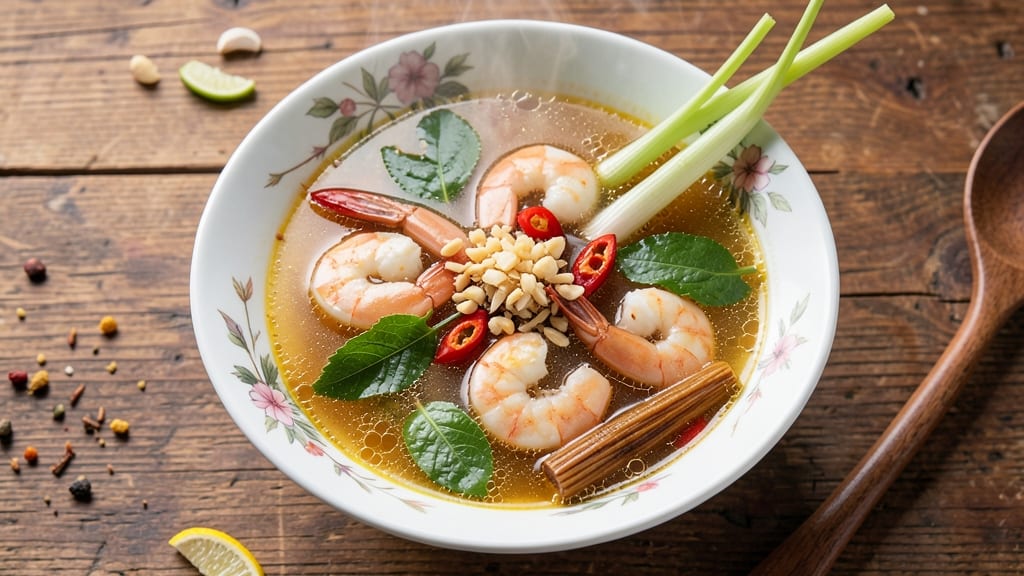
This authentic Tom Yum Goong soup brings Thailand's bold flavors to your kitchen with its signature balance of spicy, sour, and umami in every steaming bowl. ✨ The secret lies in the aromatic base—lemongrass, galangal, and kaffir lime leaves—simmered to perfection before adding shrimp and tamarind for that signature tang.
I’ve perfected this recipe over years of testing, ensuring the broth stays clear and vibrant while the shrimp cooks just enough to stay tender yet firm.
The beauty of this dish is its authentic simplicity: no heavy cream or overly complicated steps, just fresh ingredients working together. Galangal (a root similar to ginger) and bird’s eye chilies deliver the heat, while lime juice and tamarind provide the bright, sour punch.
Even if you can’t find galangal, I’ll share a substitution that keeps the flavor true to Thai tradition. The result? A restaurant-quality soup that’s as comforting as it is exciting.
What makes this recipe special is how it transforms basic ingredients into something extraordinary. The broth starts clear and fragrant, then deepens into a rich, aromatic liquid that clings to every shrimp.
Fresh cilantro and Thai basil at the end add brightness, while lime wedges and chili flakes let everyone adjust the heat to their liking. It’s the kind of dish that feels like a hug—warm, spicy, and full of flavor.
Perfect for a cozy dinner with friends or a quick weeknight meal, this Tom Yum Goong is pescatarian-friendly and easy to customize. Whether you’re a seasoned cook or new to Thai cuisine, this recipe delivers bold, authentic taste without the guesswork. Let’s get cooking!
Ingredients for authentic tom yum goong soup
Fresh aromatics and bold flavors make this Thai classic shine in every bowl.
| Ingredient | Amount | Notes |
|---|---|---|
| Large Shrimp (Peeled, Deveined) 🦐 | 1 ½ lb | Head-on preferred for broth flavor |
| Lemongrass Stems 🌿 | 3 whole | Bruised and cut into 2-inch pieces |
| Galangal Root 🌿 | 3 oz | Peeled and sliced thin (or ginger substitute) |
| Kaffir Lime Leaves 🍃 | 4 whole | Bruised and torn in half |
| Bird's Eye Chilies 🌶️ | 6 whole | Adjust for spice preference |
| Garlic Cloves 🧄 | 6 cloves | Smashed with side of knife |
| Shallots 🧅 | 4 whole | Peeled and halved lengthwise |
| Coconut Milk (Full-Fat) 🥥 | 1 cup | High-quality, unsweetened |
| Fish Sauce 🍶 | 2 tbsp | Red Boat preferred |
| Tamarind Paste 🍈 | 1 tbsp | Adjust for sourness |
| Lime Juice 🍋 | ½ cup | Freshly squeezed |
| Fresh Cilantro 🌿 | ¼ cup | Chopped, for garnish |
| Thai Basil Leaves 🌿 | ¼ cup | Fresh, for garnish |
| Salt 🧂 | 1 tsp | Diamond Crystal preferred |
| White Peppercorns 🌶️ | ½ tsp | Freshly ground |
The galangal and kaffir lime leaves are non-negotiable for authentic flavor—Thai markets carry them fresh, but Asian grocery stores usually stock them too. If you can't find galangal, ginger works in a pinch (though it's not identical). For lemongrass, look for the thick, pale stems—avoid the woody bottoms. The bird's eye chilies pack serious heat, so handle with care and adjust to taste. Fresh shrimp is ideal, but frozen works if thawed properly. Red Boat fish sauce is the gold standard, but any reputable brand will do.
No tamarind paste? Lime juice plus a pinch of sugar gets you close. The coconut milk should be full-fat for richness—canned brands like Thai Kitchen are reliable. For extra depth, toast the white peppercorns in a dry pan before grinding. The broth starts clear but intensifies as it simmers, so don't rush the cooking time. If you're serving spice-sensitive guests, remove half the chilies before adding them to the broth. The Thai basil adds a distinct anise-like flavor—regular basil won't cut it. For garnish, I always double the cilantro since some people pick it out.
This soup tastes even better the next day as flavors meld. Store leftovers in airtight containers for up to 3 days in the fridge. Freeze for up to 1 month if you want to make ahead—just reheat gently to preserve texture. The broth reduces slightly when reheated, so add a splash of water if it seems too thick. For serving, keep lime wedges and extra chili flakes on the table—everyone should customize their heat. The shrimp reheats beautifully, but if you're freezing, cook it fresh and add it to the broth after reheating.
Why You'll Love This Recipe
- No Chopping Chaos: I’ll admit, galangal and kaffir lime leaves sound intimidating—but you only need to crush a few stems and tear those leaves, not dice them. The shrimp? Just peel and devein—no fancy knife work here.
- Tangy-Spicy Magic: That first sip of lemongrass and galangal broth, brightened by bird’s eye chilies and a squeeze of lime? It’s the kind of flavor that makes you pause mid-slurp. Honestly, the balance of sour, spicy, and umami is ridiculously hard to resist.
- Weeknight to Dinner Party: Same ingredients, endless uses. Simmer a big pot for a quick weeknight dinner, or double it for guests—just add fresh herbs at the end. My husband’s coworkers still ask for the recipe after that potluck last month.
- Leftovers That Beg for More: This soup actually tastes better the next day as the flavors meld. I freeze portions for lazy nights, and it reheats like a dream. (Yes, even my picky teenage son sneaks seconds when he thinks I’m not looking.)
Step-by-step instructions for authentic Tom Yum Goong soup
Here's the traditional method that delivers restaurant-quality flavor with perfectly balanced spice and sour notes.
🍳 Step 1: Build the Aromatic Base
In a large pot over medium-high heat, add the 4 whole shallots (halved lengthwise) and cook for 3-4 minutes until they begin to caramelize slightly at the edges. This develops deep sweetness that forms the foundation of the soup.
Add the 6 cloves garlic (smashed with the side of your knife) and cook for 30 seconds until fragrant but not browned. Immediately add the 3 oz galangal root (peeled and sliced thin) and 3 whole lemongrass stems (bruised and cut into 2-inch pieces). Stir for 1 minute until the galangal softens slightly and releases its citrusy aroma.
Here's where it gets crucial: add the 6 whole bird's eye chilies and 4 whole kaffir lime leaves (bruised and torn in half). The chilies should sizzle immediately—if they don't, your heat isn't high enough. Let everything cook together for 2 minutes until the aroma fills your kitchen with that signature Thai spice profile.
🥘 Step 2: Develop the Broth
Pour in 4 cups of water (enough to cover the aromatics) and bring to a rolling boil. Once boiling, reduce heat to medium and add the 1.5 lb large shrimp (peeled and deveined). Let the shrimp cook undisturbed for 2-3 minutes until they curl slightly—this indicates they're nearly done but still retain their delicate texture.
Add the 2 tbsp fish sauce and 1 tbsp tamarind paste (dissolved in 2 tablespoons of hot water from the pot). Stir gently and let the broth simmer for 3-4 minutes until the flavors meld. You'll notice the soup develop a vibrant golden color and a complex aroma that's both spicy and tangy.
This is the moment that matters: taste the broth and adjust seasoning. Add more fish sauce if it needs saltiness, or more tamarind paste if it needs more sourness. The balance should be sharp, spicy, and slightly sweet from the caramelized shallots.
🍳 Step 3: Finish with Coconut Milk and Acid
Reduce heat to low and stir in the 1 cup full-fat coconut milk. The soup will immediately turn a creamy, cloudy white. Let it simmer gently for 2-3 minutes—just enough to warm the coconut milk through without curdling it.
Add the 0.5 cup freshly squeezed lime juice and stir well. The soup should become more vibrant in color and develop a bright, citrusy tang that cuts through the richness of the coconut milk. If you prefer a creamier texture, you can add a splash more coconut milk now, but traditional tom yum goong is more broth-like than creamy.
Here's the thing—don't rush this step. Let the soup sit off heat for 1 minute to allow the flavors to fully integrate. The lime juice should be noticeable but not overpowering, with the spicy heat still prominent beneath the citrus notes.
🍽️ Step 4: Serve with Fresh Herbs
Divide the soup among serving bowls, making sure each portion contains at least one shrimp. The shrimp should be pink and slightly curled—if they're not, return the soup to low heat for 1-2 minutes until they reach the perfect doneness.
Top each serving generously with the 0.25 cup chopped fresh cilantro and 0.25 cup fresh Thai basil leaves. These herbs not only add freshness but also provide a visual contrast to the vibrant soup. Sprinkle with a pinch of 0.5 tsp freshly ground white peppercorns and an additional pinch of 1 tsp salt if needed.
Serve immediately with steamed jasmine rice on the side. The first sip should deliver a perfect balance of heat, sourness, and umami with a hint of coconut creaminess. If the soup tastes too spicy, add a bit more lime juice to balance it—this is traditional Thai technique.
Pro Tips For Making Authentic Tom Yum Goong Soup
- Bruise the Galangal: Slice it thick—about ½-inch chunks—and smash each piece with the flat side of your knife before adding to the pot. I used to just chop it fine, but bruising releases more of that peppery, citrusy punch that makes the broth sing. (Yes, it looks messy, but trust me on this.)
- Pound Lemongrass First: Split the stems lengthwise and whack them with the side of your knife or a mortar until fragrant and slightly pulpy. This isn’t about mincing—just breaking the fibers so they steep properly. Skipping this step means your soup will taste like it’s missing half its soul.
- Shrimp in Stages: Don’t dump all the shrimp in at once—add a third when the broth is roaring, another when it’s simmering, and the last batch just before serving. This keeps them from turning rubbery while letting the broth build flavor around them. (Your future self will notice the difference.)
- Chilies Last, Heat Controlled: Toss in the sliced bird’s eye chilies with the shrimp, not the broth. If you add them early, the heat will fade into oblivion, and your soup will taste bland. A quick 30-second blanch in boiling water before adding them? That’s how you guarantee a sharp, bright kick without overpowering.
Storing and reheating your leftovers
Refrigerator Storage
Let your Tom Yum Goong cool to room temperature within 2 hours—never leave it out longer. Transfer to airtight glass containers (I use Pyrex with snap lids) and refrigerate for up to 3 days.
The flavors actually deepen overnight as the spices meld together beautifully. Store the shrimp separately if you want to add it fresh when reheating. ❄️
Freezer-Friendly Tips
For long-term storage, freeze the broth (without shrimp) in quart-sized freezer bags, leaving 1-inch headspace for expansion. Label with the date—it keeps for 1 month at 0°F.
To preserve shrimp freshness, cook them separately and freeze in a single layer before transferring to a bag. Thaw overnight in the fridge before reheating. 🥶
Gentle Reheating
For the best texture, reheat broth-only portions on the stovetop over medium-low heat. Add 2-3 tablespoons of water to restore consistency, then simmer for 5-7 minutes until steaming. For shrimp, add them to the reheated broth just before serving—they cook in 1-2 minutes at a gentle simmer.
Never microwave unless absolutely necessary, as it can make the shrimp rubbery. 🔥
Flavor Refresh
Reheated Tom Yum Goong may lose some of its vibrant acidity. Brighten it up with 1 tablespoon of fresh lime juice and a pinch of tamarind paste (or extra lime juice).
If the broth tastes flat, add ½ teaspoon of fish sauce and a splash of coconut milk to restore richness. Always taste and adjust—this soup should still pack that signature punch! 💫
Serving Leftovers
Present reheated Tom Yum Goong just like the fresh version: ladle into bowls, garnish with fresh cilantro and Thai basil, and serve with steamed jasmine rice. Keep lime wedges and chili flakes on the table so everyone can customize their heat.
The shrimp reheats beautifully when added fresh, so save a few for garnishing bowls at serving time. 🍽️
Nutrition facts
Frequently asked questions
Can I substitute shrimp with another protein?
While shrimp is traditional, this soup works beautifully with white fish fillets (like cod or halibut) or chicken breast. For fish, cut into 1-inch pieces and cook for 3-4 minutes until just opaque. Chicken should be diced into ½-inch cubes and poached gently—it absorbs the broth's flavors wonderfully. Avoid dark meats like pork or beef, as they can overpower the delicate balance.
What if I can't find galangal or kaffir lime leaves?
Galangal can be replaced with ginger (use 1 oz for 3 oz galangal), though it lacks that unique citrusy depth. For kaffir lime leaves, try 2 bay leaves or ½ teaspoon lime zest—neither is perfect, but they add aromatic complexity. The most critical ingredient is lemongrass, so don't skip it! If you're missing both, focus on boosting the lime juice to ⅓ cup to compensate for lost citrus notes.
How do I adjust the heat level?
The recipe uses 6 whole bird's eye chilies for medium heat. For milder soup, remove 2-3 chilies before adding them to the broth. For extra heat, keep them whole and add 1-2 extra. Always remove seeds first—they concentrate the capsaicin (the compound that makes it spicy). If the soup still feels too hot, balance it with 1 extra tablespoon of lime juice or a pinch of sugar to mellow the burn.
Why does my broth look cloudy instead of clear?
A cloudy broth usually means the aromatics (like galangal or lemongrass) weren't cooked long enough to break down. Simmer the base for 5-7 minutes before adding shrimp to clarify it. If it's still murky, strain through a fine-mesh sieve before adding coconut milk and lime. For extra clarity, use filtered water instead of tap water—minerals can cause cloudiness. The soup will still taste amazing, but the presentation will look more restaurant-worthy!
Can I make this soup vegetarian?
Yes, but you'll need to replace the shrimp and fish sauce. Use mushrooms (shiitake or oyster) for texture and soy sauce or vegetarian fish sauce (like Veggie Fish Sauce) for umami. Add 1 teaspoon of miso paste to deepen the savory notes. For protein, try tofu (pressed and cubed) or tempeh, but they absorb more liquid—adjust cooking time to 4-5 minutes to avoid mushiness.