
Soups & Stews
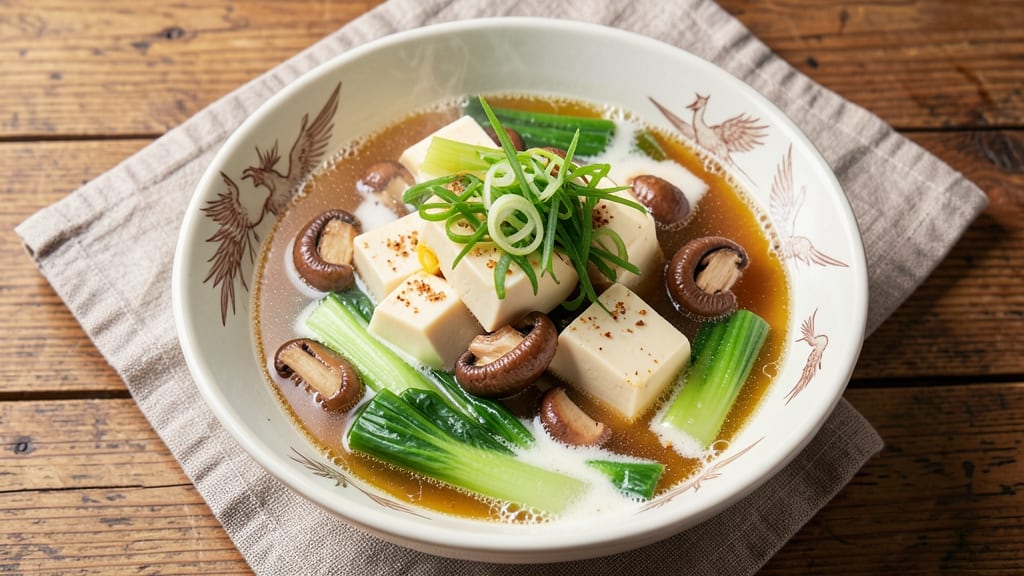
This Asian miso soup recipe delivers the perfect balance of umami depth and delicate flavors in every spoonful. The secret lies in a slow-simmered broth that transforms simple ingredients into something deeply satisfying—crispy greens contrast beautifully with silky tofu and tender mushrooms.
I developed this version after years of testing, ensuring the broth remains rich without overpowering the natural sweetness of the vegetables.
The foundation is a foolproof broth made with kombu and bonito flakes (or shiitake mushrooms for a vegetarian option), which infuses the water with layers of savory complexity. Miso paste, dissolved gently, adds that signature fermented depth, while a touch of mirin and sake brightens the flavor profile.
The tofu is poached until tender, and the greens are blanched just long enough to maintain their crispy bite—no soggy textures here.
What sets this recipe apart is how the components come together: the velvety tofu soaks up the broth's umami, the mushrooms add earthy richness, and the greens provide a refreshing contrast.
The result is a bowl that's both comforting and sophisticated, with every ingredient playing its part. Serve it as a light lunch, a pre-dinner appetizer, or a cozy weekend meal.
For those watching their diet, this recipe easily adapts—skip the bonito flakes for a vegetarian version, or use silken tofu for a lower-fat option. The broth freezes beautifully, so you can make a big batch and enjoy it all week. Let's get started on this restaurant-quality miso soup.
Ingredients for asian miso soup
The perfect balance of umami, texture, and brightness—all in one bowl of restaurant-quality miso soup.
| Ingredient | Amount | Notes |
|---|---|---|
| Dashi Broth (Kombu and Shiitake) 🍄 | 4 cups | Homemade or quality store-bought |
| White Miso Paste 🧈 | ¼ cup | High-quality, fermented |
| Silken Tofu 🍠 | 1 package (12 oz) | Firm or soft, cut into cubes |
| Shiitake Mushrooms 🍄 | 8 whole | Fresh or rehydrated, stems removed |
| Baby Bok Choy 🥬 | 4 whole | Trimmed, leaves separated |
| Green Onions 🧅 | 4 whole | Thinly sliced, white and green parts |
| Mirin 🍶 | 1 tbsp | Sweet rice wine, for brightness |
| Sake 🍶 | 1 tbsp | Dry variety, for depth |
| Sesame Oil 🫒 | 1 tsp | Toasted, for aroma |
| Toasted Sesame Seeds 🌾 | 1 tsp | For garnish, optional |
| Diamond Crystal Kosher Salt 🧂 | ½ tsp | Adjust to taste |
| White Pepper 🌶️ | ¼ tsp | Freshly ground |
| Extra-Virgin Olive Oil 🫒 | 1 tsp | For crisping greens |
The dashi broth is the soul of this soup—kombu and shiitake mushrooms work together to create that signature umami depth. For the best results, use fresh kombu from an Asian market (the dried sheets from H Mart or 99 Ranch are excellent). If you're making a vegetarian version, shiitake mushrooms alone will give you that rich, savory base. The miso paste? White miso for a milder, sweeter profile—Miso Master or Hodo brands are my go-to for consistency. And don't skimp on the shiitake mushrooms; they hold their shape beautifully and add an earthy richness that's non-negotiable.
No mirin? A 1:1 mix of dry white wine and a touch of sugar works in a pinch, though the authentic sweetness is worth tracking down. The silken tofu should be firm, not silken—it holds together better when poached. If you can't find it, regular tofu pressed for 20 minutes is a solid substitute. The bok choy is key for that crisp-tender texture—baby bok choy stays vibrant, but regular bok choy works if you blanch it just 30 seconds. For the green onions, I always use scallions if they're available—they're milder and sweeter. And if you're avoiding sesame oil (common allergen), a pinch of toasted sesame seeds can still add aroma without the oil.
This soup tastes even better the next day—the flavors meld beautifully when reheated gently. Store leftovers in an airtight container in the fridge for up to 5 days, or freeze the broth separately for up to 3 months. For a quick weeknight meal, prep everything ahead: make the broth, cut the tofu and mushrooms, and store components separately. When ready to serve, just reheat the broth, blanch the greens, and assemble. The sesame seeds and green onions can be added fresh right before serving to keep everything vibrant. And if you're making a big batch, double the broth—it freezes perfectly and turns into an instant soup base.
Why You'll Love This Recipe
- Foolproof Simplicity: Honestly, this soup takes less effort than boiling water for pasta. Toss in kombu and dried shiitake for dashi, let it steep while you slice tofu—no stirring required. That’s it. Ten minutes later, you’ve got depth without the fuss.
- Umami Magic: Between us, the miso paste does all the heavy lifting. One spoonful dissolves into the dashi, and suddenly you’ve got that rich, savory punch that makes store-bought broth taste like sad tea. The silken tofu soaks it up like a sponge, turning every bite into pure satisfaction.
- Weeknight Superstar: I make this when I’m too tired to think but still need something nourishing. It’s the perfect side for grilled fish, a light lunch, or even a hangover cure. (Yes, even on a Tuesday night.) The bok choy wilts in minutes—no overcooking, no stress.
- Budget-Friendly Leftovers: A single batch feeds my family for days. The dashi freezes like a dream, and the miso keeps for months. Toss in extra shiitake or tofu when reheating—it’s my secret weapon for turning cheap ingredients into meals that don’t taste like they cost pennies.
Step-by-step instructions for Asian miso soup with crispy greens
This method delivers a balanced harmony of umami depth and textural contrast—silken tofu, crispy bok choy, and aromatic mushrooms.
Prepare the Miso Broth Foundation
In a medium saucepan, gently warm the 4 cups Dashi Broth (Kombu and Shiitake) over medium-low heat until it reaches 160°F—just below a simmer. The kombu and shiitake should dissolve completely, infusing the broth with their earthy, savory essence. Remove the pan from heat and let it cool slightly for 2 minutes—this prevents the miso from losing its beneficial enzymes when exposed to high heat.
While the broth cools, prepare the 0.25 cup White Miso Paste by dissolving it in ½ cup of the reserved warm broth in a separate bowl. Stir until completely smooth—no lumps should remain. The miso should blend seamlessly, creating a velvety paste ready to integrate into the broth. This step is critical: adding miso directly to hot broth can create a bitter, unbalanced flavor.
Incorporate Aromatics and Tofu
Return the dissolved miso mixture to the warmed broth and stir gently to combine. Add the 1 tbsp Mirin and 1 tbsp Sake, then bring the mixture to a gentle simmer over low heat. Allow it to cook for 5 minutes, letting the flavors meld while maintaining the broth's delicate balance. The mirin will add a subtle sweetness, while the sake contributes depth and complexity.
In a separate bowl, cut the 1 package (12 oz) Silken Tofu into ½-inch cubes—this size ensures they cook evenly without becoming mushy. Gently add the tofu cubes to the simmering broth and let them poach for 3-4 minutes. The tofu should absorb the broth's flavors while maintaining its silky texture. Avoid stirring vigorously, as this can break down the tofu's delicate structure.
Cook the Shiitake and Season
Clean the 8 whole Shiitake Mushrooms by wiping them with a damp cloth to remove any dirt, then slice them into ¼-inch thick pieces. Add them to the broth and simmer for 4-5 minutes until they soften slightly but retain their shape. The mushrooms should release their umami-rich juices, deepening the broth's flavor profile. During this time, thinly slice the 4 whole Green Onions, separating the white and green parts for garnish.
Season the broth with 0.5 tsp Diamond Crystal Kosher Salt and 0.25 tsp White Pepper, stirring gently to distribute the seasoning evenly. Taste and adjust if needed—this is where the soup's balance comes together. The salt enhances the miso's richness, while the white pepper adds a subtle, clean heat that complements the umami without overpowering it.
Crisp the Bok Choy and Finish
Heat 1 tsp Extra-Virgin Olive Oil in a separate skillet over medium-high heat until shimmering. Add the 4 whole Baby Bok Choy, cut into wedges, and sear for 2-3 minutes per side until the edges turn deep golden brown and crispy. This step is where the texture contrast shines—crispy greens against the silky tofu and broth. Remove the bok choy and set aside, reserving any rendered oil in the pan.
Return the bok choy to the miso broth and simmer for 1-2 minutes to infuse the greens with the broth's flavors. Drizzle 1 tsp Sesame Oil into the broth and stir gently. Ladle the soup into bowls, garnishing each serving with 1 tsp Toasted Sesame Seeds and the sliced Green Onions. The sesame oil adds a nutty aroma, while the seeds provide a final textural crunch.
Pro Tips For Making Asian Miso Soup
- STRAIN THE DASHI CLEVERLY: Kombu releases bitterness when it boils—so remove it before the water reaches a full simmer. After 5 minutes of soaking, lift it out with tongs, squeeze out excess water, then discard. The broth will taste clean and umami-rich without that metallic aftertaste I used to fight for years.
- SLICE SHIITAKES THINLY: Fresh shiitake mushrooms need to cook fast—cut them paper-thin (⅛-inch max) so they soften in the 2 minutes they’ll spend in the broth. Thick slices turn rubbery, and nobody wants that. Use a sharp knife and work in one direction like you mean it.
- DILUTE MISO LAST: Add the miso paste after the broth is off heat—stirring it into piping-hot liquid kills the good bacteria and makes the soup taste flat. Instead, let the broth cool for 30 seconds, then whisk in the miso. Your soup will stay bright and complex, not dull.
- SALAD-DRESS THE BOK CHOY: Toss baby bok choy in a splash of the finished miso broth before adding it to the pot. The leaves absorb flavor instantly, so they don’t just sit there looking sad. Works for tofu too—just a quick dip before everything comes together. Trust me, it’s worth the extra 10 seconds.
Storing and reheating your asian miso soup
Broth Storage Secrets
The miso broth is the heart of this soup, and it stores beautifully for future meals. After cooling completely, transfer it to an airtight container—I love using glass Pyrex jars for easy reheating.
Store in the refrigerator for up to 5 days or freeze in silicone molds for up to 3 months. The broth actually improves over time as the flavors meld deeper.
When ready to use, thaw overnight in the fridge or reheat directly from frozen over low heat to preserve its delicate balance. 🧊
Tofu and Greens Prep
For maximum freshness, keep the silken tofu, shiitake mushrooms, and baby bok choy separate from the broth. Wrap the tofu in parchment paper and store in the fridge for 3 days, while the mushrooms and greens hold up well for 4-5 days in sealed containers.
The key is to blanch the greens just before serving—this maintains their crisp texture. I often prep all components ahead and assemble when hungry for a quick, restaurant-quality meal. 🥬
Reheating Perfection
When reheating the full soup, do it gently over low-medium heat—never microwave directly, as this can turn the broth watery. Add 2-3 tablespoons of water if it looks thickened, and stir constantly. For the crispy bok choy, reheat in a dry skillet for 1-2 minutes until revived.
The tofu and mushrooms will warm through in 3-4 minutes of gentle simmering. Taste and adjust seasoning—miso soup often needs a pinch of salt or white pepper after reheating. 🔥
Freezer-Friendly Tips
If you're freezing the complete soup, divide it into single-serving portions in freezer-safe containers, leaving ½-inch headspace for expansion. Thaw overnight in the fridge, then reheat gently. For the broth alone, freeze in ice cube trays—these make perfect portion-sized additions to future soups or grains.
Label everything with dates to track freshness. The frozen broth maintains its umami depth beautifully, making it a pantry staple. ❄️
Garnish Freshness
Always add toasted sesame seeds and green onions fresh after reheating—they provide the final textural and visual pop. Keep these in the fridge in small jars for easy access. A drizzle of sesame oil just before serving adds aroma that reheating can't replicate.
For extra flair, sprinkle with crushed nori flakes or chili crisp for a spicy kick. These finishing touches elevate the dish every time. 🌟
Nutrition facts
Frequently asked questions
Can I make this miso soup vegetarian?
Yes! Simply replace the bonito flakes in the dashi with extra shiitake mushrooms or dried kombu alone. For deeper umami, add 1-2 tbsp soy sauce to the broth. The recipe already uses white miso (vegetarian), so no other changes are needed. This version will still be packed with savory flavor without any animal products.
Why does my miso soup taste bitter?
Bitter miso usually means the paste was heated too long or added directly to hot broth. Always dissolve miso in warm (not boiling) broth first, then combine. For balance, add 1 tsp sugar or mirin to the broth before serving. Using red miso instead of white can also add bitterness—stick with white for a milder profile.
How do I keep the tofu from getting mushy?
Use firm silken tofu (not soft) and cut it into ½-inch cubes—smaller pieces cook faster. Poach in the broth for only 3-4 minutes max, and avoid stirring vigorously. For extra firmness, press the tofu for 15 minutes before cubing. The secret is gentle heat and minimal handling!
What's the best way to make this soup spicier?
Add ½ tsp chili crisp or gochujang to the broth while simmering, or top each bowl with red pepper flakes. For a smoky kick, stir in ½ tsp toasted chili oil at the end. Start with small amounts—miso's saltiness can make heat feel stronger than expected!
Can I substitute other greens for bok choy?
Try spinach, napa cabbage, or Swiss chard—all work well. For crispy texture, blanch for 30-45 seconds before adding to the soup. Avoid lettuce (too delicate) or kale (too fibrous). The key is choosing greens that hold their shape when cooked.