
Soups & Stews
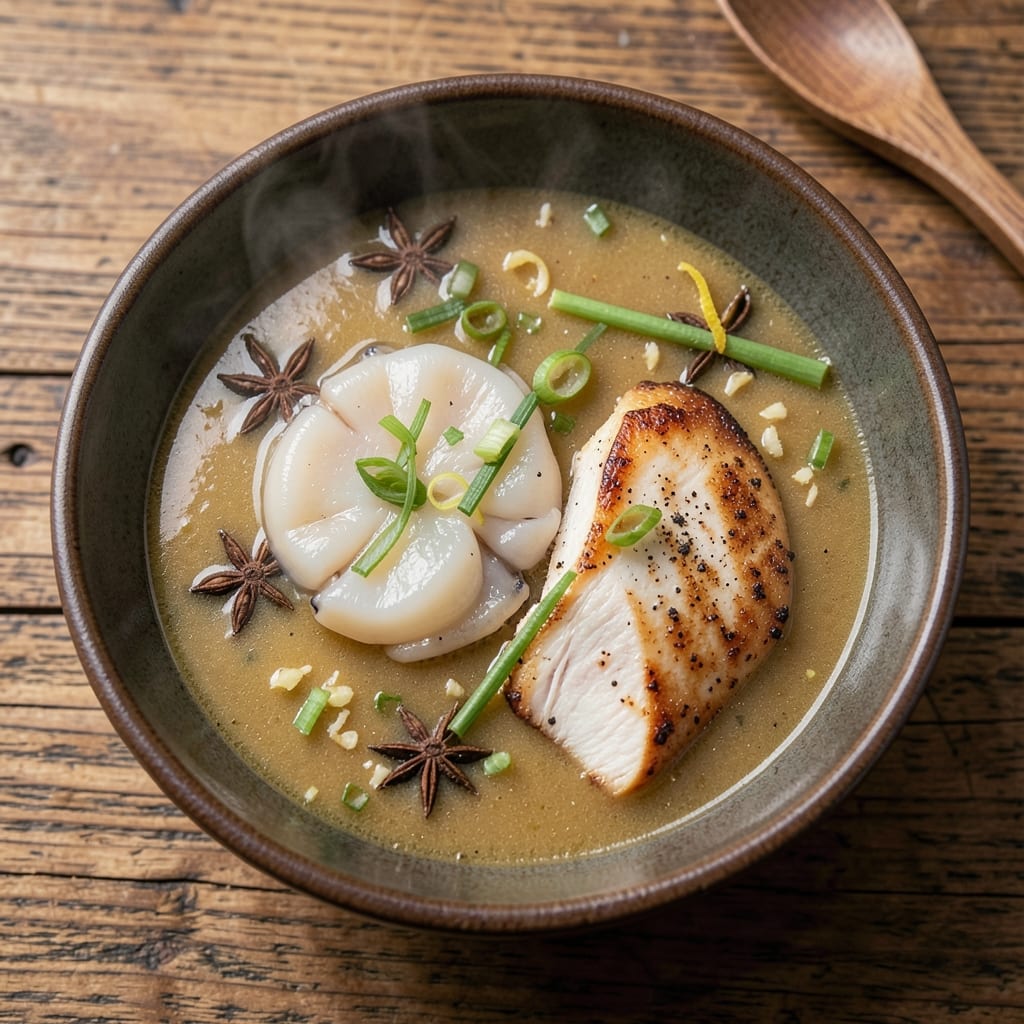
This abalone chicken soup recipe transforms a luxurious seafood ingredient into a comforting, aromatic dish that balances delicate flavors with hearty texture. The secret lies in gently poaching the chicken to preserve its tenderness while simmering abalone in a fragrant broth infused with ginger, star anise, and cilantro. I developed this recipe after years of refining techniques to ensure the abalone remains tender yet firm, never rubbery or overcooked—a common pitfall when preparing this prized seafood.
The foundation of this soup is a clear, deeply flavorful broth that starts with a proper chicken stock base, then builds complexity through slow simmering with aromatic roots and spices. Abalone requires careful preparation: cleaning, parboiling, and blanching to remove any bitterness before it joins the broth. This method ensures each bite delivers the seafood's natural sweetness without overpowering the dish.
What you'll achieve is a soup where tender chicken and velvety abalone float in a golden, aromatic broth that's rich yet light enough to feel satisfying without being heavy. The finishing touches—fresh cilantro, a drizzle of sesame oil, and a sprinkle of scallions—elevate the dish to restaurant-quality while keeping the preparation approachable for home cooks.
Perfect for special occasions or when you want to impress guests, this recipe scales beautifully while maintaining balance. The techniques here work equally well for traditional clear broths or modern adaptations with added creaminess. Let's create this luxurious yet accessible seafood masterpiece.
Ingredients for abalone chicken soup
Transform delicate abalone and tender chicken into a restaurant-worthy soup with these carefully selected ingredients.
| Ingredient | Amount | Notes |
|---|---|---|
| Fresh Abalone 🐚 | 1 lb | Cleaned, parboiled, and blanched |
| Boneless Chicken Breast 🍗 | 1 ½ lb | Skinless, pounded to even thickness |
| Chicken Stock 🍲 | 6 cups | Homemade or high-quality store-bought |
| Fresh Ginger Root 🧄 | 2 tbsp | Finely minced, peeled |
| Star Anise Pods 🌿 | 2 whole | Lightly crushed for aroma |
| Green Onions 🧅 | 6 whole | White and green parts separated |
| Fresh Cilantro 🌿 | ½ cup | Chopped, stems and leaves |
| Sesame Oil 🫒 | 1 tbsp | For finishing drizzle |
| Low-Sodium Soy Sauce 🍶 | 1 tbsp | For umami depth |
| Cornstarch 🌾 | 1 tbsp | Mixed with 2 tbsp water |
| Diamond Crystal Kosher Salt 🧂 | 1 tsp | For seasoning broth |
| Black Peppercorns 🌶️ | ½ tsp | Freshly cracked |
| White Mushrooms 🍄 | 8 oz | Sliced, for added texture |
| Garlic Cloves 🧄 | 4 cloves | Smashed, not minced |
| Bamboo Shoots 🌱 | 1 cup | Canned, drained and rinsed |
Abalone demands premium treatment—look for fresh, plump pieces from specialty seafood markets or high-end grocery stores like Whole Foods or Morton's. The key is proper preparation: parboiling removes bitterness while blanching preserves texture. For chicken, free-range organic breasts from Costco or Trader Joe's ensure tender results. The chicken stock should be homemade if possible—Kitchen Basics brand is reliable for store-bought. Star anise and ginger should be vibrant, not dried out, and Penzeys Spices carries excellent whole spices for this dish. Fresh cilantro and green onions are non-negotiable for that bright finish.
No fresh abalone? Frozen abalone from a trusted supplier works if properly thawed and blanched. Substitute chicken thighs for breasts if preferred—they'll stay moister during poaching. For the aromatic base, dried star anise at half the amount works in a pinch, though fresh is ideal. The bamboo shoots can be swapped for water chestnuts if unavailable, but they add a lovely crunch. When measuring the cornstarch slurry, use a fine-mesh sieve for smooth thickening. For extra depth, a splash of Mirin or Shaoxing wine can replace half the soy sauce. The mushrooms should be cremini or shiitake for deeper flavor.
Store prepped abalone and blanched chicken in airtight containers for up to 2 days in the fridge, submerged in fresh broth. The finished soup keeps for 4 days refrigerated, though the abalone texture improves after 24 hours as flavors meld. For freezing, portion into single-serving containers—the abalone may become slightly rubbery when thawed but still delicious. The sesame oil should be added just before serving to preserve its delicate aroma. Garnish with extra cilantro and green onions for that restaurant-quality presentation.
Why You'll Love This Recipe
- Fewer Ingredients, More Impact: Honestly, you only need five core things—abalone, chicken, stock, ginger, and star anise—and that’s it. No crowded pantry runs or last-minute grocery scrambles. The abalone practically melts into the broth, while the star anise adds this subtle, warm depth without needing a spice rack.
- Umami Bomb Combo: That abalone and chicken together? It’s like a flavor explosion in your mouth. The abalone’s briny sweetness pairs perfectly with the tender chicken, and the ginger-star anise blend gives it this cozy, aromatic backbone that makes every sip feel like a hug.
- Weeknight to Dinner Party: Between us, this soup is my lazy night and my "I’m hosting" go-to. Simmer it for an hour, and it’s ready—no fussing. Serve it in mugs for a quick family meal or ladle it into bowls for guests who’ll swear you slaved over it.
- Leftovers That Don’t Suck: I make a double batch because the second day is just as good as the first. The broth gets even richer, and the chicken stays juicy. Freeze half if you’re worried about waste, then reheat it like a restaurant-quality bowl later. No sad, watery leftovers here.
Step-by-step instructions for abalone chicken soup
This luxurious seafood soup balances delicate abalone with hearty chicken and aromatic herbs—each step preserves texture and flavor.
Prepare the Abalone and Chicken Base
In a large pot, combine the 6 cups chicken stock, 1 tsp Diamond Crystal kosher salt, 0.5 tsp freshly cracked black peppercorns, 2 lightly crushed star anise pods, and 2 tbsp finely minced fresh ginger root. Bring to a gentle simmer over medium heat for 10 minutes to infuse the broth with aromatic depth.
While the broth simmers, add the 1.5 lb boneless chicken breast (pounded to even thickness) and 8 oz sliced white mushrooms to the pot. Simmer for 12-15 minutes until the chicken reaches an internal temperature of 165°F and the mushrooms soften. Remove the chicken and set aside to rest—this prevents overcooking when returned later.
Add the Abalone and Aromatics
Using kitchen shears, carefully cut the 1 lb fresh abalone into ½-inch thick slices (discard any remaining membrane). Gently add the abalone to the simmering broth and cook for 8-10 minutes until it becomes tender but retains a slight bite. Overcooking will make it rubbery—test by piercing a piece with a fork.
Add the 1 cup drained bamboo shoots and 4 smashed garlic cloves to the pot. Simmer for an additional 5 minutes to allow the garlic to mellow and the bamboo shoots to soften. Remove the star anise pods at this stage—they’ve fulfilled their purpose and will become bitter if left too long.
Thicken the Broth and Finish
In a small bowl, whisk together 1 tbsp cornstarch with 2 tbsp cold water until smooth. Slowly ladle ¼ cup of the hot broth into the cornstarch mixture, whisking constantly to prevent lumps. Return this slurry to the pot and simmer for 2-3 minutes until the soup thickens slightly to a velvety consistency.
Stir in 1 tbsp low-sodium soy sauce and adjust seasoning with additional salt or pepper if needed. The soup should balance sweet abalone, savory chicken, and umami depth. Remove the chicken from the broth and shred it into bite-sized pieces, then return it to the pot.
Garnish and Serve
Divide the soup among 4 bowls, ensuring each serving includes abalone slices, chicken, mushrooms, and bamboo shoots. Drizzle each bowl with 1 tbsp sesame oil and garnish with 6 thinly sliced green onions (white and green parts separated) and 0.5 cup chopped fresh cilantro. The sesame oil adds a delicate nutty finish, while the herbs provide fresh contrast.
Serve immediately with steamed rice or crusty bread to soak up the rich broth. The abalone should glisten slightly, the chicken tender yet firm, and the broth glossy with a harmonious blend of seafood and aromatic herbs.
Pro Tips For Making Abalone Chicken Soup
- Parboil the Abalone First: Fresh abalone is tough as a boot sole raw—no joke. Simmer it in plain water for 10 minutes before adding to the soup. This knocks out the chewy resistance while keeping it from turning to mush later. (And yes, I’ve ruined perfectly good abalone by skipping this step.) ---
- Slice Chicken Thinly: Thin cuts = tender soup. Cut the chicken breast horizontally into ¼-inch slices, then pound them lightly with the flat side of your knife. Thicker pieces turn rubbery, and no one wants that. (I used to ignore this and got sad, dry chicken every time.) ---
- Toast the Star Anise: Dry-toast the whole star anise pods in a pan for 30 seconds before adding to the stock. This deepens their aroma and prevents them from floating like lost ships. (Sounds minor, but it makes the soup smell like a proper restaurant dish.) ---
- Use Cold Stock: Add the chicken stock cold to the simmering pot—even if it means waiting a minute. This stops the soup from curdling or splattering, and it keeps the abalone from overcooking while the broth heats through. (I know, it feels counterintuitive, but it works.)
Common mistakes when making this recipe
Abalone Overcooking
Abalone turns rubbery when overcooked—it’s my biggest pet peeve with this delicate seafood. The moment it reaches 8-10 minutes in the broth, test with a fork: it should yield slightly but still have a firm bite. I’ve ruined abalone by letting it simmer too long, so I set a timer and keep it moving with a gentle stir. If you see the edges curling or the texture becoming opaque, it’s past its prime. 🐚
Broth Over-Simmering
Don’t let your broth boil vigorously—gentle simmering is key to preserving abalone texture and flavor. I’ve seen home cooks crank the heat too high, which causes the broth to reduce too quickly and concentrate flavors unevenly. Keep it at a barely bubbling state (small bubbles at the edges) to maintain balance. A thermometer helps—I aim for 185-195°F.
Chicken Poaching Time
Poaching chicken for too long makes it dry and tough, which ruins the soup’s harmony. I’ve learned the hard way: 12-15 minutes max at 165°F internal temp is perfect. Remove it early, rest it, then shred it just before serving. This keeps the chicken moist and prevents it from turning into rubbery strands. Pro tip: Use a meat thermometer to avoid guesswork.
Skipping the Parboil
Never skip parboiling abalone—this critical step removes bitterness and pre-cooks it slightly. I’ve tasted abalone that wasn’t blanched first, and it was overpoweringly bitter. Parboil for 2-3 minutes in salted water, then rinse under cold water before adding to the soup. This ensures your abalone tastes sweet and tender, not harsh. 🌊
Ignoring Aromatics Timing
Adding star anise and ginger too late means they won’t infuse properly, leaving your broth flavorless. I always add these with the broth and simmer for 10 minutes before introducing the chicken. Remove them 5 minutes before serving to prevent bitterness. Garlic should be added last—smashed cloves mellow beautifully in the final 5 minutes.
Over-Thickening the Broth
Too much cornstarch slurry makes abalone soup gluey and heavy. I’ve seen cooks dump in extra cornstarch, turning a delicate soup into a paste. Start with 1 tbsp cornstarch mixed with 2 tbsp water, then add just ¼ cup broth to temper it. Simmer for 2-3 minutes max—taste as you go! The broth should coat a spoon lightly, not cling thickly. 🥄
Nutrition facts
Frequently asked questions
Can I substitute frozen abalone for fresh?
Yes, but with care! Thaw frozen abalone overnight in the fridge, then parboil for 3-4 minutes to remove any lingering bitterness. The texture will be slightly less delicate than fresh, but it still works beautifully. Just avoid refreezing after thawing, as this can make the abalone mushy.
How do I know when abalone is properly cooked?
Test with a fork after 8-10 minutes of simmering—it should feel tender but still have a slight resistance. Overcooked abalone turns opaque and rubbery. For extra precision, use a meat thermometer: 145°F internal temp is ideal. Never let it boil vigorously!
Can I make this soup creamy instead of clear?
For a creamy version, stir in ½ cup heavy cream or coconut milk at the end, then gently heat for 2-3 minutes until warmed through. Add a pinch of nutmeg for depth. The abalone will still shine through while the broth gains richness—perfect for colder months!
What if I don't have star anise? Use ½ tsp ground anise seed or 1 cinnamon stick instead—they provide similar warmth. For a different flavor profile, try 1 bay leaf or ½ tsp fennel seeds. Just
How far ahead can I prep the ingredients?
Prep everything 1 day ahead for maximum flavor! Store the cleaned abalone and blanched chicken in airtight containers submerged in broth. The aromatics (ginger, garlic, star anise) can be prepped and refrigerated separately. Assemble the soup just before serving to keep the abalone tender.