
Soups & Stews
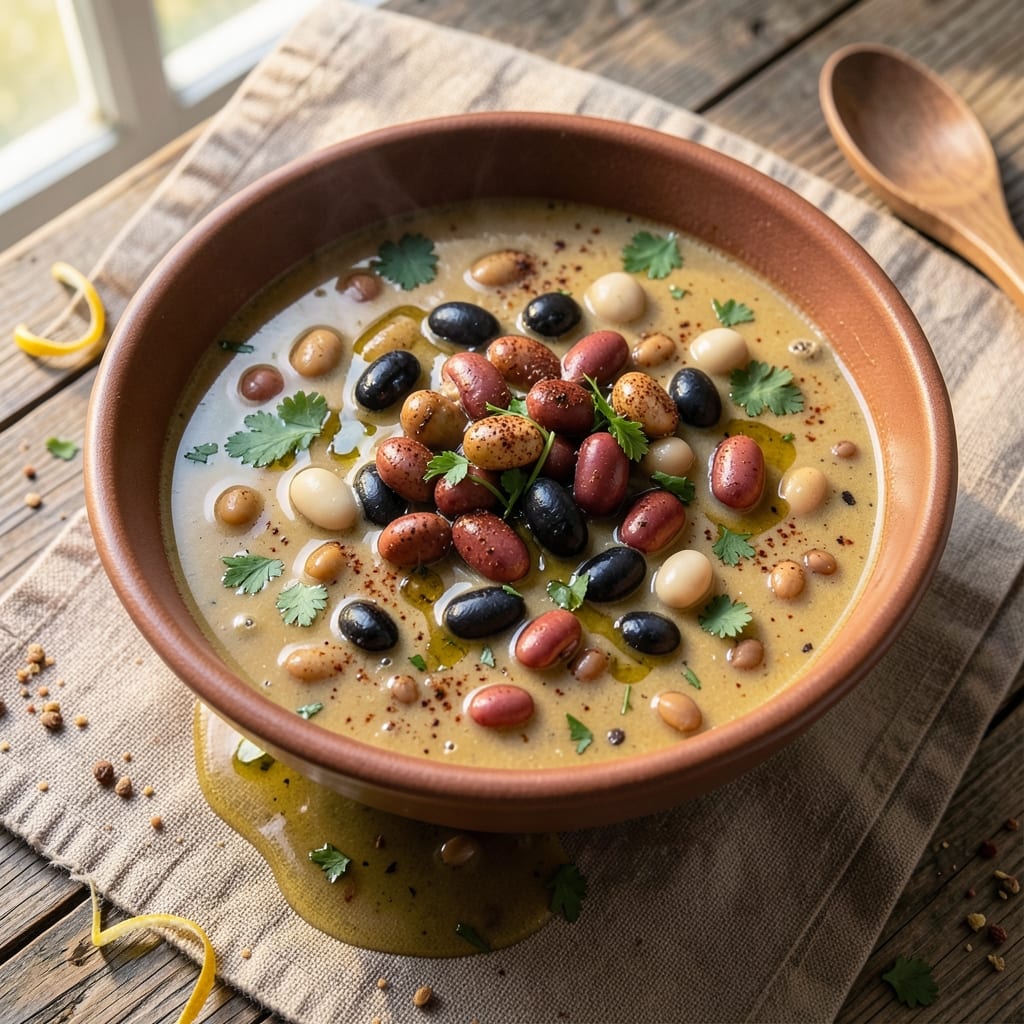
This vegetarian 9-bean soup transforms humble pantry staples into a hearty, protein-rich masterpiece that warms both body and soul. 🌱 The secret lies in blending nine different beans—each contributing texture and flavor—to create a soup so satisfying, it becomes the star of any meal. Perfect for meal preppers, budget-conscious cooks, or anyone craving a nourishing, plant-based dish, this recipe delivers restaurant-quality depth with minimal effort.
The foundation starts with soaking beans overnight to ensure tender, flavorful results, while aromatic vegetables and herbs build the base. A slow simmer allows flavors to meld, creating a broth that’s rich yet light, with each bean adding its own unique character—from creamy butter beans to earthy lentils. The beauty of this recipe is its adaptability: use dried beans for traditional texture or canned beans for a quicker version without sacrificing taste.
What makes this soup truly special is its protein punch—no meat needed. The combination of beans, tofu (optional), and spices creates a dish that’s filling, nutrient-dense, and packed with plant-based goodness. Serve it with crusty bread, a simple green salad, or over rice for a complete meal that’s as comforting as it is nutritious.
Whether you’re prepping for the week or cooking for a crowd, this foolproof 9-bean soup delivers warmth, flavor, and satisfaction in every spoonful. Ready in under an hour (with prep), it’s the perfect solution for cozy nights or busy weekdays. Let’s get cooking!
Ingredients for 9 bean soup recipe vegetarian
Nine beans, one pot—transforming pantry staples into vegetarian protein perfection.
| Ingredient | Amount | Notes |
|---|---|---|
| Great Northern Beans (Dried) 🌱 | 1 cup | Soaked overnight for tenderness |
| Navy Beans (Dried) 🌱 | 1 cup | Soaked overnight for tenderness |
| Black Beans (Dried) 🌱 | ½ cup | Soaked overnight for tenderness |
| Kidney Beans (Dried) 🌱 | ½ cup | Soaked overnight for tenderness |
| Butter Beans (Dried) 🌱 | ½ cup | Soaked overnight for tenderness |
| Lentils (Brown) 🌱 | ½ cup | No soaking required |
| Chickpeas (Dried) 🌱 | ½ cup | Soaked overnight for tenderness |
| White Beans (Cannellini) 🌱 | ½ cup | Soaked overnight for tenderness |
| Pinto Beans (Dried) 🌱 | ½ cup | Soaked overnight for tenderness |
| Onion (Yellow) 🧅 | 1 whole | Diced into small pieces |
| Carrots (Whole) 🥕 | 3 medium | Peeled and chopped into chunks |
| Celery Stalks 🧅 | 3 whole | Chopped into bite-sized pieces |
| Garlic Cloves 🧄 | 4 cloves | Minced for aromatic depth |
| Canola Oil 🫒 | 2 tbsp | For sautéing vegetables |
| Vegetable Broth 💧 | 6 cups | Low-sodium preferred |
| Tomato Paste 🍅 | 2 tbsp | For rich tomato flavor |
| Bay Leaves 🌿 | 2 whole | For subtle herbal notes |
| Thyme (Dried) 🌿 | 1 tsp | Or 1 tbsp fresh thyme |
| Oregano (Dried) 🌿 | 1 tsp | Mexican oregano preferred |
| Salt 🧂 | 1 ½ tsp | Diamond Crystal preferred |
| Black Pepper 🌶️ | ½ tsp | Freshly ground preferred |
| Firm Tofu (Optional) 🍳 | 8 oz | Cubed for added protein |
The bean selection is non-negotiable for texture and flavor harmony. Dried beans deliver the best texture when soaked overnight, though canned beans work in a pinch (drain and rinse well). Whole Foods or local co-ops often carry specialty dried beans like Great Northern and Cannellini, but any grocery store has the basics. For the lentils, brown or green varieties both work, but brown holds its shape better during cooking. The tofu, while optional, adds a satisfying protein boost—Nasoya Super Firm tofu crumbles beautifully when cubed and lightly pan-fried.
No dried beans? Canned beans will suffice, but adjust the liquid—you’ll need about 3 cups extra broth to compensate for their pre-cooked state. Swap tomato paste for 1 cup crushed tomatoes if you prefer a chunkier texture. Fresh thyme and oregano elevate the flavor, but dried works at one-third the amount. For a smoky depth, add ½ tsp smoked paprika or a dash of liquid smoke. The vegetable broth matters—low-sodium versions like Pacific Foods or homemade stock ensure you control the seasoning. Celery and carrots can be swapped for kale or spinach if you prefer greens, but traditional veggies build the soup’s classic flavor base.
Beans keep for up to 6 months in the pantry if stored in airtight containers. Once cooked, the soup reheats beautifully—simmer on low for 10-15 minutes to restore texture. Portion into containers for 5 days of fridge life or freeze for 3 months. The tofu, if used, should be prepped ahead—toss cubes with ½ tsp cornstarch and pan-fry until golden for extra texture. Double the batch and freeze half; this soup only gets better with time as flavors meld.
Why You'll Love This Recipe
- No-Soaking Needed: I’ll admit, I used to dread the overnight soak—but this soup skips it. Just a quick rinse and a long simmer, and those Great Northerns and butter beans turn tender without fuss. Honestly, it’s the kind of recipe that makes me feel like a lazy genius.
- Earthy Depth Explosion: The mix of kidney beans (smoky) and black beans (rich) with the buttery texture of Great Northerns? It’s like a flavor party where every bean has its own spotlight. Add a splash of apple cider vinegar at the end, and it’s chef’s kiss—bright, complex, and impossible to resist.
- Meal Prep MVP: Between us, this soup tastes better the next day. I make a big batch on Sundays, and it’s lunch for three days—no weird leftovers, just hearty, warming bowls. Freeze half if you’re feeling extra, and thaw it straight into a pot. Lazy? Yes. Brilliant? Absolutely.
- Pantry Goldmine: I keep a bag of each dried bean on hand just for this—it’s my go-to when I’m broke or busy. A pound of mixed beans costs less than a single takeout meal, and you get way more servings. Plus, no fancy ingredients: just broth, garlic, and herbs. Budget-friendly doesn’t get more reliable than this.
Step-by-step instructions for 9 bean soup vegetarian
Here's the method to transform pantry staples into a hearty, protein-rich soup that builds flavor layer by layer.
👨🍳 Step 1: Prepare and Sauté the Vegetable Base
Heat the 2 tbsp canola oil in a large Dutch oven over medium heat. Add the diced 1 whole yellow onion, chopped 3 medium carrots, and 3 whole celery stalks. Cook for 8-10 minutes until the vegetables soften and the onion becomes translucent.
Add the 4 cloves minced garlic and cook for another 30 seconds until fragrant. Here's where the foundation happens—don't rush this step. The vegetables should release their natural sweetness and develop a golden hue. If they stick, add 1-2 tablespoons vegetable broth to deglaze. This creates the flavor base for the entire soup.
🍳 Step 2: Build the Flavor Foundation
Stir in the 2 tbsp tomato paste and cook for 1 minute until it darkens slightly. Add the 6 cups vegetable broth, 2 whole bay leaves, 1 tsp dried thyme, 1 tsp dried oregano, 1.5 tsp salt, and 0.5 tsp black pepper. Bring to a gentle boil, then reduce heat to low and let it simmer for 10 minutes to allow the flavors to meld.
This simmering step is crucial—it develops the depth of flavor before adding the beans. The broth should now have a rich, aromatic quality. If you're using the 8 oz firm tofu, cut it into ½-inch cubes and add it now. The tofu will absorb the flavorful broth as it cooks.
🥘 Step 3: Add the Soaked Beans and Lentils
Drain and rinse all the soaked beans: 1 cup Great Northern Beans, 1 cup Navy Beans, 0.5 cup Black Beans, 0.5 cup Kidney Beans, 0.5 cup Butter Beans, 0.5 cup Chickpeas, 0.5 cup White Beans (Cannellini), and 0.5 cup Pinto Beans. Add them to the pot along with the 0.5 cup brown lentils.
Bring the soup back to a gentle boil, then immediately reduce heat to medium-low. The beans and lentils should be partially submerged. Cover the pot and let it simmer for 45-60 minutes, stirring occasionally. You'll know it's ready when the beans are tender but still hold their shape—no mushiness. The soup should have thickened slightly from the beans releasing starch.
⏰ Step 4: Adjust Consistency and Rest
Taste the soup and adjust seasoning if needed—you might need a bit more salt or pepper. For a thicker consistency, let it simmer uncovered for another 10-15 minutes to reduce. If you prefer it thinner, add ½ cup water or broth. Remove the 2 whole bay leaves before serving.
Let the soup rest for 10 minutes off the heat. This allows the flavors to fully develop and the beans to absorb any remaining liquid. The resting period also makes it easier to ladle without spilling. Serve warm with crusty bread or over rice to soak up every last drop of this protein-packed, pantry-transformed masterpiece.
Pro Tips For Making 9 Bean Soup Recipe Vegetarian
- SOAK BEANS SEPARATELY: Navy and black beans soften faster—give them a 4-hour soak while Great Northern and butter beans just need 2 hours. I learned this the hard way when my butter beans turned to mush while the navies were still rock-hard. Use two bowls, save time, and keep textures balanced.
- START WITH A BOIL, THEN SIMMER: Bring the pot to a full rolling boil for 5 minutes first—this sterilizes the beans and breaks down their skins faster. After that, drop to a low simmer (barely bubbling) or you’ll end up with split skins and a gloopy soup. Trust me, the first 5 minutes are worth it.
- SKIP THE SALT UNTIL LATER: Salting the water too early hardens the beans’ skins, making them tough even after hours of cooking. Wait until the beans are tender, then add salt—about 1 teaspoon per quart of liquid. Your grandmother wasn’t wrong about this one.
- USE A LITTLE BACON FAT: Sounds weird, but it works: fry up 2 slices of vegan bacon (or regular bacon if you’re not strict) in a pan, then pour the rendered fat into the soup. It cuts through the heaviness of five types of beans and adds depth. (Yes, even if you’re vegetarian—just use plant-based bacon.)
Wine and beer pairings for this recipe
Red Wine Classics
A medium-bodied Chianti or Sangiovese from Italy is my go-to pairing for this hearty 9-bean soup. The bright acidity and subtle earthiness of these wines complement the soup's tomato and herb base while standing up to the beans' richness. Look for a Chianti Classico with 12-14% ABV—just enough body to match the soup's heartiness without overpowering it.
For a slightly sweeter option, try a Pinot Noir from Oregon or Burgundy. Its red fruit notes (like cherry and raspberry) harmonize beautifully with the soup's savory depth while keeping the palate fresh. I particularly love Domaine Drouhin Oregon Pinot Noir—it's approachable yet complex enough to hold its own against the beans' varied textures. 🍷
Crisp White Options
If you prefer white wine, a dry Riesling from Germany or Alsace offers a refreshing contrast. The wine's crisp acidity and mineral notes cut through the soup's richness, while its subtle sweetness balances the beans' earthiness. Aim for a Kabinett or Spätlese with 11-12% ABV—just enough body to complement without overwhelming.
For a lighter touch, a Vermentino from Sardinia or a Gavi di Gavi from Piedmont shines with its citrus and almond notes. These wines elevate the soup's herbal aromatics while keeping the meal feeling bright and summery. I often reach for La Spinetta Vermentino—its crisp finish cleanses the palate beautifully.
Craft Beer Pairings
A wheat beer like Blue Moon Belgian White or Allagash White adds a fun, effervescent contrast to the soup's heartiness. The beer's coriander and citrus notes bridge the gap between the beans' earthiness and the broth's savory depth. Serve it chilled to enhance the refreshing contrast.
For a darker option, a amber ale with malty sweetness—like New Belgium Fat Tire—works surprisingly well. The caramel and biscuit notes in the beer mirror the soup's tomato and herb layers, creating a cohesive flavor experience. I like to pour this slightly cooler than room temperature to highlight its malt profile. 🍺
Non-Alcoholic Choices
For a sparkling non-alcoholic option, try San Pellegrino Aranciata Rossa or a homemade ginger-lime spritzer. The citrus and ginger notes echo the soup's herbal complexity while adding a refreshing lift. Serve it well-chilled to balance the warm soup.
A cold-brewed hibiscus tea with a splash of lime also pairs beautifully. The tea's tart, cranberry-like flavor complements the beans' earthiness, while the lime adds a bright finish. Brew a strong batch, chill it, and serve over ice for the best results.
Nutrition facts
Frequently asked questions
Can I use canned beans instead of dried for this recipe?
Yes! Canned beans work perfectly for a quicker version. Use 3 cups total canned beans (drained and rinsed) instead of the dried amounts, and add ½ cup extra broth to maintain consistency. The texture will be slightly softer, but the flavor remains rich and satisfying.
How do I make this soup in a slow cooker?
Simmer the sautéed vegetables and broth in the slow cooker on low for 4 hours before adding the beans. Then cook on low for 3-4 more hours until beans are tender. The slow cooker’s gentle heat enhances the beans’ natural sweetness while keeping them intact.
What if I don’t have all 9 types of beans?
No problem! Use your pantry staples—3-5 different beans will still create a flavorful soup. Swap lentils for extra chickpeas or black beans, and adjust the broth to 5 cups if using fewer beans. The variety matters less than the cooking method and seasoning.
Can I make this soup gluten-free?
This recipe is naturally gluten-free as long as you use gluten-free vegetable broth and check the labels on canned beans (some contain additives). Serve with gluten-free bread or rice to keep it safe for gluten-sensitive diets.
Why do my beans turn mushy?
Overcooking or using old beans causes mushiness. Always soak dried beans overnight (or quick-soak for 2 hours in boiling water), then simmer gently. Remove beans from the pot when they’re just tender—they’ll soften further while resting. For canned beans, reduce cooking time by 15-20 minutes.