
Soups & Stews
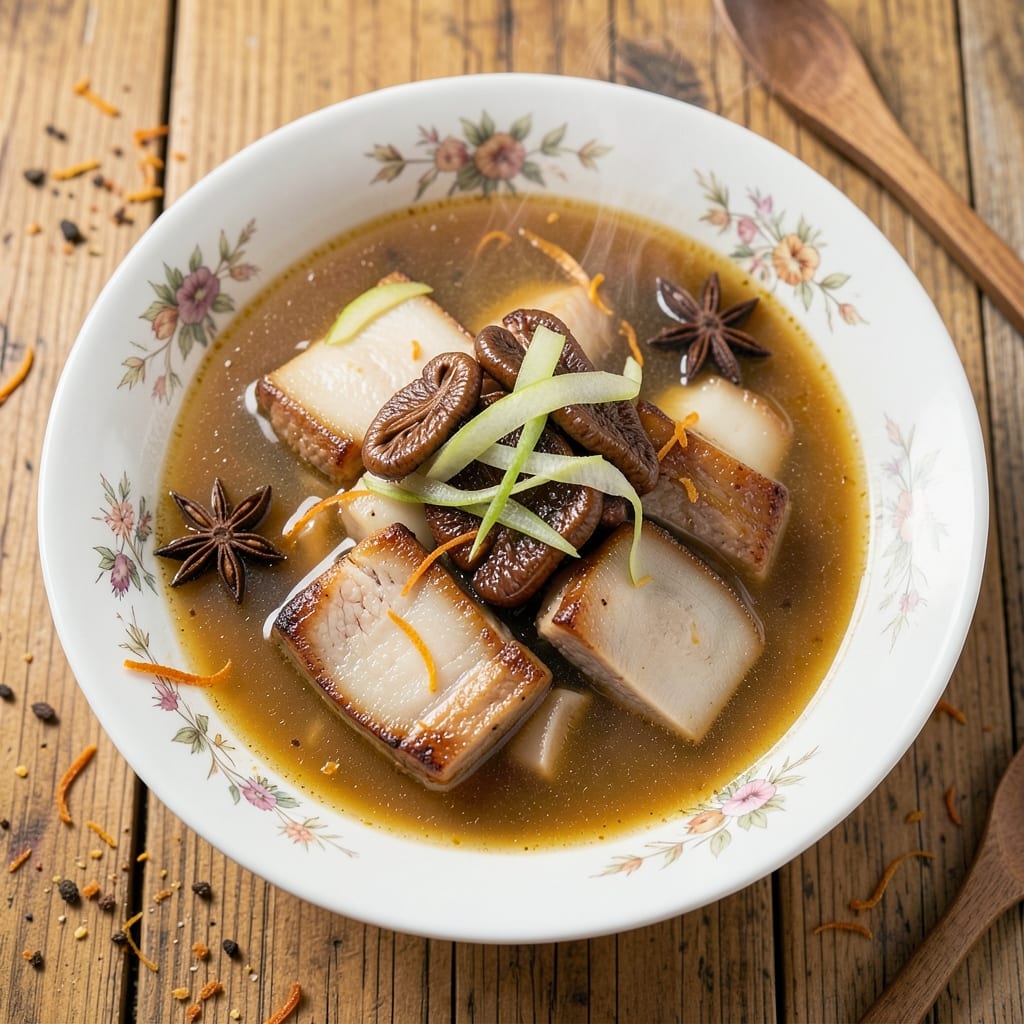
Abalone pork soup transforms humble ingredients into a luxurious, silken bowl of comfort that bridges East and West with effortless grace.
Here, tender abalone—prepared with a quick sear to lock in its delicate texture—meets a deeply flavorful pork broth infused with star anise and ginger. The secret lies in slow simmering: letting the pork shoulder break down into tender strands while the abalone remains velvety, never rubbery. This is a soup where technique matters, but the result feels like a warm embrace.
What you’ll end up with is a harmonious blend of textures—silky abalone, melt-in-your-mouth pork, and slippery noodles—all suspended in a broth so rich it sings with umami. The aroma alone will have your kitchen smelling like a bustling Cantonese restaurant, but the simplicity of the method makes it achievable at home.
Perfect for special occasions or cozy weeknights, this soup scales beautifully and tastes even better the next day. Let’s make it—your taste buds will thank you.
Ingredients for abalone pork soup
Luxurious yet approachable ingredients that transform simple pantry staples into restaurant-quality abalone pork soup.
| Ingredient | Amount | Notes |
|---|---|---|
| Fresh Abalone 🐚 | 12 oz | Cleaned, dried, sliced into bite-sized pieces |
| Pork Shoulder 🐖 | 2 lb | Bone-in, cut into 1-inch chunks |
| Dried Shiitake Mushrooms 🍄 | ½ oz | Rehydrated, sliced (discard stems) |
| Fresh Ginger 🧄 | 2 tbsp | Minced, peeled, fresh preferred |
| Star Anise Pods 🌟 | 2 whole | Lightly crushed for aroma |
| Dried Tangerine Peel 🍊 | 1 tbsp | Sliced thin, organic preferred |
| Rock Sugar 🍬 | 2 tbsp | Or substitute brown sugar |
| Cornstarch 🌾 | 1 tbsp | For abalone velvety finish |
| Dried Wood Ear Mushrooms 🍄 | ¼ oz | Rehydrated, torn into pieces |
| Green Onions 🧅 | 4 whole | White and green parts separated |
| Sesame Oil 🫒 | 1 tbsp | Toasted for aroma |
| Fresh Garlic 🧄 | 4 cloves | Minced, peeled |
| Wonton Wrappers 🥟 | 1 package | For optional dumplings |
| Dried Soy Sauce 🥢 | 1 tbsp | Or light soy sauce |
| Shaoxing Wine 🍷 | ½ cup | Or dry sherry substitute |
The abalone is the star here—look for fresh, plump pieces at Asian markets or high-end seafood counters. If frozen, thaw slowly in the fridge overnight. Whole abalone? Ask the fishmonger to clean and slice it for you. Pork shoulder should have good marbling for flavor—Costco or local butchers usually have the best cuts. For the mushrooms, dried shiitake and wood ear add depth without overpowering. Rehydrate them in hot water for 20 minutes before using, then drain well. Star anise and tangerine peel are non-negotiable for that authentic Cantonese aroma—Penzeys or Asian grocery stores carry them in bulk.
No fresh abalone? Frozen scallops work in a pinch, but they won’t have the same texture. Running low on Shaoxing wine? Dry sherry or mirin bridge the gap, though the flavor will be subtly different. The dried soy sauce adds umami—if you only have regular soy, reduce to half the amount and add a pinch of sugar. For the ginger, fresh is best, but if you must use powdered, double the amount. The wood ear mushrooms can be tricky to find; dried chives in a similar texture pinch if needed. Want to skip the abalone entirely? Extra-large shrimp or firm tofu hold up well in the broth, though the texture won’t be identical.
This soup tastes even better the next day—double the batch if you’re feeding a crowd. Store in airtight containers in the fridge for up to 4 days, or freeze for 3 months. The abalone and pork can be prepped ahead and refrigerated separately until ready to cook. For serving, keep the broth hot and assemble bowls last-minute so the noodles don’t get soggy. Sesame oil should be added just before serving to preserve its aroma. Leftovers reheat beautifully—just add a splash of water if the broth thickens too much.
Why You'll Love This Recipe
- Minimal Chopping Needed: I swear by this—just slice the ginger, tear the shiitakes, and dice the pork. The abalone’s already prepped (ask your fishmonger to clean it), so you’re basically done before the water even boils. Honestly, my busiest nights are the ones I rely on this for.
- Umami Bomb Combo: That star anise and dried shiitake? They turn this soup into a flavor explosion. The pork stays tender, the abalone melts into the broth like silk, and the ginger’s bright kick ties it all together. I’ll be real: my picky-eating partner inhaled his second bowl without complaint.
- Weeknight to Dinner Party: Same recipe, different vibes. Simmer it for 45 minutes on a Tuesday for a cozy meal, or let it slow-cook for 2 hours on Sunday to serve at a gathering. The broth thickens beautifully—just add a splash of Shaoxing wine if you’re feeling fancy. (Yes, even on a Tuesday night.)
- Leftovers That Don’t Suck: Most soups get boring after day two, but not this one. The flavors deepen overnight, and reheating? Just a quick stir on low heat. I freeze portions too—the abalone stays tender, and the pork’s rich enough to satisfy even when thawed. Budget-friendly and lazy-approved.
Step-by-step instructions for silken abalone pork soup
Master this luxurious soup where tender abalone melts into a rich, aromatic pork broth.
Prepare the Pork Broth Foundation
In a large stockpot, combine the 2 lb pork shoulder cut into 1-inch chunks, 0.5 oz dried shiitake mushrooms (rehydrated and sliced), 2 whole star anise pods (lightly crushed), 1 tbsp dried tangerine peel, 2 tbsp rock sugar, and 0.5 cup Shaoxing wine. Add 8 cups cold water and bring to a boil over high heat.
Once boiling, reduce to a gentle simmer and skim off any foam that rises to the surface. This ensures a clear, clean broth. Let it simmer uncovered for 1 hour, stirring occasionally. The pork should become fork-tender, and the broth should develop a deep, golden hue. Here's the thing—this slow simmering extracts maximum flavor from the pork and aromatics, creating the umami-rich base for your soup.
Build the Umami Layer with Aromatics
While the broth simmers, heat a separate pot with 2 cups water and add 0.25 oz dried wood ear mushrooms (rehydrated and torn) and 2 tbsp fresh ginger (minced). Bring to a boil, then reduce heat and simmer for 10 minutes. Strain the mushrooms and ginger, reserving the infused water.
In the same pot, add 4 cloves fresh garlic (minced) and 1 tbsp sesame oil. Sauté over medium heat for 1 minute until fragrant. Pour the reserved mushroom-ginger water into the broth pot and stir well. This step intensifies the soup's depth of flavor—don't skip it. The wood ear mushrooms add a delicate, almost floral note that complements the richness of the pork and abalone.
Cook the Abalone to Silken Perfection
In a small bowl, whisk together 12 oz fresh abalone (sliced) with 1 tbsp cornstarch and 1 tbsp dried soy sauce. This coating ensures the abalone remains silken and doesn't turn rubbery. Gently add the abalone to the simmering broth and cook for 8-10 minutes until just tender. The abalone should look translucent and feel tender when pierced with a fork.
Real talk: abalone cooks quickly, and overcooking turns it chewy. Watch closely during the last 2 minutes of cooking. Once done, remove the abalone with a slotted spoon and set aside. The broth should now be velvety and infused with all the flavors we've built—this is where the magic happens.
Finish and Serve with Garnishes
Return the broth to a simmer and add the white parts of 4 green onions (sliced). Cook for 2 minutes to infuse the broth with freshness. Taste and adjust seasoning with additional dried soy sauce if needed. The soup should be rich but balanced, with a subtle sweetness from the rock sugar and tangerine peel.
To serve, ladle the hot broth into bowls and arrange the abalone slices on top. Garnish with the green parts of the green onions (chopped) and a drizzle of sesame oil. For an extra touch, you can add wonton wrappers lightly pan-fried until crispy as a garnish. This soup is best enjoyed immediately while the abalone is still silken and the broth steaming hot.
Pro Tips For Making Abalone Pork Soup
- Simmer Slow and Steady: I used to rush the abalone pork soup, thinking it’d save time—but the meat stayed tough and the broth lacked depth. For this dish, once everything’s in the pot, keep the heat at a gentle simmer (just small bubbles breaking the surface) for at least 2 hours. The abalone needs time to melt into the broth, and the pork shoulder will fall apart on its own if you’re patient.
- Slice Pork Thinly Before Browning: Thick pork shoulder chunks? Big mistake. Cut the pork into ½-inch thick slices first, then sear them in batches until deeply browned. This ensures the meat cooks evenly in the broth later and adds a rich, caramelized flavor that a quick stir-fry can’t match. (Yes, it’s extra work upfront, but trust me—your soup will taste like it simmered all day.)
- Rehydrate Shiitakes Properly: Dried shiitake mushrooms are non-negotiable for texture, but I’ve learned the hard way that tossing them straight into the pot is a gamble. Soak them in hot water for 20 minutes first, then slice them thick—about ¼-inch. The extra prep keeps them from turning to mush and adds a satisfying chew that disappears too fast if you skip this step.
- Toast Star Anise First: Star anise isn’t just for flavor—it’s the backbone of this soup’s aroma. Before adding it to the broth, dry-toast the pods in a small pan over medium heat for 30 seconds until fragrant. This unlocks their oils and prevents them from floating like useless bobbers. Remove them early (after 45 minutes of simmering) so they don’t overpower the dish. (And no, those tiny seeds aren’t the same as anise-flavored anything else—don’t substitute!)
Best sauces and condiments for abalone pork soup
Classic Cantonese Sauce
Start with a light soy sauce base—about 2 tablespoons—to balance the soup’s richness. I often add 1 teaspoon of Shaoxing wine to deepen the umami while keeping the sauce glossy. For a touch of sweetness, a ½ teaspoon of rock sugar dissolved in the sauce ties all the flavors together beautifully. This classic combo enhances the pork and abalone without overpowering them. 🌟
Spicy Chili Oil Finish
For a bold twist, drizzle the soup with 1 tablespoon chili oil (homemade or store-bought) just before serving. I like to infuse mine with dried red chilies and Sichuan peppercorns for a numbing heat. This adds a vibrant red hue and a fiery kick that cuts through the soup’s richness. Start with ½ teaspoon and adjust to taste—trust me, it elevates the dish instantly. 🔥
Creamy Sesame Dressing
Blend 2 tablespoons tahini, 1 tablespoon toasted sesame oil, 1 tablespoon soy sauce, and 1 teaspoon honey into a silky dressing. Drizzle this over the soup right before eating to add a nutty, creamy contrast to the abalone’s silkiness. The tahini’s earthiness pairs perfectly with the pork’s savory depth. Use sparingly—just enough to coat the top of the broth. ✨
Fermented Black Bean Sauce
For a funky, umami-packed sauce, simmer 1 tablespoon fermented black beans (sold in Asian markets) with ½ cup water for 5 minutes, then strain. Stir this into the soup during the final 2 minutes of cooking. The beans add a salty, tangy complexity that makes the abalone taste even more luxurious. It’s a secret weapon in my kitchen—don’t skip it! 💪
Lemon-Ginger Drizzle
Zest 1 teaspoon fresh lemon peel and mix with 1 tablespoon minced ginger and 1 tablespoon olive oil. Drizzle this bright, citrusy dressing over the soup tableside. The acidity cuts through the soup’s richness, and the ginger adds a fresh, zesty note that’s surprisingly refreshing. Perfect for balancing the meal’s heartiness. 💛
Nutrition facts
Frequently asked questions
Can I substitute abalone with another seafood in this recipe?
Yes, but the texture will differ. Scallops are the closest substitute—use 12 oz and coat them with cornstarch to mimic abalone's silkiness. Shrimp (peeled and deveined) works too, but cook them for only 3-4 minutes to avoid toughness. For a vegetarian option, firm tofu (pressed and cubed) absorbs flavors well, though it won't match abalone's delicate melt-in-your-mouth quality.
How do I know when the pork shoulder is fully cooked?
The pork is done when it shreds easily with two forks and reaches an internal temperature of 203°F. Look for a deep golden broth and tender strands—no pink should remain. If using a meat thermometer, insert it into the thickest part of a pork chunk. For extra flavor, let it rest 10 minutes before shredding or slicing.
What if I don't have Shaoxing wine? Can I use something else?
Dry sherry or mirin work best as substitutes—use the same 0.5 cup amount. For a non-alcoholic option, apple cider vinegar (reduce to 0.25 cup) adds acidity, though the flavor will be subtly different. The key is balancing sweetness and depth—adjust to taste.
Why does my abalone turn rubbery?
Overcooking is the #1 culprit! Abalone cooks in 8-10 minutes—any longer and it toughens. Always coat it in cornstarch first to protect its texture. Also, avoid boiling—keep the broth at a gentle simmer (180-190°F). If it looks opaque, it's done; translucent means it's perfect. Pro tip: Remove it from heat 1 minute early—it'll finish cooking from residual heat.
Can I make this soup ahead of time?
Yes! This soup tastes even better the next day. Store the broth and pork separately in airtight containers in the fridge for up to 4 days, or freeze for 3 months. Reheat gently on the stove—add a splash of water if the broth thickens too much. Re-cook the abalone fresh before serving to preserve its silken texture. The flavors meld beautifully overnight, making it perfect for meal prep.